
One week after winning a fifth term, Rep. Lance Gooden of Texas is facing a public airing of something every member of Congress hopes never to see: a 36-page report from the House’s independent watchdog that says there is “substantial reason to believe” he sought taxpayer reimbursement for travel that may not have been official and that his campaign may have misreported its spending.
On Monday, the House Ethics Committee announced that it will continue reviewing a referral it received on June 10 from the Office of Congressional Conduct, or OCC, and it published the OCC’s report along with Gooden’s written response. The committee was careful to say that further review “does not itself indicate that any violation has occurred, or reflect any judgment on behalf of the Committee.” Gooden, a Republican from Terrell, calls the referral “insane” and “bogus.”
Readers should keep both things in mind. The OCC report is a set of allegations and questions, not a verdict. But it is also a detailed look at how a member’s office spends public money, and at a basic weakness in how the House polices itself.
What the watchdog says it found
The OCC report, adopted by the office’s board on a 5-0 vote on May 27, began after public reporting in December 2025, by LegiStorm, that Gooden had received more travel reimbursements than any other House member, about $140,000 in 2025 at the time. The OCC wrote that it “identified a pattern of extravagant expenditures by Rep. Gooden that appear inconsistent with his official duties.”
Among the specifics the report cites:
Hotels. The OCC listed reimbursed stays at properties such as the Park Hyatt in Washington and The Chatwal, where it said nightly rates “frequently exceeded $1,000 and, in some instances, reached over $2,000 per night.” House rules do not ban expensive hotels, the report notes, but require lodging to be “reasonable.” The OCC contrasted those stays with an email in which Gooden, on a personal trip to Brazil, complained that an $800 hotel room was “expensive.”
Airfare. The report says Gooden and his staff “almost exclusively” flew business or first class. It also describes what it called a duplicate reimbursement: after Gooden requested $378.48 for his share of a June 2025 flight on which his son also traveled, a second request for the same amount was filed days later, “which seemingly covered his son’s travel costs.” The OCC said the duplicate “may have resulted from an inadvertent error.”
Rewards points. On at least two occasions, the OCC says, official staff travel appears to have been booked through the Chase Travel portal of Gooden’s wife. Using a relative’s account, the report says, would allow “the accumulation of private rewards and benefits from official funds, which is prohibited by House rules.”
Ground transportation. House disbursement statements show $19,613.21 in car rental reimbursements and $18,593.66 for rideshares in 2025, the OCC says, and it flagged month-long rentals and rideshare trips that ended near campaign-funded events.
Campaign reports. From January 2025 to February 2026, the campaign reported 23 payments to Chase totaling $256,465.77, but the OCC said, “For nearly every disbursement listed, the itemized values fail to account for the total amount charged.” It also questioned a $17,160.70 campaign payment to a luxury Vail resort in November 2024, labeled “fundraising trip,” for which it found no public invitation, and a $1,286.20 payment to a New Orleans hotel in 2022 that coincided with a Facebook post about a Mardi Gras “detour” with his wife.
The OCC repeatedly says it could not resolve these questions because Gooden, several current and former staff members and his campaign treasurer declined to cooperate. It went further, writing that shared legal counsel and coordinated refusals raise “a reasonable inference that non-cooperation was not coincidental but coordinated,” and that Gooden “may have interfered” with the review. That, too, is the OCC’s inference, not a finding by the Ethics Committee.
Gooden’s side
Gooden’s lawyers at Dickinson Wright told the committee in June that the OCC’s demand for more than a year of official, campaign and personal travel records was “unreasonably burdensome,” and that Gooden offered in writing to answer questions about specific transactions if the OCC would identify them. The OCC, they wrote, “refused to engage on any specific theories or concerns” and built “allegations grounded in worst-case assumptions.” They called the conflict-of-interest suggestion “offensive and without foundation.”
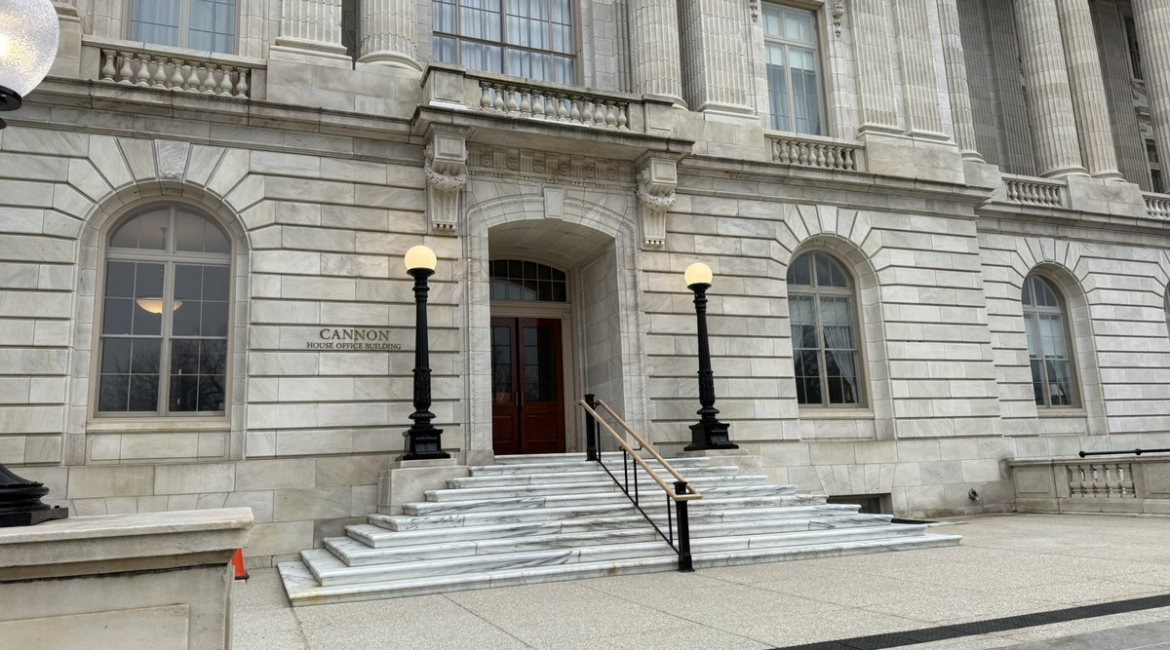
The letter offers one concrete rebuttal. The OCC questioned an official ride from Dulles Airport on a day the campaign paid for a staff lunch at Bullfeathers. That restaurant, the lawyers wrote, is “less than one-tenth of a mile” from the Cannon House Office Building, and the lunch was “separately reported, separately funded.” They said Gooden “looks forward to working cooperatively” with the Ethics Committee.
In a statement Monday quoted by The Texas Tribune, Gooden went on offense: “There’s a reason the Senate doesn’t have an OCC – because of insane, bogus referrals like this one. The Ethics Committee will expose this witch hunt, and I’m calling on House Administration to launch an oversight investigation into the OCC’s target selection and record of failed inquiries.” The Tribune noted that the committee has cleared other Texas Republicans investigated over campaign finance, including Reps. Wesley Hunt and Ronny Jackson. Gooden beat Democrat Chelsey Hockett by about three percentage points last week.
The real accountability problem
Gooden has a point about process, and conservatives should not dismiss it. A watchdog that demands more than a year of official, campaign and personal travel records without saying what it suspects invites exactly the standoff that happened here. Fair procedure is not a technicality when the accused is a sitting member.
But the larger problem runs the other way. The OCC has no subpoena power; the report ends with a section on information it “was unable to obtain” and a recommendation that the committee issue subpoenas. That means a member who simply declines to answer can leave the questions open for months. The committee received this referral in June, extended its review in July and announced a further review on Monday, five months later and after the election. Voters in Texas’s 5th District went to the polls without seeing a report that existed since spring.
Members’ office budgets are public money. Two simple reforms would help regardless of how the Gooden matter ends. First, House rules could require members to answer a written OCC request within a set time, with refusal itself referred to the Ethics Committee as a matter of record. Second, the House could publish itemized travel receipts online, not just quarterly totals, so that the press and the public can see the hotel, fare class and purpose of each trip. Sunlight cuts both ways: it protects members who follow the rules as much as it exposes those who do not.
What happens next
The Ethics Committee, which has five members from each party, said it will not comment further until it completes its initial review. The OCC report itself notes that House rules can make members personally liable for misspent funds. Until then, every claim in the OCC report is an allegation, and Gooden is entitled to the presumption that he can explain it. The House, for its part, owes taxpayers a faster answer than the one it has given so far.
Sources: House Ethics Committee statement (Nov. 9, 2026); OCC Report and Findings, Review No. 26-6164 (adopted May 27, 2026); Rep. Gooden’s response through counsel (June 16, 2026); The Texas Tribune and The Washington Post (Nov. 9, 2026); LegiStorm (Dec. 15, 2025). No violation has been found by the Ethics Committee. The OCC’s characterizations, including its inference of coordinated non-cooperation, are its own.



