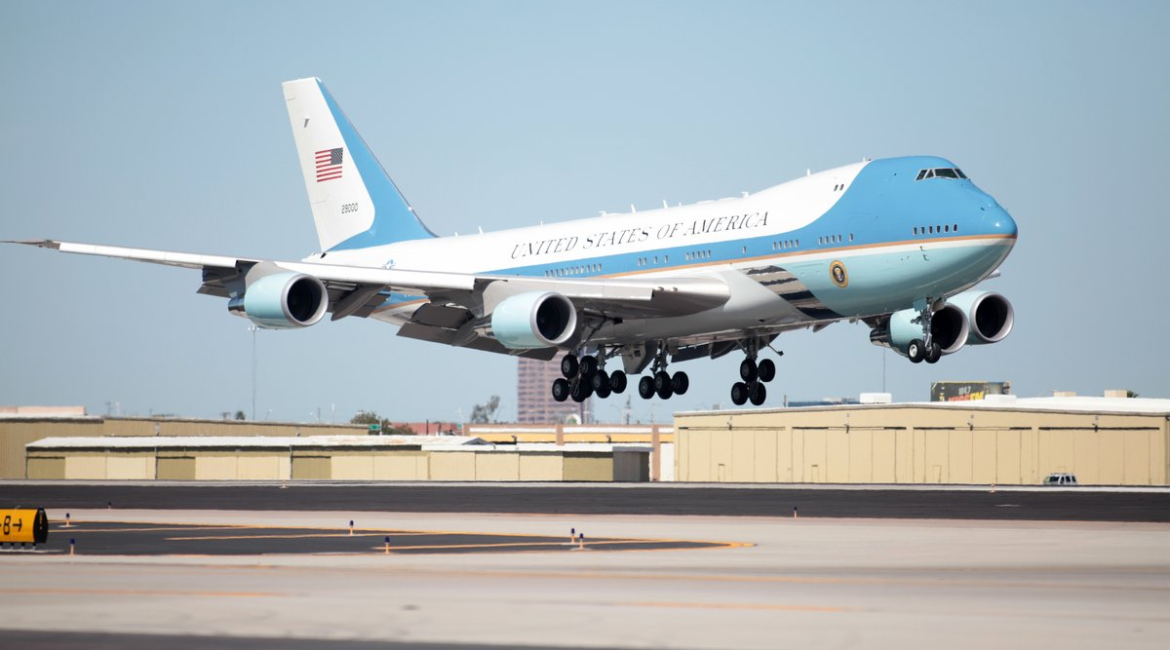
Two weeks after his party’s midterm defeat, President Trump has turned to the arena where presidents have the most freedom to act: foreign policy. He landed in Manila on Tuesday evening local time (about 3:30 a.m. Central) for a Southeast Asian summit and his first meeting with America’s Quad partners in two years. On Thursday in Shenzhen, China, he is scheduled to sit down with Chinese President Xi Jinping and Russian President Vladimir Putin. It will be the first three-way summit among the leaders of the three countries.
The trip is the biggest political story of the week. Here is what is confirmed, what each side wants, and what conservatives should watch for.
First stop: Manila and the Quad
Trump arrived at the tail end of the annual summit of the Association of Southeast Asian Nations (ASEAN). Shortly after landing, he met the leaders of the other three Quad countries: Japanese Prime Minister Sanae Takaichi, Indian Prime Minister Narendra Modi and Australian Prime Minister Anthony Albanese. The BBC notes that the Quad last met at the leaders’ level in 2024, in Delaware, under President Biden. Trump himself helped revive the group on his first presidential trip to Asia in 2017.
“We have a great relationship with these people and these countries,” Trump told reporters during the leaders’ photo, calling Modi “a very tough man” and adding that Takaichi “may be even tougher.” His relationship with Modi has been strained over the past year by U.S. tariffs on India and stalled trade talks, and the BBC reported that no trade breakthrough was expected in Manila. A bilateral meeting with Philippine President Ferdinand Marcos Jr. was also scheduled.
The welcome was not unanimous. NBC News and DW reported protests in Manila over fuel prices driven up by the U.S.-Israeli war with Iran and over Pax Silica, the U.S.-led initiative to build China-free supply chains for AI and critical minerals, which the Philippines joined in April. Critics there worry about the water and land demands of planned data centers north of the capital.
The main event: Trump, Xi and Putin in Shenzhen
China’s Foreign Ministry confirmed Monday that Xi will host Trump and Putin in Shenzhen on Thursday, on the sidelines of the Asia-Pacific Economic Cooperation (APEC) forum, CNBC reported. The Wall Street Journal had reported last month that Putin proposed the three-way meeting as a way to negotiate an end to the war in Ukraine.
The three governments are not describing the agenda the same way. The White House says Trump’s priorities are reducing nuclear weapons and the Iran war; a White House official told reporters Trump was not expected to raise Russia’s war in Ukraine. But speaking to reporters as he left the White House on Monday, Trump said he would bring up Ukraine and that he thinks Putin is “backing down a little bit,” according to PBS NewsHour. “I think he could be tougher,” Trump said. “I think he’d like to see it finish.” Kremlin aide Yuri Ushakov said last week that the Shenzhen talks would continue efforts toward a negotiated settlement in Ukraine.
Trump also said he might meet North Korean leader Kim Jong Un while in China. “We may meet with Kim Jong Un also, so that’ll be good,” he said, adding that whether Kim comes is “up to President Xi.” No meeting has been announced.
What each leader wants
Xi may gain the most simply by hosting. “For Xi, just the ability to bring Putin and Trump to the table, a first among equals scenario, will deliver much of the political benefit even before the discussions begin,” Peter Alexander of Z-Ben Advisors told CNBC. A U.S.-China trade truce expires in January, and analysts largely expect an extension. Beijing has said little about the agenda. David Roche of Quantum Strategy told CNBC that China has no interest in nuclear disarmament talks until it reaches parity with the U.S., which he estimates will take about 10 years.
Putin wants to be treated as a peer of the American and Chinese presidents and to shape any Ukraine settlement on his terms. He told U.S. envoys Steve Witkoff and Jared Kushner in Moscow last week that Europe should “figure out” whether it wants “peace or war,” CNBC reported. Ukrainian President Volodymyr Zelenskyy warned Monday that North Korea is supplying Russia with ballistic missiles.
Trump wants a win abroad after a hard month at home. Democrats won both chambers of Congress on Nov. 3, which will make it much harder to pass his domestic agenda. A nuclear arms-control framework involving all three powers would be historic. No serious analyst quoted this week expects a binding agreement on Thursday, though; Quantum Strategy’s David Roche told CNBC the meeting is likely to be “almost 100% photo op.”
The Nvidia problem follows him
The trip is also overshadowed by the scandal at Nvidia, whose co-founder Jensen Huang resigned as CEO last week after admitting an affair with a former executive of a Singapore company suspected of diverting Nvidia chips to China. U.S. intelligence officials reportedly suspect the woman of spying for China; she has not been charged, and China rejects the espionage allegations. Hours before Trump left, the Commerce Department issued a rule to stop Chinese companies from renting advanced American chips through data centers in third countries.
Trump sent a mixed message on the way out. He told reporters he “would not mind” if Nvidia reinstated Huang, saying “that certainly isn’t a bad idea” and “I think he learned a big lesson,” according to CBS News. He also said he did not know whether the woman was a spy and might raise the question with Xi. That puts him at odds with his own Treasury secretary. Scott Bessent said Sunday that Nvidia needs a “dramatic shakeup” and an outside CEO. A source told CBS that Nvidia’s board is not interested in bringing Huang back.
What conservatives should watch
- No concessions on chips. Trump said Monday that the U.S. bars Nvidia from selling its most advanced chips to China. That line should hold in Shenzhen. Export controls on AI chips are a national-security tool and should not be traded for soybean purchases or a photo opportunity.
- Nothing about Ukraine without Ukraine. A three-way meeting that excludes Kyiv and Europe should not produce terms imposed on them. Any framework should be verifiable and should not reward Russian aggression.
- Arms control that includes China. Trump is right that a nuclear deal limited to Washington and Moscow no longer makes sense while China builds up its arsenal. If Beijing will not commit to anything specific, the summit should not be described as an arms-control success.
- Allies first. Starting the trip with Japan, India, Australia and the Philippines sent the right signal. The Quad and America’s treaty allies should hear about any outcome in Shenzhen from Washington before they read it in Beijing’s press releases.
Presidents often turn to foreign policy after midterm losses. It is an area where the White House can still act without Congress. Whether this trip produces more than photos will be clear by Thursday night, Shenzhen time.
Sources: BBC News live coverage (Nov. 17, 2026); NBC News live blog (Nov. 17); DW (Nov. 17); CNBC (Nov. 16); PBS NewsHour (Nov. 16); CBS News (Nov. 16). Summit outcomes are not yet known; statements about agendas reflect what officials said before the meeting.