
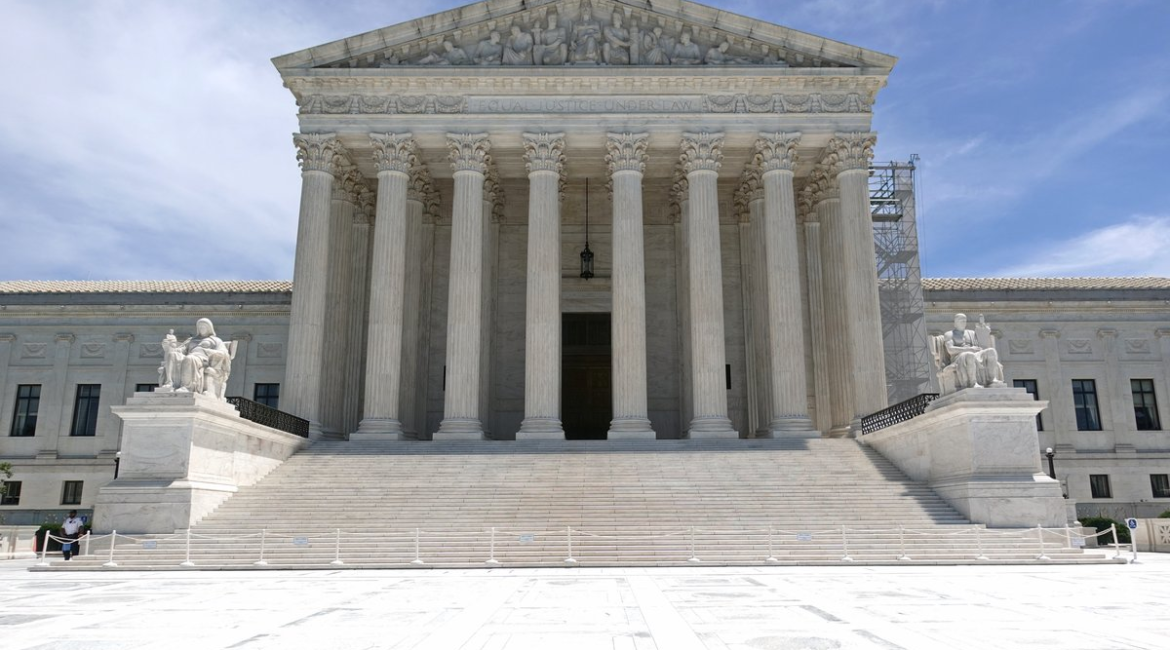
In 2013, the city of Portage, Indiana, bought five garbage trucks from a local dealer for about $1.1 million. In 2014, the dealer wrote the mayor a $13,000 check. A federal jury convicted the mayor, James Snyder, of accepting an illegal gratuity. In June 2024, the Supreme Court threw out the conviction. The federal law used against him, the justices held 6-3 in Snyder v. United States, covers bribes promised before an official act, not rewards paid after it. (Snyder said the check was for consulting work.)
That ruling capped a decade of Supreme Court decisions narrowing federal anti-corruption law. Many were unanimous and legally sound, but together they left gaps that dishonest officials can exploit. As this magazine reported, former Jackson, Mississippi, Mayor Chokwe Antar Lumumba was sentenced Friday for taking $50,000 in disguised campaign checks. Before pleading guilty, one of his arguments was that moving a bid deadline was not an “official act” under federal bribery law.
Here are six ways to fix the law without turning every handshake into a federal crime.
How the Court narrowed the law
The cases came one after another. In McDonnell v. United States (2016), a unanimous Court overturned the conviction of former Virginia Gov. Bob McDonnell, who had accepted $175,000 in loans, gifts and other benefits from a businessman seeking state help for a nutritional supplement. The Court held that “setting up a meeting, talking to another official, or organizing an event—without more” is not an “official act.”
In Kelly v. United States (2020), the “Bridgegate” case, the Court unanimously reversed the convictions of New Jersey officials who closed George Washington Bridge access lanes to punish a mayor. Justice Elena Kagan wrote that “not every corrupt act by state or local officials is a federal crime.” In 2023, in Percoco and Ciminelli, it unanimously threw out convictions tied to Andrew Cuomo’s New York, rejecting fraud theories it found too broad.
Then came Snyder. Writing for the majority, Justice Brett Kavanaugh said the government’s reading would subject “19 million state and local officials” to up to 10 years in federal prison for “even commonplace gratuities” like gift cards or lunches, and that states should set their own rules. Justice Ketanji Brown Jackson, joined by Justices Sonia Sotomayor and Elena Kagan, dissented.
Conservatives should take the Court’s concerns seriously. Vague criminal laws give prosecutors too much power. But the answer to vague laws is clear laws written by Congress and state legislatures, not no laws at all.
Fix 1: Close the gratuity gap, narrowly
Federal officials already face a two-year maximum sentence for accepting an illegal gratuity under 18 U.S.C. §201(c). State and local officials who handle federal money no longer face any comparable federal rule. Congress should write one, with limits that answer the Court’s objections. The No Gratuities for Governing Act, introduced by Rep. Dan Goldman (H.R. 4175) and Sen. Andy Kim (S. 5509), offers a starting point. It would cover only gratuities of $1,000 or more tied to government business worth $5,000 or more, with a two-year maximum sentence. Sen. Jeff Merkley’s Stop Corrupt Gratuities Act takes a similar approach.
Both bills come from Democrats, but Republicans should not leave the issue to them. A conservative version should keep high dollar thresholds, apply only to entities receiving federal funds (as current law, 18 U.S.C. §666, already requires), require proof the payment was linked to a specific official act, and spell out exemptions for plaques, meals of modest value and gifts from family. That respects federalism while ensuring that a $13,000 check after a $1.1 million contract is not legal.
Fix 2: States should not wait for Washington
The Snyder majority listed how states already handle gifts. Delaware treats accepting gifts for official conduct as a misdemeanor, Arizona treats it as a felony, and Colorado’s constitution allows gifts only under $75. But it also noted that Indiana imposed no general criminal or civil ban on gratuities to local officials, leaving the rules to each local government. That patchwork is how a $13,000 check fell through the cracks.
Every state legislature should pass a clear criminal ban on gratuities given to state and local officials for official acts above a modest threshold, with exemptions for ordinary courtesies. It should also let the state attorney general prosecute when local prosecutors have a conflict. That is the federalist answer the Court invited.
Fix 3: Define “official act” in plain words
McDonnell did not legalize bribery. The Court said an official act includes using one’s position “to exert pressure on another official to perform an ‘official act,'” or giving advice knowing it will form the basis for one. Congress should write those examples into the statute. It should also list procurement steps, such as changing bid deadlines, specifications, scoring criteria or contract terms, as official acts. Defendants should not be able to argue, as Lumumba’s lawyers did, that rigging the steps of a contract is not an official act.
Sen. Kim’s Anti-Bribery Improvement Act would go further and criminalize selling “access” under an express agreement. That needs careful drafting so it does not reach routine constituent meetings. Spelling out procurement actions is the safer first step.
Fix 4: Apply pay-to-play rules to big contractors
Lumumba’s bribe came as five $10,000 campaign checks. Campaign money is hard to prosecute as bribery, because the Supreme Court in McCormick v. United States (1991) required an explicit quid pro quo. There is a proven alternative that does not require proving a bribe at all. Since 1994, MSRB Rule G-37 has barred municipal bond dealers from doing business with a government for two years after making contributions to an official who influences their selection. The SEC adopted a similar two-year “time out” for investment advisers who manage public pension money in 2010.
States and cities should apply the same rule to firms seeking large public contracts. Firms whose owners or executives give above a small threshold to officials with influence over a contract would be barred from that contract for two years. If Wall Street can live with these rules, contractors can too.
Fix 5: Require disclosure of payments after a contract
The $13,000 check in Snyder was described as a consulting fee. Officials should be required to publicly report any payment, job offer or consulting deal from a vendor that won a contract they influenced, for two years after the award. Failing to report should carry penalties and allow the government to cancel the contract. Disclosure lets voters, reporters and prosecutors judge for themselves.
Fix 6: Rebuild the corruption prosecutors and protect them from politics
Laws only matter if someone enforces them. In September 2025, NOTUS reported that the Justice Department’s Public Integrity Section, which had 36 attorneys assigned full-time to corruption cases when the year began, was down to two. The department also suspended a long-standing rule requiring local U.S. attorneys to consult the section on election and campaign-finance cases. Current staffing has not been publicly confirmed.
That consultation rule protected both parties from politically motivated prosecutions. Congress should restore it in statute, set a minimum staffing level for the section and require detailed public annual reports. Conservatives who worry about a weaponized Justice Department should want career corruption prosecutors applying consistent standards no matter who holds power.
What to avoid
Kim’s Honest Services Fraud Improvement Act would let private citizens sue officials for honest services fraud and collect part of the damages. In a polarized country, that invites politically motivated lawsuits against officials of both parties. Clear laws and professional prosecutors are better tools than bounty suits.
The bottom line
The Supreme Court has repeatedly told Congress that if it wants to criminalize a type of corruption, it must say so clearly. Congress has not. Today a payment can be legal or illegal depending on whether it arrives before or after the contract. The fixes above are narrow, constitutional and tested in practice. Lawmakers who campaign against corruption should pass them.
Sources: Supreme Court opinions in Snyder v. United States (2024), McDonnell v. United States (2016), Kelly v. United States (2020), Percoco v. United States (2023) and Ciminelli v. United States (2023), via Cornell Law School’s Legal Information Institute; offices of Sen. Andy Kim and Sen. Jeff Merkley; MSRB Rule G-37; SEC Rule 206(4)-5 (17 C.F.R. 275.206(4)-5); NOTUS via The Washington Sun (Sept. 22, 2025); The Jackson Wire (Nov. 21, 2026).



