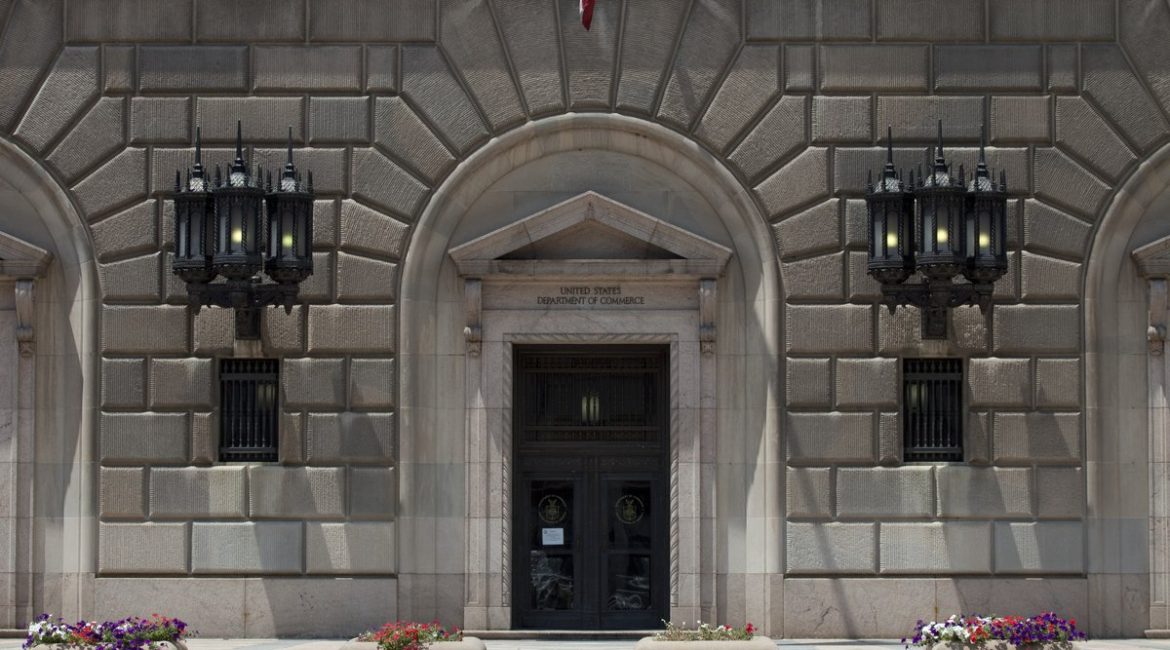
Most presidents use their Thanksgiving message to talk about family, the troops and gratitude. President Trump used part of his, posted on Truth Social from his West Palm Beach golf club, to accuse his own Commerce Department of putting out “fake” economic numbers before the midterm elections. He demanded an investigation.
There is an unusual twist. The revision he is angry about made the economy under his administration look better, not worse.
What the President said
On Wednesday, the Commerce Department’s Bureau of Economic Analysis reported that real GDP grew at a 4.3% annual rate in the third quarter. The advance estimate, published days before the Nov. 3 election, had put growth at 3.4%. The new figure was 0.9 percentage point higher.
Trump’s response, as quoted by USA Today, was to wish “a Happy Thanksgiving to even those who issued fake Economic Numbers, just prior to the Election, and corrected them yesterday, three weeks late, showing that the GDP was actually 4.3%, versus 3.4%, A RECORD SETTING ERROR, and one so grave that it should be immediately investigated.”
In a separate post, Axios reported, he wrote: “Why wasn’t the correct number issued before the Election? I am asking for an immediate investigation of this situation,” and called it “a massive, and purposeful, error.” He offered no evidence that anyone deliberately understated growth. The Commerce Department and BEA did not respond right away to requests for comment, Axios said.
The rest of the holiday message was combative. Reuters described a 461-word post that attacked liberals, immigrants and a federal agency. According to Reuters, it described large numbers of immigrants and people of Somali descent as jobless or criminal and warned of unnamed efforts to impose Muslim religious law. Reuters said Trump provided no evidence for those claims either. Later in the day he called service members from Mar-a-Lago. On a call with an F-16 squadron flying missions connected to the Iran war, USA Today reported, he said “we have victory at hand.”
Checking the claims
The underlying facts are not in dispute, and they don’t support the accusation.
- “Three weeks late.” The revised estimate came out on BEA’s pre-announced schedule. BEA publishes three estimates of each quarter’s GDP over three months. A third estimate for the third quarter is due Dec. 23, according to Axios.
- “A record setting error.” According to CNBC’s analysis, it was the largest change between the advance and second estimates since a 1.2-point revision in the second quarter of 2020, during Trump’s first term. Measured in absolute terms, it was tied for 16th largest since 1990. It was also about twice the average revision of 0.43 point across 147 quarters, so it was large but not unprecedented.
- Why it changed. BEA said the revision “primarily” reflected stronger investment and consumer spending. Investment was led by software, after a revision to a Bureau of Labor Statistics producer price index for software publishing. Consumer goods spending, including pharmaceuticals, was revised up using updated Census Bureau retail data. Health-care services were revised down.
- Who was in charge. BEA sits inside the Commerce Department, which is run by Secretary Howard Lutnick, one of the President’s closest allies. If there had been a scheme to make his economy look worse before the election, it would have been happening inside his own administration.
Lutnick took the opposite view from his boss. On X, as reported by Benzinga, he celebrated the revision: “The American Economy under The Trump Administration is doing BETTER than every expert estimated!” He credited record goods exports. BEA’s release, however, said exports decreased in the third quarter. The growth came from investment, consumer spending and government spending.
This has happened before
This isn’t the first time Trump has gone after a statistical agency. In August 2025, he fired Bureau of Labor Statistics Commissioner Erika McEntarfer after a weak jobs report that included large downward revisions, and accused the agency of manipulating the numbers. As the Council for Community and Economic Research noted, no evidence of manipulation ever came out. The Senate confirmed longtime BLS economist Brett Matsumoto as her replacement on Aug. 7 by a 51–47 vote. At his confirmation hearing he said BLS decisions should be “driven by science rather than politics.”
Axios pointed out an important difference. Last year’s complaint was about a weak report. This year’s is about a strong one. The first GDP estimate already showed a booming economy, and the revision made it look even better. It also strengthens the case for the interest-rate hikes that Trump opposes, since traders now see a December hike as nearly certain.
Why conservatives should care
It is tempting to dismiss this as holiday venting. Conservatives shouldn’t, for three reasons.
First, markets depend on these numbers. Conservatives defend free markets, and markets run on information. Lenders, employers, farmers and the Fed all use GDP, inflation and jobs data to make decisions involving trillions of dollars. When a president tells the country that the official numbers are rigged, he is weakening something businesses depend on.
Second, Republicans won’t always be in charge. Democrats take both chambers of Congress in January. If it becomes normal for a president to call government data fake whenever it is inconvenient, a future Democratic president can do the same. Conservatives should want strong norms around data now, while their own side controls the executive branch.
Third, the facts actually help the President. Growth at a 4.3% rate is the strongest since the third quarter of 2023, Benzinga noted. A White House spokesman told CNBC the revision shows Trump’s policies are “delivering results.” That is a reasonable political message. Claiming the earlier number was a “purposeful” fraud undercuts it.
There is a fair debate to have about government data. Axios noted that there are reasonable arguments over how to make early estimates more timely and accurate. Survey response rates have fallen, and statistical agencies have lost staff. Those are problems Congress should address. But they are not the same as accusing career statisticians of rigging an election, and treating them as the same thing makes the real problems harder to fix.
What happens next
It isn’t clear who would carry out the investigation Trump wants, or whether one will happen. None of the news reports reviewed for this article said who would conduct a probe, what it would cover or when it would start. The next data point is Dec. 23, when BEA releases its third estimate of third-quarter growth. If the 4.3% figure holds or rises, the economy will look even stronger under the same rules the President is now questioning.
Sources: U.S. Bureau of Economic Analysis; USA Today; Axios; Reuters via Investing.com; CNBC; Benzinga; Council for Community and Economic Research. Trump’s allegation that the advance GDP estimate was deliberately wrong is unsupported by any evidence made public as of this writing.