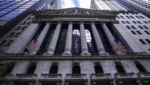
Wall Street ended October with a hard landing. On Friday, October 30, the S&P 500 fell 140.32 points, or 1.82%, to 7,580.07. The Nasdaq Composite fell 747.73 points, or 2.86%, to 25,437.00, its biggest one-day percentage drop since June 5, leaving it 7.8% below its October 6 record close. The Dow Jones Industrial Average lost 572.25 points, or 1.09%, to 51,770.31, according to Reuters.
The headline loser was Intel, and that makes this more than an ordinary market story. Since August 2025 the United States government has been one of Intel’s largest shareholders. When Intel’s stock fell, the taxpayers’ stake fell with it.
What happened on Friday
Intel shares fell 28.6% after the company gave a fourth-quarter forecast far below Wall Street’s expectations. CNBC reported that it was the stock’s worst day since the 1970s. Intel guided to adjusted earnings of 25 cents a share on revenue of $15 billion to $16 billion. Analysts had expected 43 cents and $17.1 billion. The company pointed to a slowdown in PCs and to an explosion at its chip plant in Israel that killed two workers and that Intel expects will cost about $600 million in revenue. Before the report the stock had risen roughly 150% this year, even though Intel still has not announced a major outside customer for its contract manufacturing business.
The selling spread across the sector. Reuters reported that the Philadelphia semiconductor index dropped 7.2% and is down more than 15% for the month. AMD fell 10.9% and Nvidia 4.2%. PC makers Dell and HP lost 10.8% and 9.6%. The S&P 500 technology sector had its worst month since March 2025.
The sell-off began a day earlier. On Thursday Alphabet had its worst day on record, falling about 13% and wiping out roughly $500 billion in market value. It reported negative free cash flow of $9.07 billion for the quarter, a far deeper hole than analysts expected, and kept its 2026 capital spending guidance at $195 billion to $205 billion. On Friday Amazon slipped 1.4% after missing estimates and posting a second straight quarter of negative free cash flow while keeping its roughly $220 billion capital spending plan for 2026. Alphabet fell another 1.4%, Reuters reported.
The question investors are now asking is simple: when will the AI data center boom start paying for itself? Corporate America overall is still doing well. Reuters, citing LSEG data, said 82% of the 299 S&P 500 companies that have reported so far beat estimates, and third-quarter earnings growth is expected at 31.6%. Markets are not pricing a recession. They are repricing the risk that the biggest spenders have overbuilt.
Oil, bonds and the Fed
The rest of the picture was mixed. U.S. crude rose $2.12 to $104.12 a barrel and Brent reached $117.63, both six-month highs, after a tanker was attacked in the Strait of Hormuz. Traders are watching for escalation in the eight-month war with Iran. Energy stocks were among the few winners, with Exxon up 2.2% and Chevron up 2.8%. Investors moved into Treasuries, and the 10-year yield fell about 6 basis points to 4.931%. Gold, normally a safe haven, fell 3.63% to $3,874.58, a one-year low.
The Federal Reserve held its benchmark rate at 3.75% to 4% this week. Two officials, Beth Hammack and Lisa Cook, dissented in favor of a hike. Markets now see about a 75% chance of a rate increase in December, according to Nasdaq’s economists. With oil above $100, the Fed is not coming to the rescue of tech stocks. The October jobs report on Friday, November 6, and the JOLTS job-openings data on Tuesday are next on the calendar.
The taxpayer’s seat at the table
Here is the part that should concern fiscal conservatives. On August 22, 2025, Intel announced that the federal government would buy 433.3 million newly issued shares at $20.47 each, an $8.9 billion investment equal to a 9.9% stake. The money did not come from a new appropriation. It came from converting $5.7 billion in CHIPS Act grants that had been awarded but not yet paid, plus $3.2 billion from the Pentagon’s Secure Enclave program, into stock. Under the deal the stake is passive. The government gets no board seat and agreed to vote with Intel’s board on most shareholder matters.
For a while the deal looked like a winner. Before Friday, Intel’s stock had more than doubled in 2026. Then on one Friday, CNBC estimated, the government’s stake lost about $12 billion in value. It is still in the black, because it was bought so cheaply. But the volatility is the point. In a single session the paper value of a federal investment moved by more than the original purchase price.
Supporters argue that the stake gives taxpayers upside in exchange for subsidies they were going to pay anyway, and that a domestic leading-edge chipmaker is a national security asset. Both arguments are serious. Converting grants into equity at least means the public shares in any gains rather than simply handing out money.
But ownership creates incentives that grants do not. A government that owns 10% of a company has a reason to steer contracts, trade policy and regulation toward that company and away from its competitors, including American ones such as AMD and Nvidia. It can be tempted to prop up a weak quarter rather than accept a loss on its books. And every Intel announcement now carries a political dimension it did not have before. Those risks do not show up in a single trading day, but they are real.
What responsible ownership would look like
If Washington is going to hold equity in private companies, Congress should set rules rather than leaving each deal to the executive branch. Three ideas would cost little and help a great deal. The views below are this magazine’s.
First, transparency: require the Commerce Department to report the market value, cost basis and gain or loss of every federal equity stake each quarter, in the same plain terms a mutual fund uses. Second, a firewall: bar any agency from favoring a company in procurement, export licensing or tariff decisions because the government owns its shares, and have inspectors general audit for it. Third, an exit plan: set a public timetable for selling the stake once the program’s national security goals are met, so that a temporary rescue does not become permanent state ownership.
Markets will recover from Friday or they won’t. That is how markets work, and investors who chased AI stocks knew the risks. Taxpayers never chose to make that bet. The least they are owed is a clear accounting of what their stake is worth and a plan for getting out.