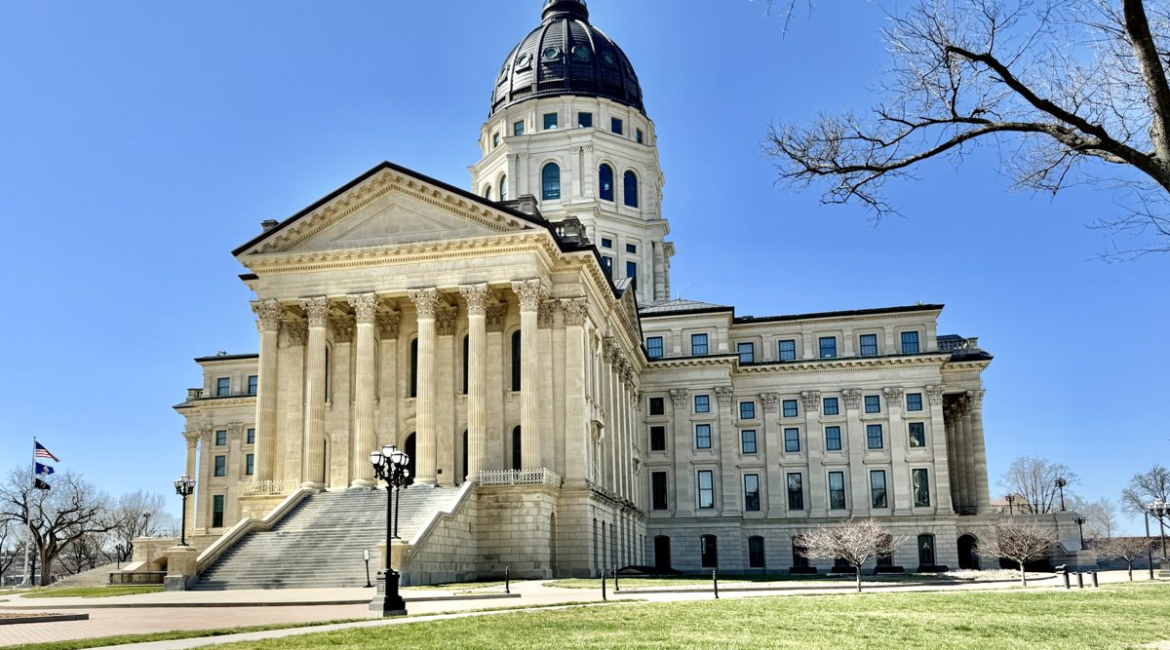
Two days before the midterm elections, President Donald Trump is spending his Sunday in two states he carried easily two years ago. He is scheduled to rally voters in Salina, Kansas, and Dubuque, Iowa, and the fact that those are the places he needs to be tells you a great deal about where the fight for the Senate stands.
Kansas has not sent a Democrat to the U.S. Senate since 1932. Trump won it by 16 points in 2024 and won Iowa by 13. Yet both states now have Senate races that public polls show as close, and Republicans are spending the final weekend defending ground they once considered safe.
A schedule that changed twice
The Sunday stops almost did not happen. Trump had initially canceled both appearances in favor of a series of telephone rallies, then reversed course on Friday, Al Jazeera reported. NBC News reported that the president planned roughly 20 tele-rallies for candidates around the country and had already held 25 in-person rallies over the past month. NBC also reported that the costs of the Iran war have helped turn Kansas into a toss-up.
Explaining the reversal, Trump said “they said if you could go, it would be better than a tele-rally,” according to USA Today. Speaking about Kansas Sen. Roger Marshall, Trump said, “Because I think he’s doing well,” according to NBC.
Doug Heye, a Republican strategist and former communications director for the Republican National Committee, told Al Jazeera the rallies “never should have been cancelled to begin with.” In his view, “Whether they help or not, they certainly help Trump to show that I’m out there trying to do the things to get my people over the line.”
Kansas: a Republican seat in play
Marshall, the Republican incumbent, faces Democrat Adam Hamilton. A Washington Post-Schar School poll released Friday showed Hamilton ahead 52% to 43%, while an Emerson College survey had Hamilton up by a narrower 50% to 47%, according to Al Jazeera. USA Today noted that a CNN poll showed Hamilton ahead by 4 points.
Those numbers should be read with care. Heye questioned the nine-point Post-Schar margin and pointed to the Des Moines Register’s final 2024 Iowa poll, which showed Kamala Harris ahead by 3 points shortly before Trump carried the state by about 13. “A lot of Republicans just don’t want to answer calls from pollsters,” he said. Al Jazeera reported that rising farm costs and opposition to the administration’s immigration crackdown have helped make the race unexpectedly competitive.
USA Today also reported that Trump’s approval rating is underwater in both Kansas and Iowa, which helps explain why Republican candidates there want him on stage for turnout but are also campaigning hard on local issues.
Iowa: an open seat and a home-turf rally
In Iowa, Republican Rep. Ashley Hinson is running for the Senate against Democrat Josh Turek. USA Today reported that Hinson leads the RealClearPolitics average by less than a point. Dubuque sits in Iowa’s 2nd Congressional District, the seat Hinson currently holds, so Sunday’s rally is aimed squarely at the voters who know her best.
The national picture
Nationally, the environment favors Democrats. The RealClearPolling average of the generic congressional ballot shows Democrats ahead 51.5% to 43.1%. A THP/MM survey taken October 28-29 had Democrats up 54% to 41%, and an Emerson College poll found a 10-point Democratic lead, according to Al Jazeera.
The arithmetic of control is straightforward. All 435 House seats and 35 Senate seats are on the ballot. Democrats need a net gain of three House seats and four Senate seats to win both chambers. The Senate contests most likely to decide control are in Michigan, Texas, Kansas, Iowa, North Carolina and Alaska. More than 51 million Americans had already voted early or by mail, Al Jazeera reported, though early-vote totals do not reveal how those ballots were cast.
Pollster Natalie Jackson told Al Jazeera, “We can be fairly confident that Democrats will win the House majority, but the Senate picture is unclear.” She also warned that “In some individual races – particularly the close Senate races – we could see polling error that shifts the race in one direction or another,” and noted that pollsters have reported difficulty getting Republicans to respond, which could mean the polls understate GOP support.
Republicans are betting on exactly that. House Speaker Mike Johnson, campaigning in Michigan for Senate candidate Mike Rogers, predicted the party would “defy history,” according to Fox News. Fox reported that Republicans are counting on base enthusiasm to overcome voter concerns about inflation, fuel prices and the war with Iran. Historically, the president’s party usually loses seats in a midterm, which is the history Johnson hopes to defy.
The closing-argument problem
Both parties face the same question from voters: what will you do about the cost of living? Asked whether Republicans had found a convincing closing message, Heye answered, “No, they haven’t. That’s a big part of their challenge.” He said candidates should focus on energy, health care, groceries and other everyday costs. “Families are making very real economic decisions; you have to address to them what you’re going to do to solve those problems,” he said.
Democrats have their own weakness. Celinda Lake, a Democratic pollster working with Michigan Senate candidate Abdul El-Sayed, told Al Jazeera that “The feelings about the Democrats are negative, too, which is very different from, say, 2018, when Democrats were positively perceived.” Voters may want change without being sure either party will deliver it.
Our view
The views below are this magazine’s.
A Republican Senate majority that has to fight for Kansas is a majority that has stopped taking its voters for granted, or should. The lesson of the final weekend is not that conservative ideas have lost their appeal on the Great Plains. It is that voters in farm states are paying higher costs for fuel, fertilizer and groceries, and they want to hear specifically how their senators will bring those costs down.
Rallies can help turn out loyal voters, and a sitting president drawing a crowd in Salina or Dubuque is still a powerful thing. But Heye’s warning deserves attention from every Republican on the ballot: a closing message about what the other side will do wrong is not a substitute for a clear plan of what you will do right. On energy, that means expanding domestic production. On spending, it means restraint that eases pressure on interest rates. On agriculture, it means trade policy that opens markets instead of closing them.
Polls have been wrong before, in both directions, and Jackson is right that the votes, not the surveys, will settle it. Polls in most states close Tuesday evening. Whatever the outcome in Kansas and Iowa, the fact that they are competitive at all should change how both parties campaign in the heartland from here on.