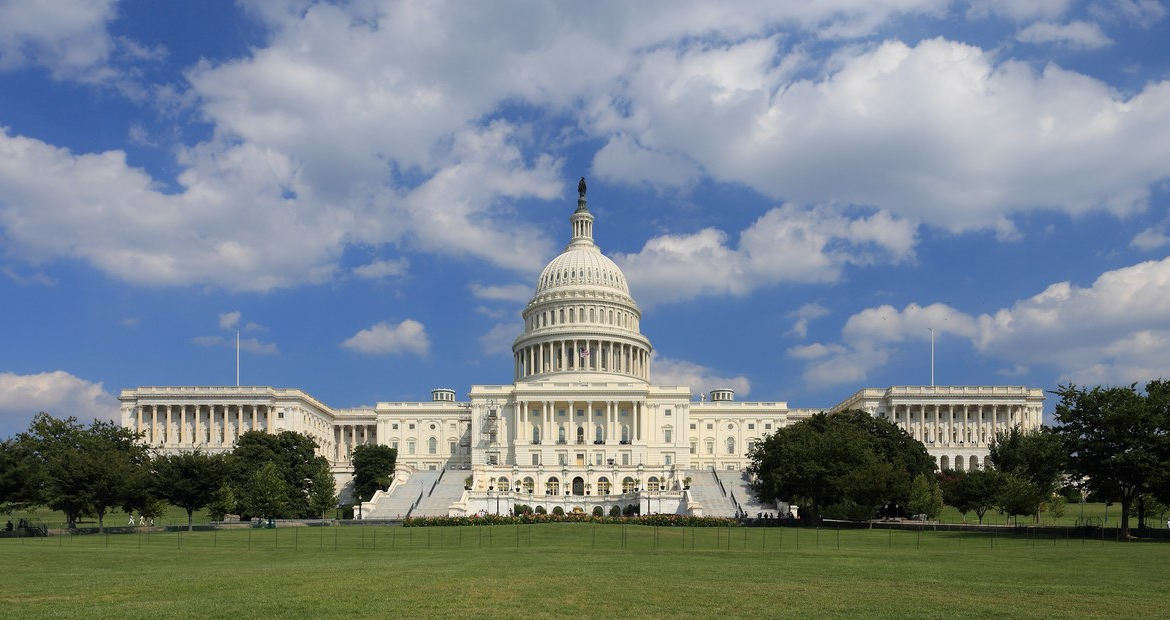
Congress has the power to declare war. Presidents have the power to command the armed forces. For half a century, the gap between those two sentences has been filled by improvisation, old authorizations stretched to new enemies, and a War Powers Resolution that every president since Nixon has treated as optional. The Iran war and the midterm verdict on it make the problem concrete again.
This is a solutions piece. It does not re-litigate every strike. It asks what durable rules would force Congress to vote, on the record, before the United States sustains overseas combat for months or years.
What the War Powers Resolution already requires
Congress enacted the War Powers Resolution (Public Law 93-148) over President Nixon’s veto on Nov. 7, 1973. A Congressional Research Service report summarizes the core design: the president must consult Congress “in every possible instance” before introducing U.S. forces into hostilities or imminent hostilities; must report to Congress within 48 hours; and, under Section 5(b), must terminate the use of forces within 60 to 90 days unless Congress authorizes the use or extends the clock.
In practice, the clock rarely runs. CRS notes that from 1975 through March 2017 presidents submitted 168 War Powers reports, but only one — the 1975 Mayaguez incident — cited the Section 4(a)(1) trigger that starts the withdrawal deadline, and even then the operation was already over. Presidents of both parties have introduced forces into hostile environments while arguing the Resolution is unconstitutional or inapplicable. Courts have mostly ducked the merits as political questions.
When Congress has spoken clearly, it has done so with specific Authorizations for Use of Military Force. Major modern examples CRS highlights include the 1991 Persian Gulf authorization, the 2001 AUMF after the Sept. 11 attacks, and the 2002 Iraq AUMF. Those votes mattered because they put members on record. The problem is the long afterlife: the 2001 AUMF in particular has been cited for operations far from the original theater and against groups that did not exist in 2001.
Why Iran makes the reform case urgent
The current conflict with Iran has been a central political fact of 2026. Voters just delivered both chambers of Congress to Democrats in an election widely read as a rebuke of the war’s costs. Vice President Vance said the war is why Republicans lost; President Trump called that largely true while defending the decision. Lawmakers in both parties are now talking about War Powers votes, oversight, and even Cabinet impeachment related to the conflict’s conduct.
Whatever one thinks of the underlying strategy, a sustained overseas war without a fresh, specific congressional authorization is exactly the scenario the 1973 Resolution was written to prevent. If the legal theory rests only on Article II self-defense, inherent powers, or an old AUMF aimed at someone else, voters never get a clean yes-or-no from their representatives. That is bad for constitutional structure, and it is bad politics for whoever holds the White House when the bills come due.
Four concrete reforms
1. Automatic funding cutoff after 60 days without an AUMF. Amend the War Powers framework so that, after U.S. forces have been in hostilities for 60 days, no appropriated funds may be obligated for those hostilities unless Congress has passed a joint resolution or specific AUMF covering them — with a short, defined wind-down period for withdrawal and force protection. Presidents already face a theoretical 60-day clock. Make the clock bite by tying it to the power of the purse, which courts are more willing to enforce than abstract consultation duties. Exempt genuine rescue, embassy protection, and short counter-attacks on forces already under fire, tightly defined.
2. Require a contemporaneous joint resolution for sustained campaigns. For any operation expected to last more than 30 days or to involve repeated strikes on another state’s territory, require the president to transmit a proposed joint resolution within 48 hours of first hostilities, and require both chambers to vote within a fixed number of legislative days under privileged procedures. No quiet letters. No forever-green 2001 citations for a new state adversary. If members support the war, they should say so on camera. If they oppose it, they should own that too.
3. Mandate public disclosure of the legal rationale. Within 48 hours of introducing forces into hostilities, the Office of Legal Counsel or equivalent should release an unclassified memorandum stating the constitutional and statutory theory — Article II, treaty, specific AUMF, or War Powers consultation — with a classified annex for sources and methods. Sunshine will not stop every bad war. It will stop some of the worst lawyering, and it will give Congress a target for hearings before the 60-day mark rather than after the bodies are home.
4. Sunset every AUMF. New authorizations should expire after two years unless reauthorized by law. Existing AUMFs from 2001 and 2002 should be brought to a reauthorization vote on a date certain, narrowed to named adversaries and theaters, or repealed. Sunset clauses are how Congress keeps wars from becoming permanent background furniture. They do not forbid war; they forbid war without periodic consent.
What this is not
These reforms are not isolationism. The United States will face real threats, including from Iran and its proxies. Commanders need flexibility for emergencies. The point is consent for sustained campaigns — the kind that reshape budgets, inflate oil prices, and decide midterms.
Nor is this a one-party cudgel. Democrats who discover War Powers only when a Republican sits in the Oval Office, and Republicans who discover them only under a Democrat, will keep losing credibility. Write the rules so they bind your own side. That is the only version that lasts.
How Congress can start in the lame duck
- Introduce a clean War Powers enforcement bill with the funding cutoff and privileged vote procedures, separate from any Iran policy rider that would guarantee a veto on substance alone.
- Force a floor vote on a narrow Iran-specific authorization or on a directed withdrawal timeline, so the public sees who stands where.
- Attach AUMF sunsets to the next National Defense Authorization Act, where defense bills already move.
- Demand the legal rationale memo for current hostilities as a condition of supplemental funding.
The bottom line
The Constitution’s war powers were written for a republic that feared standing wars as much as standing armies. The 1973 Resolution tried to restore that balance and mostly failed, not because the idea was wrong, but because Congress would not enforce its own work and presidents would not volunteer for handcuffs.
Conservatives who believe in limited government should be first in line to fix that. A president who can wage a long war without a vote can also spend, regulate and surveil without a vote. Restore the authorization requirement, put a hard funding stop behind it, disclose the legal theory, and sunset what you pass. Then, when America fights, it fights with the people’s representatives on the record — which is the only durable way a free country goes to war.
War Powers history is drawn from the statute and CRS Report R42699. References to the Iran war and midterm politics describe publicly reported debate; this article does not invent operational details or casualty figures.