Whoever wins on Tuesday, the first big test for Congress comes just five weeks later. The stopgap law that is keeping the federal government open runs out on December 11. If lawmakers miss that deadline, a funding gap begins on December 12, about a year after the longest shutdown in American history ended in November 2025.
There is a better way, and a bipartisan bill to accomplish it is already sitting on the Senate calendar. This piece looks at what is coming, what shutdowns cost and how a well-designed automatic continuing resolution could end them for good.
Where the budget stands
The current continuing resolution, Public Law 119-103, was signed in early September and funds the government from October 1 through December 11, a span of 72 days, according to the Congressional Research Service. It took three votes to get there: the House passed its version 220-205 on July 21, the Senate passed an amended version 90-6 on August 8, and the House agreed 370-48 on September 1.
Not one of the regular fiscal 2027 appropriations bills has been enacted. CRS reports that the House has passed three of them and that the Senate Appropriations Committee had not reported any. That leaves a lame-duck Congress, some of whose members will have just lost their seats, to finish the year’s spending work.
The December deadline is crowded. The authority for the National Flood Insurance Program and for surface transportation programs also expires December 11, and several health care extensions and Temporary Assistance for Needy Families run out on December 31, according to an overview at gov.house. The same overview notes that appropriations leaders have not settled on an overall spending level, and that a $1.5 trillion defense request is part of the debate.
What shutdowns cost
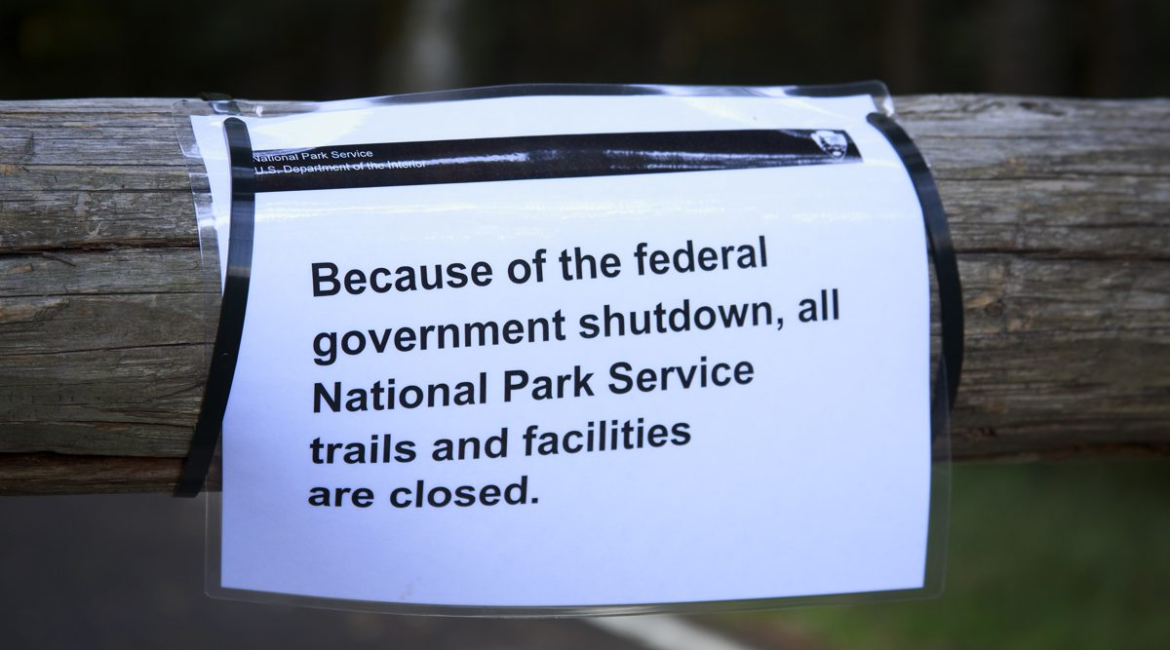
Americans got a fresh reminder last fall. The 2025 shutdown lasted 43 days, the longest ever, ABC News reported when it ended. About 670,000 federal workers were furloughed and roughly 730,000 worked without pay, according to the Bipartisan Policy Center figures ABC cited. Roughly 42 million SNAP recipients lost benefits during the lapse, and thousands of flights were canceled or delayed. The Congressional Budget Office had projected that a six-week shutdown would permanently cost about $11 billion in inflation-adjusted economic output, as ABC reported. According to a Bank of America Institute memo cited by ABC, the government has missed a funding deadline 20 times since 1977.
Shutdowns also cost taxpayers directly, which is the part fiscal conservatives should care about most. In 2019, the Senate Permanent Subcommittee on Investigations, led by Republican Rob Portman and Democrat Tom Carper, studied the three shutdowns between 2013 and 2019. It found they cost nearly $4 billion: $3.7 billion in back pay to furloughed employees who were barred from working, plus at least $338 million in extra administrative work, lost revenue and late fees. That added up to an estimated 56,938 years of lost work. The subcommittee said the true cost was likely higher because several large departments could not provide complete data.
In other words, taxpayers pay federal workers in full for work they are forbidden to do. “Federal government shutdowns don’t save money, they actually cost taxpayers billions of dollars,” Portman said at the time. The subcommittee’s main recommendation was for Congress to enact an automatic continuing resolution.
The states already do this
This is not a theoretical idea. Three states, North Carolina, Rhode Island and Wisconsin, automatically continue funding at the previous year’s level until a new budget is enacted, according to the National Conference of State Legislatures. Wisconsin’s law is simple: if lawmakers do not amend or eliminate an existing appropriation, “such existing appropriations provided for the previous fiscal year shall be in effect in the new fiscal year,” the statute says.
States without that safety net have paid for it. NCSL notes that Minnesota’s 20-day shutdown in 2011 furloughed 19,000 state workers and closed state parks at the height of summer, and New Jersey’s three-day shutdown in 2017 closed state beaches over the Fourth of July week.
The bill already on the Senate calendar
In Washington, the leading proposal is the Prevent Government Shutdowns Act of 2026, S. 4632, introduced by Sen. James Lankford of Oklahoma with Democrat Maggie Hassan of New Hampshire. Its cosponsors include Republicans Chuck Grassley and Joni Ernst and Democrats John Fetterman, Tim Kaine, Elissa Slotkin, Jacky Rosen and Mark Kelly, according to Congress.gov. It was placed on the Senate calendar on June 1 but has not received a vote.
The bill text works in two parts. First, if any appropriation lapses, funding automatically continues at the prior rate in 14-day increments, renewing every two weeks until Congress acts. Federal programs keep running, and workers stay on the job.
Second, and most important, the pressure shifts from the public onto Congress itself. During any automatic continuation, members of Congress, their staffs and Office of Management and Budget officials may not use official funds for travel, except for one trip back to Washington, and members may not use campaign money for official travel. Neither chamber could take up other business except spending bills, a debt limit measure and, after 30 days, a few top nominations and short-term program extensions. Neither chamber could recess for more than 23 hours, and the Senate would have to check for a quorum at noon every day. Waiving those rules would take a two-thirds vote, and only for up to seven days.
An earlier version, Portman’s End Government Shutdowns Act, took a different approach to keep an automatic CR from becoming a permanent autopilot: funding would fall by 1% after 120 days and by another 1% every 90 days after that, CBS News reported in 2019.
The objections
The most serious objection from the right is that an automatic CR gives up leverage: a shutdown threat is sometimes the only way to force spending cuts. The record does not support that. Shutdowns have rarely produced lasting savings, and the Senate investigation found they add costs. A built-in, gradual cut like Portman’s would create steady pressure in favor of restraint rather than a sudden crisis.
The objection from the left is the reverse: that frozen funding locks agencies at old levels. But Congress remains free to pass new spending bills at any time. An automatic CR only sets the default when it fails to do so.
Our view
The views below are this magazine’s.
Shutdowns punish the wrong people. Air traffic controllers, border agents and SNAP families bear the cost, while the officials responsible keep traveling, fundraising and campaigning. The Lankford-Hassan approach gets the incentives right by keeping the government open and keeping Congress in its chairs until it finishes the job.
The lame-duck session is a natural moment to act. With the election behind them, lawmakers will be freer to vote on process reform on its merits. Leaders could attach S. 4632, ideally with a Portman-style gradual spending reduction, to whatever bill passes before December 11. Wisconsin already works this way. Washington can too.