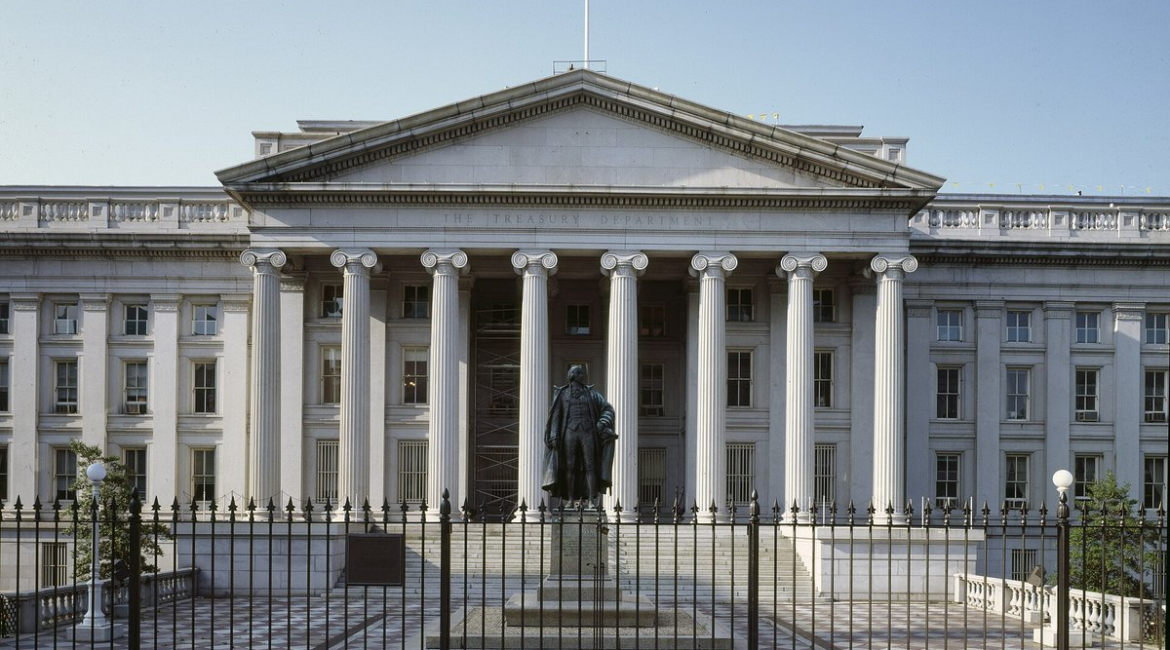
Every year Washington sends out tens of billions of dollars that it should not. These are not disputed policy choices about how much to spend. They are payments that went to the wrong person, in the wrong amount, or with no documentation that they were owed at all. In its most recent government-wide review, the Government Accountability Office found that federal agencies made an estimated $186 billion in improper payments in fiscal year 2025, up $24 billion from the year before. About $153 billion of that, roughly 82%, was overpayments.
Cutting this kind of waste should appeal to everyone. Those who want smaller government should want to stop paying people who aren’t eligible. Those who want strong safety-net programs should want the money to go to the people the programs were meant to help. The good news is that we already know a good deal about what works.
The size of the problem
GAO’s numbers are sobering. The FY2025 estimate covers 64 programs at 15 agencies, and 73% of the total comes from five program areas: Medicare, Medicaid, the Earned Income Tax Credit, the Supplemental Nutrition Assistance Program and the pandemic-era Shuttered Venue Operators Grant program. Nineteen programs reported error rates of at least 10%, and six reported rates above 25%. Since FY2003, agencies’ estimates of improper payments add up to about $3 trillion, according to GAO.
Some context is needed. GAO says the $24 billion increase comes mostly from programs that reported estimates for the first time, along with a rise in Medicaid errors tied to the end of COVID-era eligibility flexibilities. Not every improper payment is fraud. Many are paperwork failures, such as a payment that may well have been owed but wasn’t properly documented. But the estimates also understate the problem. The $186 billion does not include the Temporary Assistance for Needy Families program, for example. Separately, GAO has estimated that the federal government loses between $233 billion and $521 billion a year to fraud, based on 2018–2022 data.
Acting Comptroller General Orice W. Brown summed it up in April: “This $186 billion problem demands urgent action – agencies need stronger controls, better data, a commitment to accountability, as well as robust Congressional oversight.”
What already works: checking before paying
The clearest success story of the last few years is a simple one. Stop paying people who have died.
The Social Security Administration keeps the most complete federal record of deaths. For years, though, Treasury’s Do Not Pay system, which agencies use to screen payments, could see only a limited public version of that data. Starting in December 2023, under temporary three-year authority Congress granted in the Consolidated Appropriations Act of 2021, SSA began sharing its full death data with Do Not Pay. In its first year, that access produced a net $109 million in savings, a 2,377% return on investment, and savings were projected to reach $330 million by December 2026, according to a House Ways and Means Committee summary.
Congress then made the arrangement permanent. The Ending Improper Payments to Deceased People Act, Public Law 119-77, was signed on February 10, 2026. It permanently authorizes SSA to share its full death data with Do Not Pay, sets December 27, 2026, as the effective date for key changes, just as the temporary authority would have run out, and includes safeguards for living people wrongly listed as dead. SSA must have clear and convincing evidence before recording a death and must notify agencies when it corrects an error. That combination of better data with protections for people caught in mistakes is a good model.
Treasury’s own data analytics show the same pattern. In fiscal 2024 (October 2023 through September 2024), the department said it prevented or recovered more than $4 billion in fraud and improper payments, up from $652.7 million the year before. That included about $2.5 billion from screening high-risk transactions, $1 billion in check fraud recovered with the help of machine learning, $500 million through risk-based screening and $180 million from more efficient payment processing schedules. Treasury processes about 1.4 billion payments a year worth more than $6.9 trillion, so even small gains in screening add up.
A five-part plan
Here is what Congress and the agencies should do next. The proposals draw on GAO’s own recommendations. In March 2022 GAO sent Congress 10 matters for consideration on improper payments, and as of April 2026, nine of them were still open.
1. Make “check before you pay” the default everywhere. Every federal payment program, and every state-run program spending federal money, should have to screen payments against Do Not Pay and other federal eligibility data before money goes out, not after. In May 2024, Treasury and the Labor Department announced a partnership to give state unemployment agencies access to Do Not Pay data. That should be the norm for every federally funded benefit program, with funding to help states connect. GAO notes that the federal government sent an estimated $1.2 trillion to state and local governments in FY2025.
2. Treat every big new program as high-risk from day one. GAO recommends that any new program paying out more than $100 million in a single year be automatically treated as susceptible to improper payments and report error estimates quickly. Pandemic programs showed what happens without that rule. Large sums went out the door while the error estimates arrived years later.
3. End self-certification and plan for emergencies in advance. GAO warns that self-certification, where applicants simply attest that they qualify, should be avoided. Agencies should have eligibility checks and fraud controls designed before the next hurricane, wildfire or pandemic, so that speed and integrity do not have to be traded off in a crisis.
4. Give prosecutors time. Congress already extended the statute of limitations for fraud in the Paycheck Protection Program and COVID-19 Economic Injury Disaster Loan program from five years to 10. GAO recommends doing the same for unemployment insurance and Employee Retention Credit fraud. Otherwise, people who stole pandemic money may escape simply because the clock runs out before investigators reach their cases.
5. Hold agencies accountable for results. Inspectors general found that 12 of the 24 agencies responsible for nearly all improper payment estimates failed to fully comply with the Payment Integrity Information Act in FY2024. Congress should restore the requirement that agencies report on their antifraud controls in their annual financial reports, as GAO recommends. Programs that keep exceeding their error targets should face consequences, such as required corrective action plans, budget scrutiny and accountability for senior leaders. GAO notes that some agencies have already made senior leaders responsible for payment accuracy, and that approach should spread.
Why this is achievable
Several of these reforms are unglamorous. None requires choosing between compassion and fiscal discipline. The death-data sharing it made permanent returned many times its cost in its first year. Treasury’s analytics multiplied recoveries roughly sixfold in a single year. The tools exist. What is missing is the will to make them mandatory and the persistence to follow through after the headlines fade.
An error total of $186 billion is not a rounding error, even in a multitrillion-dollar budget. Recovering even a fraction of it, while protecting eligible beneficiaries from wrongful denials, would be a rare win that both parties could take credit for. The next Congress, whichever party controls it, should start with the nine GAO recommendations already on its desk.