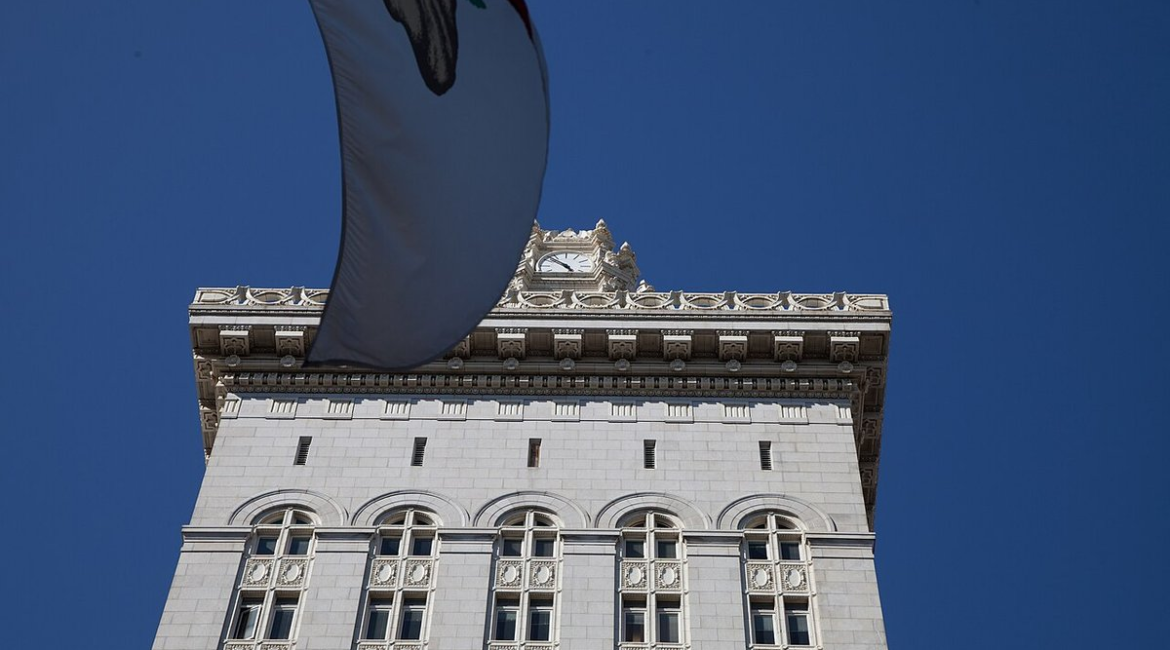
The most important corruption trial in California this fall is not happening in Sacramento or Los Angeles. It is unfolding in a federal courtroom in Oakland, where former Mayor Sheng Thao, her longtime partner and two local businessmen are on trial on charges that they traded the power of City Hall for money. On Friday, the government’s star witness took the stand and told jurors, in his account, exactly what the deal was supposed to be.
All four defendants have pleaded not guilty and are presumed innocent. What follows are allegations made by prosecutors and testimony from witnesses, some of whom have their own legal exposure. The jury, not the press, will decide what is true.
The charges
A federal grand jury returned an eight-count indictment on January 9, 2025, against Thao, her partner Andre Jones, and David and Andy Duong, whose family runs the recycling company California Waste Solutions and a modular housing venture called Evolutionary Homes, according to the U.S. Attorney’s Office for the Northern District of California.
The indictment alleges that during Thao’s 2022 campaign for mayor, the Duongs paid for a $75,000 negative mailer campaign against a rival and that after she took office, they paid Jones $95,000 for a job that required no real work. In exchange, prosecutors allege, Thao promised to use her office to have the city buy housing units from Evolutionary Homes, extend California Waste Solutions’ recycling contract, and appoint officials chosen by the Duongs. The government also alleges that the scheme involved shifting Thao’s rent and bills to Jones, false invoices, and a financial disclosure form that left out what it should have included.
The charges include conspiracy, bribery involving a program receiving federal funds, and honest-services mail and wire fraud, with an additional false-statement count against Andy Duong. The most serious counts carry a maximum of 20 years in prison. “The public deserves honesty and transparency from City Hall,” said Patrick D. Robbins, who led the U.S. Attorney’s Office at the time, when the case was announced.
The star witness
The case began, according to The Oaklandside, after checks written by businessman Mario Juarez to pay for the 2022 attack ads bounced. FBI agents raided homes connected to the Duongs and Thao in June 2024. Juarez later pleaded guilty to bribery conspiracy and is cooperating with prosecutors.
On Friday, he described the alleged arrangement in vivid terms. According to NBC Bay Area, Juarez testified that the plan called for Jones to receive $300,000 a year in a sham job, with the total potentially rising to as much as $3 million depending on how many homes the city purchased. “Then she threw a curveball,” Juarez testified, recounting what he said Thao told him: “I want $300,000 in exchange.”
Jurors also heard about a text that read “so we may go to jail,” and Juarez recalled a line about how “we’ll have $100 million in our bank account” if the deals went through, NBC Bay Area reported. He testified about an alleged plan to extend the recycling contract by 10 years and to secure a land lease at the former Oakland Army Base. Assistant U.S. Attorney Abraham Fine is leading the prosecution. Juarez is scheduled to return to the stand Thursday.
The defense has made Juarez’s credibility a central issue, pointing to lawsuits against him and alleged misconduct in his past, The Oaklandside reported. A cooperating witness who has pleaded guilty and hopes for leniency is exactly the kind of witness juries are told to weigh with care, and Chief U.S. District Judge Yvonne Gonzalez Rogers, who is presiding, will instruct them accordingly.
The “shelter crisis” testimony
Earlier testimony focused on how, prosecutors say, the housing purchase was supposed to get through City Hall without competition. According to AsAmNews, former senior city official LaTonda Simmons testified about a “shelter crisis” emergency declaration that could be used to bypass normal competitive bidding, and about an alleged March 9, 2023, meeting regarding the purchase of 300 units.
Not every city official’s testimony helped the government. Jestin Johnson, who served as city administrator under Thao, testified that he did not feel pressured by Thao, though he recalled her calling the Evolutionary Homes units “amazing,” AsAmNews reported. The defense seized on the structure of Oakland’s government: attorney Jeffrey Tsai argued that Oakland has a weak-mayor system in which the mayor cannot simply order purchases, and Johnson described the mayor’s role as more of a “cheerleader.” Defense attorney Shawn Halbert told jurors, “There is no slush fund,” and the defense has called the government’s theory a “conspiracy theory.” Supporters of the Duongs protested outside the courthouse.
A pattern worth noticing
Whatever the verdict, the case is part of a wider federal investigation. In February, San Leandro City Councilmember Bryan Azevedo pleaded guilty to accepting a $2,000 bribe plus a promised share of future sales and to lying to investigators, and agreed to cooperate, according to The Oaklandside. The same report noted that a Vietnamese American business association tied to the Duongs paid for a 2023 trip to Vietnam, and that Oakland’s Public Ethics Commission alleged in 2019 that the Duongs were involved in $51,000 in straw campaign donations.
That last point matters. Straw donations and pay-to-play contracting are not unusual crimes; they are the classic forms of municipal corruption. The fact that a local ethics agency had flagged problems years before federal agents arrived raises an uncomfortable question about whether local enforcement has the teeth to deter anyone.
Why it matters on Tuesday
Thao was removed from office in a recall election in November 2024. But the trial is overlapping with a decision Oakland voters will make on November 3. Measure EE would convert Oakland to a strong-mayor system, giving the mayor veto power, creating a legislative analyst for the City Council, and having council salaries set by the Public Ethics Commission, according to Oakland North.
Critics, including Steven Falk, warn that concentrating more power in the mayor’s office raises the risk of corruption, the very issue being tried in federal court. Supporters, including Gail Wallace of the League of Women Voters, argue that clearer lines of authority make it easier for voters to know whom to hold accountable. Both arguments have merit. The defense’s own claim that Thao lacked the power to deliver the alleged favors shows how a diffuse system can blur responsibility; the prosecution’s claim that she tried to steer a no-bid purchase anyway shows what can happen when a powerful office meets weak guardrails.
The lessons for any city
Conservatives have long argued that the best protection against corruption is limited government and transparent spending. The Oakland case, whatever its outcome, illustrates why. The alleged scheme depended on three things: a large city contract worth defending, an emergency declaration that could sidestep competitive bidding, and campaign money that could flow through intermediaries without being traced quickly.
Each of those has a fix. Cities can require competitive bids even under emergency declarations, with short deadlines rather than none. They can bar contractors and their families from contributing to officials who vote on their contracts. And they can give local ethics agencies the budget and subpoena power to act on red flags like straw donations before the FBI has to.
Thao and her co-defendants deserve their day in court, and they are getting it. Oakland’s taxpayers deserve a system that does not need a federal trial to find out whether City Hall is for sale.