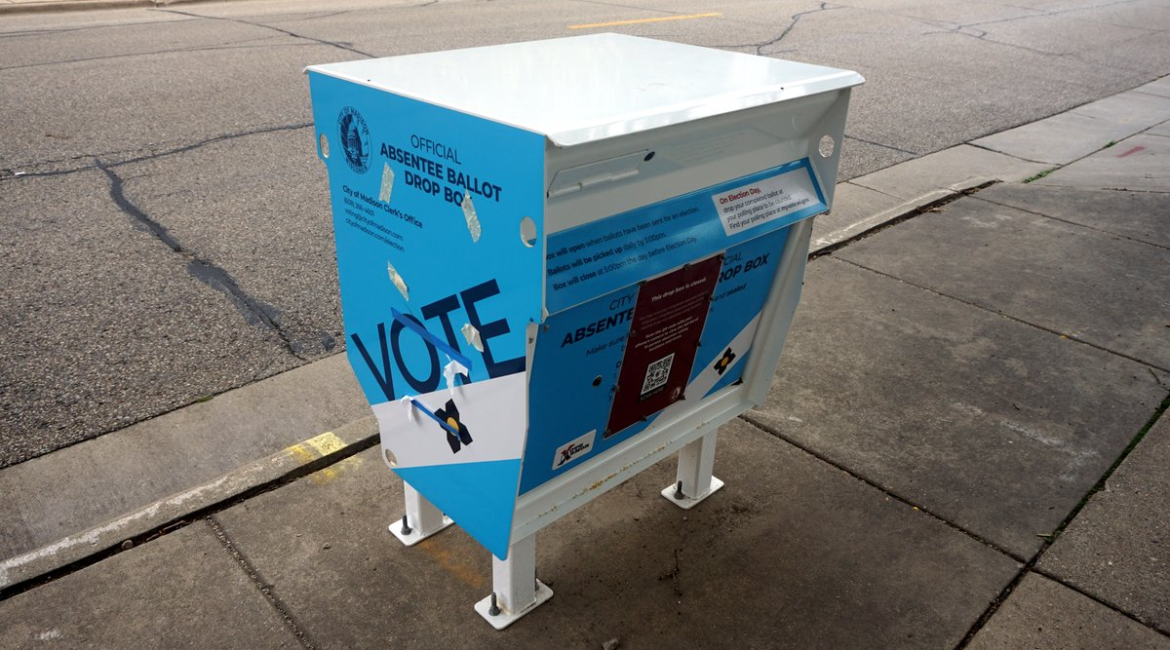
Tonight millions of Americans will refresh election maps waiting for answers, and in some states they’ll be waiting a while. In a few places that wait will run past bedtime. In others it could take days, and in a handful of close races, weeks. Slow counts don’t prove fraud, and anyone who says otherwise is misleading you. But slow counts do leave a vacuum, and rumor fills it. A self-governing people should be able to learn the unofficial results of most races on election night, and most states can already do it. The rest can catch up with a few practical reforms.
Why some states are fast and others are slow
The difference is mostly a matter of state law, not competence. In-person ballots are scanned as they are cast. Mail ballots are a different job: before a mail ballot can be counted, election workers must check the voter’s identity, often by matching a signature, then open the envelope, remove the ballot, flatten it and run it through a scanner. That work is what election administrators call pre-processing, or “pre-canvassing.”
According to a Center for Election Innovation & Research survey current as of Aug. 24, 2026, 45 states and the District of Columbia let officials process mail-ballot envelopes before Election Day; only five do not. At least 33 states allow ballots to be scanned before Election Day, while three, Alaska, Alabama and Mississippi, allow scanning only after polls close. No state releases any results before the polls close, so early processing doesn’t leak results. It only means officials aren’t starting from zero at 8 p.m.
Florida is the model often cited. It processes mail ballots as they arrive and can scan them after public testing of its tabulators, per CEIR. Its mail ballots also generally must arrive by the time polls close. In August, three hours after polls closed in the state’s primary, Florida had reported enough votes for the Associated Press to call almost all of its dozens of contested races, the New York Times reported, as excerpted on Election Law Blog. Texas lets counties of 100,000 or more begin counting four days before Election Day. Georgia allows scanning starting the third Monday before the election. Michigan lets cities of 5,000 or more tabulate during the eight days before Election Day.
Then there are the holdouts. In Pennsylvania, officials may not begin processing mail-ballot envelopes until 7 a.m. on Election Day. In Wisconsin, processing can begin only after polls open, per CEIR. Those rules produce the familiar late-night swings. In 2020, as PolitiFact recounted via PBS, Donald Trump led Wisconsin by more than 100,000 votes early in the night; the picture shifted after Milwaukee’s central count finished processing mail ballots around 3:30 a.m. Nothing about that was improper. But it was predictable and avoidable, and it fed years of suspicion.
Reform 1: Let officials prepare mail ballots in advance
The single most effective fix is to let election workers verify and prepare mail ballots, and ideally scan them, in the days before Election Day, under observation by both parties, with no results produced until polls close. Florida, Texas, Georgia and Michigan, states run by Republicans and Democrats alike, already do some version of this.
Pennsylvania is the clearest case for change. House Bill 37, which would let counties pre-canvass mail ballots before Election Day, passed the state House on June 9, 2026, and was referred to the Senate State Government Committee on June 18, where it remains, according to legislative records. Votebeat reported that no major election bill has become law in Pennsylvania since no-excuse mail voting began in 2020, and that Senate Republican leaders have insisted any election legislation include expanded voter ID requirements.
That points to the obvious deal. Pair pre-canvassing with a reasonable voter ID requirement, and both parties get something their voters want: faster results and stronger verification. Wisconsin’s legislature should take up the same bargain on its own processing rules.
Reform 2: Ballots should arrive by Election Day
The second-biggest driver of slow counts is the ballot that shows up after the election. California counts ballots postmarked by Election Day that arrive up to a week later. “You’ll get, like, a million mail ballots dropped off on Election Day, and it’s just a huge logistical issue to process those,” University of Florida political scientist Michael McDonald told the Times.
In June, the U.S. Supreme Court held 5-4 in Watson v. Republican National Committee that federal law does not forbid Mississippi’s five-day postmark grace period. Justice Amy Coney Barrett wrote that the policy question belongs to legislatures. Justice Samuel Alito, joined by Justices Clarence Thomas and Neil Gorsuch, dissented, and Justice Brett Kavanaugh joined most of the dissent. About 14 states plus D.C. accept some ballots that arrive after Election Day, according to Voting Rights Lab.
The Court has handed the question back to the states, and states should answer it with a clear rule: ballots in hand by the close of polls. Ohio did exactly that in a 2025 law, ending its four-day grace period for most absentee ballots, PBS reported. Military and overseas voters, whose ballots really do face long transit times, should keep the extended return windows many states give them. For everyone else, an Election Day deadline gives a firm finish line. It also makes it impossible to argue afterward that ballots were cast after the results were known.
Reform 3: Tell the public what’s left to count
Much election-night anxiety comes from not knowing how many ballots remain. Every state should require counties to post, on election night and at fixed intervals afterward, the number of ballots received but not yet counted, broken down by type: mail, provisional, and ballots awaiting a signature fix. A voter who can see “12,000 mail ballots from County X remaining” is far less likely to believe a “ballot dump” story than one watching numbers jump without explanation.
States should also set firm, published deadlines for voters to correct, or “cure,” a missing signature, so the tail end of the count doesn’t drag on open-ended.
Reform 4: Encourage early returns and verify every count
Voters can help. The U.S. Postal Service recommends mailing a ballot at least a week before the deadline, PBS noted. States that want faster results should say so loudly, and make in-person early voting and secure drop-off easy to use well before Election Day.
Speed must never come at the expense of accuracy. Officials in all 50 states already conduct some form of post-election audit, according to Votebeat. Legislatures should make sure those audits are routine, public and bipartisan, so a fast count is also a verified one.
The conservative case
None of this asks conservatives to give ground on election integrity. It advances it. Verified identity, ballots in by Election Day, observers in the room, public tallies of what’s outstanding, and audits afterward are an integrity agenda. Faster counts take away the oxygen conspiracy theories need, on the right and the left.
Florida shows a large, politically divided state can count quickly and confidently. Tonight, if your state is still counting at breakfast, call your state legislator tomorrow and ask why.