For most of this century, the rule of thumb about Election Day was simple: whoever turned out their people won. In 2026 that rule comes with a twist. Democrats have banked a large lead in ballots cast before today. Republicans are betting that their voters, who increasingly prefer to vote in person on the day itself, will erase that lead before the polls close. Which side is right will decide more than control of Congress. It will also show whether the GOP’s turnout strategy still works in a midterm with an unpopular economy.
The early-vote numbers
More than 54 million Americans voted before today, NPR reported, or nearly half of the total ballots cast in the last midterm. USA Today, citing the University of Florida Election Lab, put the figure at about 54 million, roughly 8 million more than in 2022.
Twenty-seven states report the party registration of early voters. In those states, the early electorate was 43 percent Democratic, 32 percent Republican and 25 percent independent or unaffiliated, according to USA Today’s analysis. NPR described the Democratic edge in early ballots as double-digit.
The state numbers show how much early voting has grown. Texas recorded about 7.7 million early votes, approaching its midterm record of 8.3 million. Georgia reported 2.8 million, up 13 percent. Michigan’s 2.3 million was up 26 percent. North Carolina reached roughly 2.8 million, up 31 percent, and South Carolina jumped to 1.1 million from about 620,000, a 75 percent increase.
Party registration is not a vote count. Registered Republicans may cast ballots for Democrats, and the other way around, and independents can break either way. Still, the numbers tell us who has already voted, and so who each campaign must still reach today.
The Republican bet
Republicans’ answer is that their voters simply haven’t shown up yet, by design. NPR noted that GOP voters now cast ballots “overwhelmingly in person on Election Day.” The Washington Post reported Monday that the party’s fate hinges on Election Day turnout this year. That is a notable shift from 2024, when Republican leaders urged supporters to “bank” their votes early and by mail.
The Post also reported that much of the party’s ground game has moved to outside groups, including Elon Musk’s America PAC, that took on organizing work once handled by the Republican National Committee. Outside groups can spend heavily, but when a party depends on them it gives up some control over who gets contacted and when. The Post further reported that some base voters have told organizers they are considering sitting out or crossing over. How large that group is, the Post’s reporting doesn’t establish, and today’s returns will.
Some prominent Republicans aren’t hiding their nerves. Sen. Ted Cruz, speaking on his podcast “The Verdict” on Oct. 30, said, “I am deeply, deeply worried,” and warned, “It would be a bloodbath,” as quoted by USA Today. Michael McDonald, the University of Florida political scientist who runs the Election Lab, offered a cautionary note in the same report: “It would be highly unusual for Election Day to be dramatically different than in the past.”
Put another way: if Election Day voters break toward Republicans the way they have in recent cycles, the GOP will close some of the gap. Whether they close all of it depends on whether this year’s Election Day electorate is as big and as Republican as the party needs.
The headwinds
The national environment is not doing Republicans favors. An AP-NORC poll cited by USA Today found just 25 percent of Americans approve of President Trump’s handling of the economy. Pew Research Center found his approval among Hispanic Americans at 24 percent, down from 38 percent in February 2025. Those numbers matter most in places such as Texas and in the suburbs where Republicans gained ground two years ago.
That is why races in states Trump carried comfortably are suddenly in play. In Texas, Attorney General Ken Paxton faces Democrat James Talarico for the Senate. Gov. Greg Abbott is seeking a fourth term against Gina Hinojosa, Fox News noted. In North Carolina, former Gov. Roy Cooper faces Republican Michael Whatley for an open Senate seat. In Georgia’s governor’s race, Democrat Keisha Lance Bottoms faces Keith Jackson, per USA Today.
What the math looks like
Republicans hold the Senate 53-47, and 35 Senate seats are on the ballot, including special elections in Florida and Ohio, the Guardian reported. Thirty-nine governorships are also up. NPR reported that Democrats need to flip four Senate seats and that the party is clearly favored to flip only North Carolina. Apart from Maine, the remaining Republican-held toss-ups are in states Trump won by double digits. Republicans’ top Senate pickup target is Michigan.
In the House, Democrats are favored. NPR put the number of seats they need to flip at three; the Guardian described the requirement as a net gain of four. We could not reconcile the two figures from the reporting available, so readers should expect the precise number to vary by outlet tonight.
How to read tonight
The first polls close at 6 p.m. Eastern, with the first results expected from Kentucky and Indiana, per NPR. Texas polls close at 8 p.m. Eastern, with some areas closing at 9 p.m. Eastern, according to Fox News. Because early and mail ballots are counted on different schedules in different states, early returns may lean one way and then swing as Election Day votes, or late mail ballots, get added. NPR cautioned that counting in some places “could take days,” and in a few close contests possibly weeks.
That is normal, and partisans on both sides should say so out loud. The Associated Press reported that tens of thousands of volunteers will monitor polling places today, along with about 1,000 Justice Department monitors. Observers are a good thing. Rumors about “dumps” of ballots are not.
The bottom line
The Republican strategy this year has a certain old-fashioned logic: show up, in person, on the day federal law has set as Election Day since the 1840s. If it works, it will be because ordinary voters decided the stakes were worth a trip to the polls. If it falls short, the party will need to rethink how it builds turnout, and whether handing so much of that job to outside groups was wise.
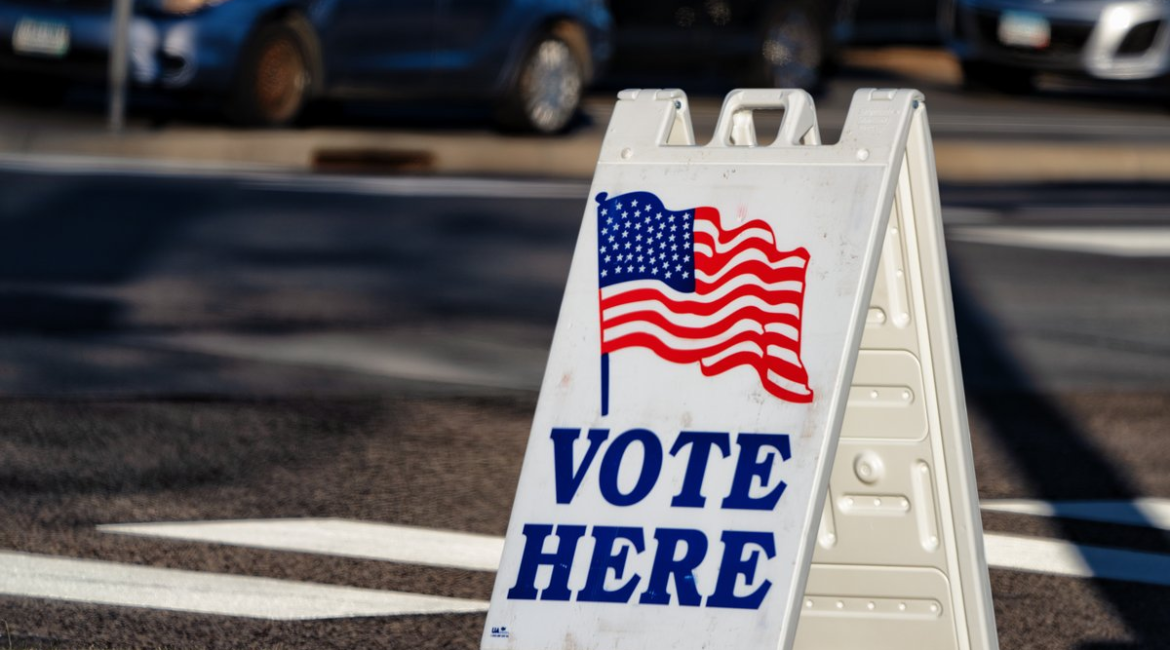
Either way, the outcome is still unwritten. If you haven’t voted yet, the polls are open. Go.