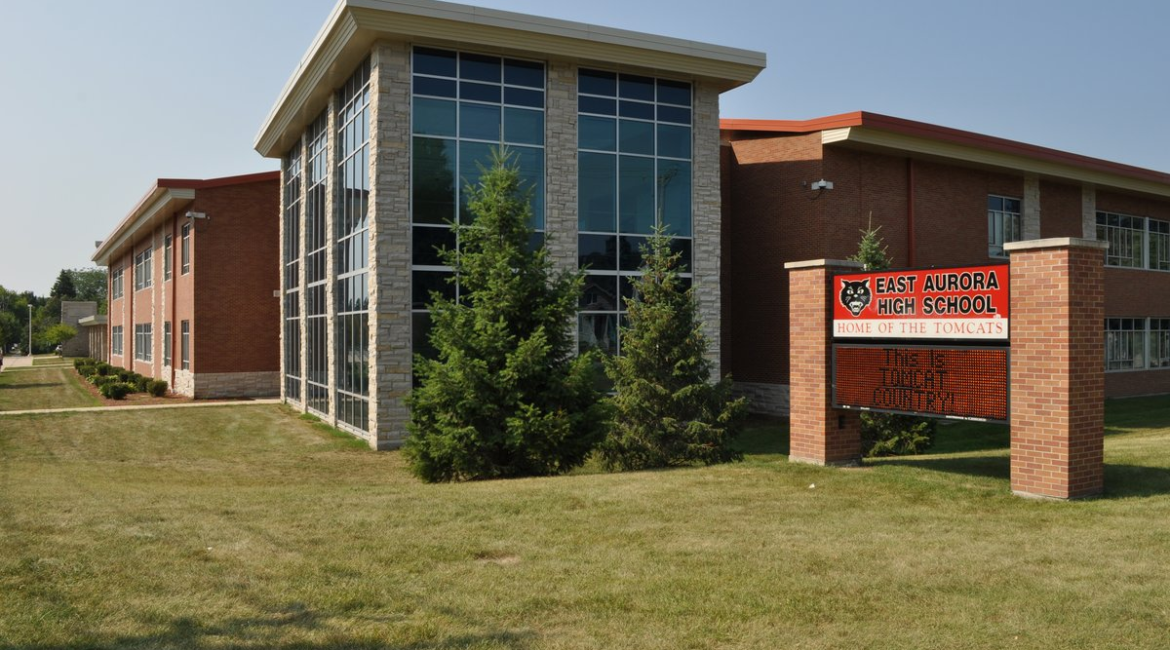
In 2021, school districts across the country were spending emergency federal money as fast as they could. Washington had sent it to reopen classrooms safely, and the pressure to spend it quickly was real. A federal indictment announced last week in Chicago alleges what that urgency could cover for.
On Oct. 27, a federal grand jury indicted Annette Johnson, a member and former president of the Board of Education of East Aurora School District 131 in Aurora, Illinois. She faces two counts of honest services mail fraud and one count of honest services wire fraud (indictment, U.S. v. Johnson, No. 1:26-cr-00559). Each count carries a maximum of 20 years in federal prison, according to the U.S. Attorney’s Office announcement (reprinted in full by McHenry County Blog).
The charges are allegations. Johnson is presumed innocent. Through her attorney, she says she will plead not guilty.
What the indictment alleges
According to the indictment and the U.S. Attorney’s announcement, Johnson steered District 131 to buy air purifiers from a vendor for about $2.7 million in 2021 and voted to approve the purchase. The district paid with Elementary and Secondary School Emergency Relief (ESSER) money. The indictment describes those funds as “set aside by Congress as part of the Coronavirus Aid Relief, and Economic Security (‘CARES’) Act” to address the pandemic’s impact on schools.
Prosecutors allege that Johnson and the vendor had a side arrangement the rest of the board did not know about. Part of the sale proceeds would go to a company where Johnson worked as chief financial officer and whose owner, the indictment says, was in a romantic relationship with her. Prosecutors say the vendor then sent that company a $1.3 million check labeled “commission.”
The Chicago Sun-Times, reviewing the indictment, reported that the board approved the purchase on Nov. 1, 2021. It also reported that Johnson later voted for a payment of about $201,000 for an “extended warranty” on the purifiers. CBS Chicago dated that second vote to 2023. According to the Sun-Times, the indictment says the companies paid Johnson $7,500 in 2021, income she did not list on her statement of economic interests filed with Kane County.
The case was investigated by the FBI and the U.S. Department of Education’s Office of Inspector General and announced by U.S. Attorney Andrew S. Boutros of the Northern District of Illinois.
Her side
Johnson’s attorney gave CBS Chicago a full denial: “Annette Johnson is innocent. This was the height of the pandemic, and getting children safely back into their classrooms was paramount. The Superintendent authorized this purchase in the best interests of the District and its students. The District received air purifiers that worked then and are still working today, and Ms. Johnson did not take a dollar from this transaction. She will plead not guilty.”
The district said in a statement that the allegations are “incredibly serious and concerning” but that Johnson “is entitled to a presumption of innocence,” and that it is cooperating with investigators (ABC7 Chicago). The district noted that no other current board member, administrator or employee is named as a co-defendant. Johnson still sits on the board; CBS Chicago reports her term runs through April 2029.
The warning signs that went nowhere
The criminal case will be decided in court. The accountability failure around it is already on the public record, and it is the part every taxpayer should study.
The disclosure forms were blank. Illinois requires local officials such as school board members to file annual statements of economic interests, and District 131’s own policy manual repeats the requirement, according to the indictment. The Sun-Times reported that Johnson’s statements “were left blank between 2012 and 2024.” For more than a decade, a form designed to expose conflicts of interest was filed with nothing on it, and nothing happened.
A challenge was raised and dropped. In 2024, an Aurora resident challenged Johnson’s eligibility for office, alleging a financial conflict of interest involving vendors, at least one of which had done business with the district. The Sun-Times reports that the board ruling on the challenge found it “didn’t have the authority to challenge the validity of her economic statements” and dropped the matter. A year later, Johnson listed an outside employer on her disclosure form for the first time.
The rules existed on paper. The indictment quotes District 131’s own code of conduct. It required board members to avoid “any conflict of interest or the appearance of impropriety” and barred any member from participating in “the selection, award, or administration of a contract supported by a federal award” if he or she had a real or apparent conflict. Federal grant rules (2 CFR 200.318) impose the same standard on recipients. The rules were not the problem. Enforcing them was.
Bigger claims, not yet charged. Aurora Mayor John Laesch, who served on the school board with Johnson from 2015 to 2019, has called for her resignation. He told the Sun-Times that a whistleblower came to him in 2024 and that records he gave investigators show $43.1 million flowing from the district between 2018 and 2023 to eight companies he says have ties to Johnson. Those are the mayor’s claims. They are not part of the indictment, and no charges have been filed over them. Whether investigators pursue them is an open question.
Not an isolated case
Pandemic-era education money has produced a steady stream of cases. In April, the U.S. Department of Education highlighted several findings by its Inspector General:
- A fraud scheme involving falsified documents and overbilling cost the Boone County, West Virginia, school district $3.4 million.
- Puerto Rico’s education department improperly used $3.9 million in ESSER funds on services that were not delivered as required.
- Wisconsin’s education agency approved more than $20 million in emergency aid for 184 ineligible nonpublic schools.
Some of these involved fraud. Others came down to poor controls. Together they show emergency money moving faster than the systems meant to watch it.
Voters noticed. In this week’s NBC News Exit Poll, 90% of voters said government corruption was a crucial or major factor in their vote (NBC News). Much of the money that matters most to families, though, is spent by local boards, not Congress, and those boards draw little attention.
What should change
Some of the fixes are simple and would cost almost nothing.
Reject blank forms. A county clerk should not accept an economic-interest statement with nothing on it. At minimum, every question should require an affirmative “none.” A form left blank for twelve years should trigger an automatic referral, not silence.
Match payments against disclosures. School districts already know who they pay. Comparing the vendor list each year against board members’ disclosed employers and business interests is a spreadsheet exercise. It should be required for any district spending federal grant money.
Give someone the authority to act. When a resident brings a credible conflict-of-interest complaint, there must be an office with the power to investigate it, whether a state ethics commission, an inspector general or the county state’s attorney. A complaint that dies because no one has jurisdiction tells every official that the rules are optional.
Disclose recusals. When a member steps aside from a vote because of a conflict, the minutes should say so and say why. When no one steps aside on a multimillion-dollar purchase, the board should affirm on the record that no member has an interest in the vendor.
None of this depends on how the Johnson case ends. If she is acquitted, the questions about the blank forms and the dropped challenge remain. If she is convicted, prosecutors will have done their part, years after the money was spent. Local oversight should catch these problems before a grand jury has to.
This article describes allegations in a federal indictment. An indictment is not evidence of guilt, and the defendant is presumed innocent unless proven guilty in court.