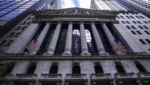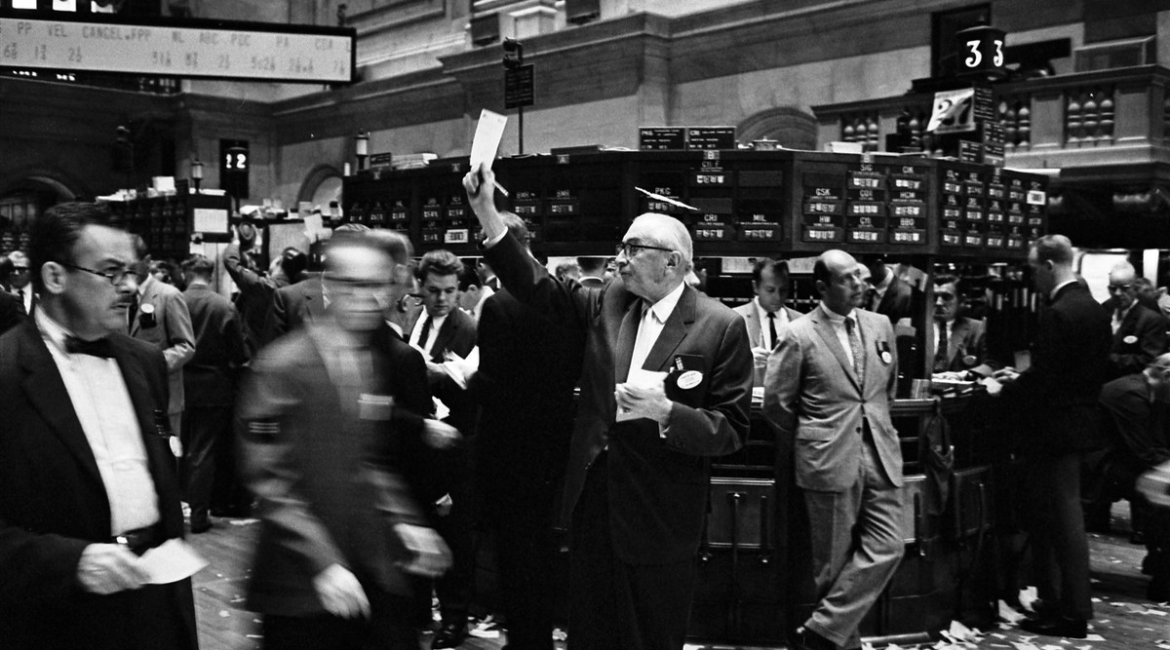
Wall Street gave back Wednesday’s post-election relief rally and then some. On Thursday, fears that a Democratic Congress will slow artificial-intelligence data-center buildouts collided with fresh doubt about whether the AI spending boom will pay off. The Nasdaq Composite fell into a correction. Chip stocks led the rout. Friday morning’s October jobs report then landed hot: 165,000 payrolls and a 4.1% unemployment rate, well above the ~59,000 consensus that had framed Thursday’s close.
Here is what moved Thursday, what Friday’s payrolls showed, and what that means for December at the Federal Reserve.
The sell-off, by the numbers
According to CNBC’s close tally, the Nasdaq Composite sank 5.5% into correction territory. The S&P 500 fell about 4.4%. The Dow Jones Industrial Average dropped roughly 1,833 points, or 3.4%. All three indexes posted their steepest one-day declines since the April 4, 2025, “Liberation Day” tariff shock.
The so-called Magnificent Seven lost more than $1 trillion in combined market value. Nvidia alone shed more than $440 billion and fell more than 9%, turning year-to-date negative at −2.6%. The Cboe Volatility Index, or VIX, jumped 11.57 points. Declining stocks on the NYSE outpaced advancers by almost 6 to 1. All 11 S&P 500 sectors finished negative; information technology fell 7.30%, its worst day since March 2020.
The BBC put the Nasdaq’s one-day market-value loss at an estimated $2.5 trillion and said AMD and Micron each dropped more than 17%. ETF.net, citing the Philadelphia Semiconductor Index, reported a 12.2% plunge in the Philly Semis benchmark, with Micron −17.5%, AMD −17.3%, and Nvidia −9.3%. The iShares Semiconductor ETF fell 12.1%.
That erased Wednesday’s big rebound. On Wednesday the Dow had jumped 1,569 points, or about 3%, as oil plunged and investors priced in more congressional oversight of the Iran war. Thursday was the reverse: tech sold first and hardest.
Why AI and data centers were the fuse
Investors are reassessing two things at once. First, returns on the vast sums already pledged to AI infrastructure. Second, politics. Democrats won both chambers of Congress on Tuesday, and candidates in several states campaigned against large data-center projects. The BBC quoted Sen. Bernie Sanders calling for a “national data center moratorium.” Texas’ Democratic governor-elect campaigned on slowing new construction in the sector.
President Trump blamed the slide on Democrats in Truth Social posts, saying the market “suffered one of the Worst Days in History based on the results of the Election” and later telling voters they had “only yourselves to blame.” Markets, for their part, are pricing policy risk: more scrutiny of AI buildouts, higher political friction for power-hungry campuses, and a less friendly path for the chip and cloud names that led the bull market.
Qualcomm and Arm earnings overnight added fuel. Outlooks that looked merely adequate were read as disappointing after years of AI euphoria, CNBC reported.
Oil, inflation and the Fed path
Oil remains a wild card. Wednesday’s nearly 9% plunge in crude, tied to hopes the midterms would curb further Iran-war escalation, took a big bite out of the war premium. Thursday was messier. CNBC reported Brent crude rose 3.8% to settle at $98.29 a barrel and West Texas Intermediate rose 2.7% to $90.52, as investors weighed de-escalation hopes against fresh reports of tanker attacks and supply risks. Even after the bounce, prices remain well below recent war-scare peaks — but inflation is still elevated, and the Fed has said so plainly.
Rate-hike odds have cooled from the week’s highs. After Wednesday’s hot ADP private-payroll and ISM services readings, markets had priced roughly four-in-five odds of a December hike (about 82% on CME FedWatch, as cited in contemporary market reports). By Thursday evening, a secondary report of CME FedWatch data via Longbridge/HKEJ put the probability of a 25-basis-point December hike at 68.7%, with a 31.3% chance of no change. Prediction-market chatter on X earlier pointed near 65%; treat that figure as unverified unless confirmed on Polymarket or Kalshi directly. The Fed’s next meeting is Dec. 8–9.
Friday’s jobs report — hotter than expected
The Bureau of Labor Statistics said October nonfarm payrolls rose by 165,000, and the unemployment rate edged down to 4.1%. That smashed the roughly 59,000–65,000 consensus that framed Thursday’s close (CNBC preview). CNBC called the print “way more than expected.”
Breadth mattered. Professional and business services led with +70,000. Health care added 42,000. Transportation and warehousing added 25,000, and manufacturing continued higher with +19,000. Average hourly earnings rose 0.4% on the month and 3.1% over the year, to $38.00. The average workweek held at 34.4 hours. August was revised up by 53,000 (to +186,000) and September by 31,000 (to +60,000), so the two prior months are a combined 84,000 stronger than first reported.
That is not the “low-hiring, low-firing” soft patch markets had been pricing into Thursday’s equity washout. A hot payroll print with firm wages keeps a December rate hike in play even after the AI-led sell-off. ABC News, citing CME FedWatch, put December hike odds near 68% in early post-report coverage — close to Thursday evening’s secondary FedWatch reading near 69%.
What to watch next
- Jobs follow-through: Whether markets reprice December hike odds after the 165,000 / 4.1% print, or treat it as one hot month.
- AI/chip follow-through: Whether Nvidia, Micron, AMD and the Philly Semis stabilize or extend the correction.
- Oil: Whether Brent holds below $100 amid Iran diplomacy and tanker-risk headlines.
- FedWatch: Whether December hike odds settle nearer 60% or climb back toward 80% after payrolls.
The bottom line
Thursday was a reminder that speculative corners of the market can reverse in a single session when politics and fundamentals line up against them. A Democratic Congress does not rewrite the laws of supply and demand for semiconductors overnight, but it can change the odds on permitting, power, and regulation for data centers — and markets price odds.
Conservatives who care about sound money should separate two stories. One is a legitimate repricing of AI exuberance. The other is the still-elevated inflation and energy risk that keep a December rate hike on the table. Families do not live on Nasdaq futures. They live on grocery bills, gas prices and mortgage rates. Friday’s jobs numbers say the labor market is still hot enough that Thursday’s sell-off looks more like an AI-policy repricing than a Fed pivot.
Market figures are from Thursday’s close unless noted. October employment figures are from the BLS Employment Situation release on Nov. 6, 2026. CME FedWatch probabilities cited via secondary reporting (Longbridge/HKEJ Thursday; ABC News Friday); verify on the CME FedWatch tool for the latest print.