
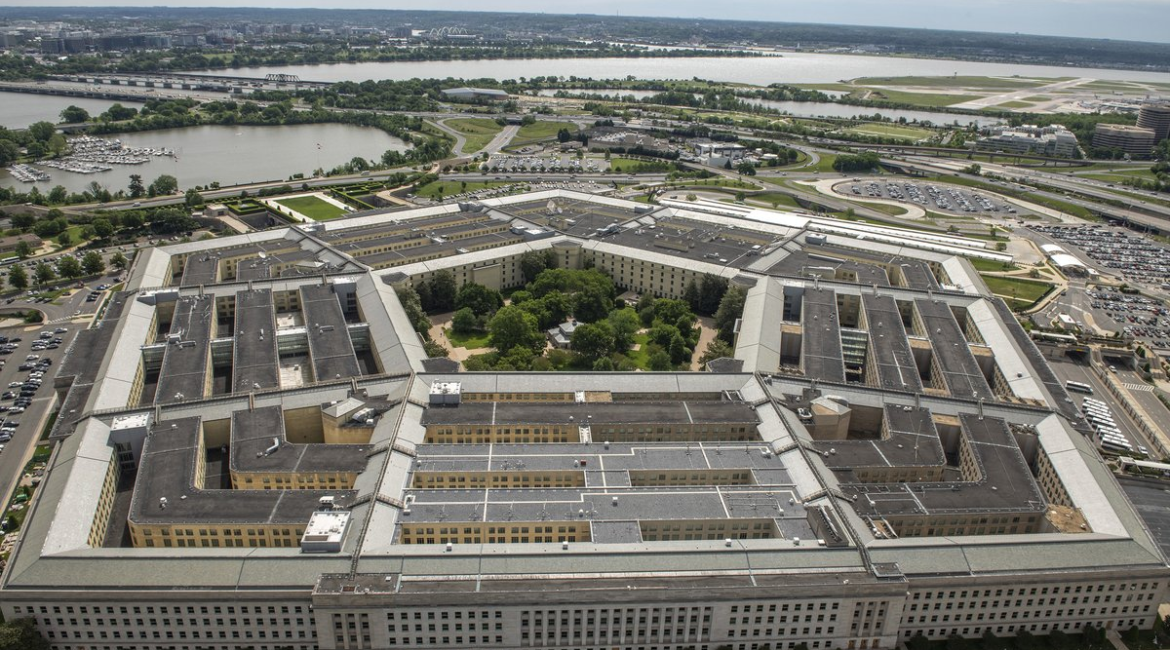
Sometime next month, if past years are a guide, the Pentagon will release the results of its ninth full financial audit. Nobody in Washington expects it to pass. The Defense Department has failed all eight so far, and it is the only one of the 24 major federal agencies covered by the Chief Financial Officers Act that has never received a clean opinion, the Government Accountability Office told Congress in May.
That would be embarrassing for any agency. For one that spends more than $1 trillion a year, owns about 82% of the federal government’s physical assets and has asked for $1.5 trillion for fiscal 2027, a 44% one-year increase, it is a national scandal hiding in plain sight. Supporting a strong military and demanding that it account for its money are not opposing goals. They are the same goal.
How bad is it?
For fiscal 2025, the department’s inspector general issued a “disclaimer of opinion,” meaning auditors could not even form a judgment because the records were not reliable enough. The audit covered $4.65 trillion in reported assets and identified 26 material weaknesses, according to the Congressional Research Service. The parts of the department that received disclaimers account for at least 43% of its assets and at least 64% of its budgetary resources.
The failures are specific. Auditors said the department could not “provide or obtain accurate and reliable data to verify the existence, completeness, or value” of global spare parts for the F-35, its largest weapons program, Breaking Defense reported. GAO says the department cannot produce a complete population of its own transactions and has not fully set up a reliable process to cut off computer access for employees who leave. Of the 17 most serious “scope-limiting” weaknesses identified in 2024, it has resolved one.
Progress exists, but it is slow. Auditors closed 1,004 of 2,972 open findings in fiscal 2025 and then issued or reissued 2,473 more. A House Oversight subcommittee scorecard, built with GAO’s help, gave the Army, Navy, Air Force and Marine Corps an “F” for closing findings and an “F” for fixing material weaknesses.
Audits pay for themselves
The argument for finishing the job is not just about accounting. GAO found that department components identified more than $16 billion in previously untracked assets and inventory between fiscal 2019 and 2023. The Navy found $4.3 billion in untracked equipment and supplies. GAO estimated the department avoided at least $5.5 billion in improper payments from 2020 to mid-2023 by using its Advana data platform. The Navy’s effort to shut down obsolete systems has produced more than $100 million in projected savings from 11 retired systems.
And it can be done. The Marine Corps received its first clean opinion for fiscal 2023 and has kept it for three straight years. That success required more than 70 site visits and testing of roughly 26 million assets, GAO reported, and the Corps still has seven material weaknesses to fix. But it proves the military can count what it owns.
Six fixes
1. Put real consequences behind the 2028 deadline. The fiscal 2024 defense authorization law requires a clean department-wide opinion by Dec. 31, 2028, and threatens to cancel 1.5% of certain unobligated funds for components that are not audited at all, CRS notes. It does not penalize components that are audited and fail. The bipartisan Audit the Pentagon Act of 2026 (H.R. 7555), introduced by Rep. Mark Pocan, D-Wis., with Rep. Andy Biggs, R-Ariz., among its cosponsors, would cut 0.5% from any component that cannot certify a clean opinion, rising to 1% in later years, with the money going to deficit reduction. It exempts military personnel and the Defense Health Program and allows a presidential national security waiver. Congress should adopt that model, starting after 2028 so the department has a fair runway.
2. Don’t let a paper opinion replace real controls. In early 2026 the department changed strategy, centralizing the effort under a new Joint Task Force Audit and focusing on documenting major account balances, often manually and with artificial intelligence tools, rather than fixing every control weakness first. GAO warned that this means key internal control problems may not be prioritized “for at least the next 2 years.” A clean opinion built on armies of temporary auditors could vanish the next year. Congress should require public, dated milestones for closing each material weakness, a step GAO recommended in 2023 that the department had not taken as of September 2025.
3. Kill the legacy systems. The inspector general has described an environment with outdated systems and about 2,000 system interfaces. Six of the 26 material weaknesses are related to information technology. Congress should set a hard sunset date for financial systems that cannot pass an audit and stop funding their upkeep after that date, as the Navy has started doing on its own.
4. Make fraud prevention someone’s job. In 2025 GAO expanded the department’s financial-management high-risk area to include fraud risk, noting that without stronger fraud controls, the department “cannot estimate the extent of fraud in its programs.” GAO said 15 reporting entities did not submit fraud risks in their assessments. Congress should create a senior fraud risk officer with authority to compel action across the services and require an annual public estimate of fraud exposure.
5. Tie big budget increases to accountability. GAO warned that rapid spending of new money from last year’s reconciliation law and the proposed 2027 increase “could stress already weak controls department-wide.” Appropriators should require detailed spending plans and quarterly reconciliations for any account that grows sharply while its component remains unauditable.
6. Keep the books visible. As part of its new approach, the department plans to cut the number of standalone financial statements; the Army’s will stop in fiscal 2027. GAO cautioned this “potentially risks limiting accountability and transparency.” Congress should keep separate audited statements for each military service so lawmakers and taxpayers can see where problems are.
The objections
Critics argue that funding penalties could hurt readiness. That is why personnel and health accounts should be exempt, the penalties should be modest and phased in, and a national security waiver should exist. Others note the audit itself is expensive; the department expects to spend $1.7 billion supporting it in fiscal 2027. But that is a small fraction of the assets that remain unverified, and the audits have already found far more than they cost in untracked property and avoided payments.
Some will say the Pentagon is too big to audit. The Marine Corps, and every other large federal agency, say otherwise.
The bottom line
The military asks Americans for an ever-larger share of their taxes, and in wartime it has a strong case for many of its needs. But a department that cannot say what it owns or confirm what it paid for will always invite waste and fraud. The ninth failed audit is coming. Congress should make sure there is never a twelfth.
Sources: Government Accountability Office, GAO-26-109115, testimony before the House Oversight Subcommittee on Government Operations (May 13, 2026), including the FY2025 DOD Financial Management Scorecard; Congressional Research Service, In Focus IF12627 (updated April 28, 2026); Breaking Defense (Dec. 19, 2025); text of H.R. 7555, Audit the Pentagon Act of 2026 (introduced Feb. 12, 2026). The timing of the fiscal 2026 audit release is estimated from prior years. Recommendations, including the start date for penalties, are this publication’s views.



