OPINION
Rob Henderson’s theory explains why the loudest crusades of affluent, college-educated progressives so often cost them little and cost working families a great deal.
Rob Henderson grew up in foster care, enlisted in the Air Force, went to Yale on the GI Bill, and earned a Ph.D. at Cambridge. Along the way he noticed something about the people at the top. A Yale classmate told him that “monogamy is kind of outdated” and not good for society. Then she told him she came from an affluent family and planned to have a monogamous marriage herself.[1]
Henderson gave the pattern a name. In a 2019 New York Post essay he called these “luxury beliefs”: “ideas and opinions that confer status on the rich at very little cost, while taking a toll on the lower class.”[1] He has since used a slightly shorter version, ideas and opinions “that confer status on the upper class, while often inflicting costs on the lower classes,” and he gave his fullest account of it in his 2024 memoir, Troubled: A Memoir of Foster Care, Family, and Social Class.[2]
The theory is simple. Status used to come from things: the fur coat, the yacht, the European car. Now that a middle-class family can lease a German sedan, the comfortable class needs something harder to copy. Opinions do the job, provided they are the right opinions, held loudly, and paid for by someone else. As Henderson put it: “If you have $50 and I have $5, you can burn $10 and I can’t.”[3]
Who actually holds them
The popular shorthand for this crowd is “liberal white women.” The data say to aim more carefully, because that label is too broad to be accurate.
White women as a group are not a progressive bloc. In Pew Research Center’s study of validated 2024 voters, white women favored Donald Trump by 4 points.[4] The divide that matters is class and education. Voters with four-year degrees backed Kamala Harris by 16 points, while voters without degrees backed Trump by 14. White college graduates made up a larger share of Harris’s voters (35%) than white voters without degrees (29%).[4]
Within that educated class, young women have moved sharply left. Gallup found that from 2017 to 2024, an average of 40% of women ages 18 to 29 called themselves liberal. That is up from 28% in 2001 to 2007, and 15 points higher than young men in the same period.[5] The political scientist Zach Goldberg, writing in Tablet in 2019, reported that white liberals “recently became the only demographic group in America to display a pro-outgroup bias.” He also quoted Vox’s Matthew Yglesias, whose account drew partly on Goldberg’s research, as writing that on race white liberals had moved “to the left of even the typical black voter.”[6]
Then there is the stereotype that these women have “nothing to occupy their time.” It is wrong, and we should say so. College-educated women are working in record numbers. Among women ages 25 to 54 with a four-year degree, labor-force participation reached 85.9% in 2024, the highest on record, compared with 71.0% for women without degrees.[7]
The leisure Henderson describes is not idleness. It is insulation. He says luxury beliefs advertise “how much leisure time” a person has “to adopt these fashionable beliefs.”[2] For the comfortable professional, that means the time and the cushion to hold an opinion without ever living with its results. And the professions where the luxury-belief class gathers, such as HR offices, foundations, newsrooms, school administration, and university departments, are exactly where opinions become rules for everyone else.
So the target here is not a race or a sex. It is a class: the affluent, credentialed, mostly upper-middle-class progressive activist, male or female, whose policies follow a pattern. The activist can afford to be wrong. The cashier, the electrician, and the single mother in the apartment downtown cannot.
Exhibit A: “Defund the police”
Henderson uses this as a textbook case. “You can scream ‘defund the police’ all day,” he wrote, “with the knowledge that you will not be personally responsible for whatever happens with policing policies.”[2] In a later essay he listed “defunding the police” with drug legalization and open borders as beliefs through which affluent people are “engaging in a status display.”[3]
The people who live where the police are needed most did not ask for this. In a Gallup survey taken in June and July 2020, at the height of the slogan, 81% of Black Americans said they wanted police to spend the same amount of time or more in their area. Only 19% wanted less.[8]
Then came 2020. The CDC recorded a 30% jump in the U.S. homicide rate, from 6.0 to 7.8 per 100,000. It was the largest one-year increase in modern record-keeping.[9] Many things drove that spike, including the pandemic, and no single slogan caused it. But the burden was not shared equally. CDC researchers found that firearm homicide rose most among young Black men. Rates “were lowest and increased least” in the lowest-poverty counties and rose most where poverty was highest.[9]
When Minneapolis, the city where the movement began, finally voted on replacing its police department with a new “Department of Public Safety,” voters said no, 56% to 44%. The two North Minneapolis wards that are home to much of the city’s Black population rejected it too.[10] The suburbs were never at risk. The North Side was.
Exhibit B: Zoning for thee, but not in my neighborhood
The familiar lawn sign proclaims that “in this house, we believe” in kindness, science, and justice. Then the same homeowner goes to the planning-board meeting.
Boston University political scientists Katherine Levine Einstein, David Glick, and Maxwell Palmer read the minutes of planning and zoning meetings in 97 Massachusetts cities and towns. They found that only 15% of speakers supported proposed new housing and 63% opposed it. Speakers were 25 percentage points more likely to be homeowners than the average voter. In Cambridge, among the most progressive cities in America, only 40% of commenters supported new housing.[11] The researchers concluded that opposition is “amplified in more advantaged communities.” Poorer neighborhoods, with looser zoning, end up absorbing the development pressure that wealthy ones block.[11]
Restricting supply in places where people want to live is a quiet way to protect your own home’s value while sending young families, teachers, and tradesmen on longer commutes. It costs the believer nothing. In fact, it pays her.
Exhibit C: Green virtue, billed to the renter
Energy is where the luxury-belief bill is easiest to read, because it arrives every month.
California has built the nation’s most aggressive climate agenda. In 2025 its average residential electricity price was 31.35 cents per kilowatt-hour, according to the Energy Information Administration. The national average was 17.23 cents, so Californians paid about 82% more.[12] Wildfire costs and grid spending are part of that, and honest critics should say so. But part of it is a subsidy that runs straight uphill.
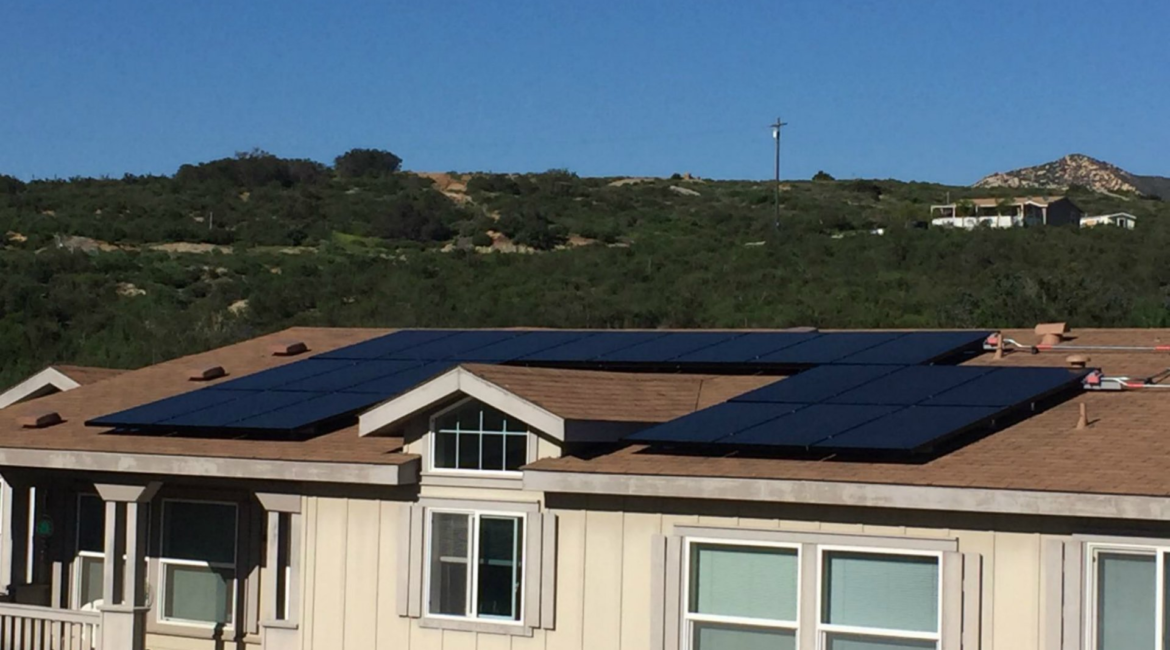
California’s own ratepayer watchdog, the Public Advocates Office, estimated that legacy rooftop-solar “net metering” would shift $8.5 billion a year onto customers without solar by the end of 2024. That is up from $3.4 billion in 2021, and the office estimated that roughly 16% to 23% of the average non-solar household’s bill would go to subsidizing the program. The office said these subsidies “disproportionately increase energy bills for renters and lower income households.”[13] Translation: the homeowner with panels on her roof gets a smaller bill, and the renter who can’t install panels pays more.
Nationally, electricity is getting more expensive. EIA’s November 2026 outlook puts the average residential price at 18.2 cents per kilowatt-hour this year, up from 17.2 in 2025, and 18.7 cents in 2027.[12]
The federal electric-vehicle tax credit followed the same pattern. Economists Severin Borenstein and Lucas Davis studied tax returns from 2006 to 2021. They found that the top fifth of earners received more than 80% of EV credit dollars, the top 5% received about 50%, and the bottom three-fifths received less than 3%.[14] Congress ended the new-EV credit for vehicles bought after September 30, 2025.[14] Until then, taxpayers helped buy the second car in the driveway of the people who lecture them about climate.
Exhibit D: Closed schools, and the kids who paid
During the pandemic, the comfortable class had a backstop: home offices, tutors, learning pods, and parents with college degrees at the kitchen table. Poor kids had a Chromebook and a spotty connection.
Harvard economist Thomas Kane’s team analyzed test data from 2.1 million students. They found that “high-poverty schools were more likely to go remote and their students lost more when they did so.” In high-poverty schools that were remote for more than half of 2020–21, the loss was “about half of a school year’s worth of typical achievement growth.” Kane estimated that students in those schools could see about a 5% decline in lifetime earnings. He noted that in places such as Texas and Florida, which stayed largely in person, the gaps by race and school poverty did not widen.[15]
Keeping schools closed was presented as caution. For the people who could afford private substitutes, it was cheap caution, and children with the fewest resources paid for it.
Exhibit E: Debt “relief” that runs uphill
Universal student-loan cancellation is a favorite cause on campus and in professional circles. Economists Sylvain Catherine and Constantine Yannelis calculated that under universal forgiveness, the average person in the top earnings decile would receive $5,944 in present-value relief, versus $1,070 for the bottom decile. The top 30% of earners would get almost half of all dollars forgiven.[16]
A fairness note: the narrower 2022 Biden plan, which capped income and added extra relief for Pell Grant recipients, was less tilted. Penn Wharton estimated that about two-thirds of its benefit would go to households earning under about $82,000.[16] The Supreme Court struck that plan down in 2023. But the bill for any cancellation still lands on every taxpayer, including the roughly six in ten adults over 25 who never earned a bachelor’s degree.[16]
Exhibit F: Marriage for me, “options” for you
Henderson’s original example is still his strongest. The affluent “are among the most likely to display the luxury belief that sexual freedom is great,” he wrote, “though they are the most likely to get married and least likely to get divorced.”[3]
The numbers back him up. In 1970, 81% of adults 25 and older with only a high-school diploma were married, slightly more than the 79% of college graduates. By 2024, according to Pew Research Center, the share had fallen to 50% among high-school graduates but stayed at 64% among college graduates.[17] The upper class kept the institution while telling everyone else it was optional, and working-class families are the ones who live with the consequences.
What to do instead
The instinct behind the complaint is right. Ideas that cost the people who promote them nothing should not get a free pass from the people who pay for them. Some practical rules:
- Make policymakers show who pays. Congress and state legislatures should require a published estimate of a new rule’s cost to middle- and lower-income households before it takes effect. That should cover energy mandates, zoning rules, and new benefit programs.
- End upside-down subsidies. Governors and state utility commissions should phase out rooftop-solar arrangements that shift costs onto renters. Congress should not revive tax credits whose benefits go mostly to the top fifth of earners.
- Build, don’t block. State legislatures should allow more housing by right near jobs and transit, so a handful of neighbors at a Tuesday-night hearing cannot veto a whole region’s supply.
- Fund the police people actually want. Mayors and city councils should listen to the 81% of Black Americans who want at least the same police presence, rather than to activists who live far from the consequences.
- Keep schools open and put kids first. Elected school boards and governors should write in-person learning into emergency plans, and spend recovery money on tutoring, not overhead.
- Say the quiet part about family. Civic, religious, and political leaders, including the college-educated people who marry, stay married, and raise children in stable homes, should be willing to say that marriage is good for children.
Henderson’s point is not that comfortable people are bad. It is that comfort makes it easy to be careless with other people’s lives. A conscience that costs nothing is not worth much, and it is time the people paying the bills stopped financing someone else’s status symbol.
Sources
Figures are quoted as published. Direct quotations were checked against the source text.
- Rob Henderson, “‘Luxury beliefs’ are the latest status symbol for rich Americans,” New York Post, August 17, 2019
https://nypost.com/2019/08/17/luxury-beliefs-are-the-latest-status-symbol-for-rich-americans/
Source for the Yale classmate who said “monogamy is kind of outdated” while planning a monogamous marriage herself, and for the original definition: “ideas and opinions that confer status on the rich at very little cost, while taking a toll on the lower class.” - Rob Henderson, Substack essays and memoir announcement
https://www.robkhenderson.com/p/troubled-a-memoir-of-foster-care https://www.robkhenderson.com/p/status-symbols-and-the-struggle-for https://www.robkhenderson.com/p/luxury-beliefs-are-like-possessions
Troubled: A Memoir of Foster Care, Family, and Social Class (Gallery Books) was released February 20, 2024. Henderson’s announcement describes it as “my fullest exposition yet of the luxury beliefs framework—ideas and opinions that confer status on the upper class, while inflicting costs on the lower classes.” “Luxury Beliefs are Status Symbols” (June 2022) contains the “while often inflicting costs” wording and the line about “how much leisure time they have to adopt these fashionable beliefs.” “Luxury Beliefs are Like Possessions” (May 2022) contains: “You can scream ‘defund the police’ all day with the knowledge that you will not be personally responsible for whatever happens with policing policies.” Biographical details (foster care, Air Force, Yale on the GI Bill, Cambridge Ph.D. in psychology, 2022) come from Henderson’s essays and Gates Cambridge. - Rob Henderson, “Thorstein Veblen’s Theory of the Leisure Class—A Status Update,” Quillette, November 16, 2019; updated version on Substack, January 29, 2023
https://quillette.com/2019/11/16/thorstein-veblens-theory-of-the-leisure-class-a-status-update/ https://www.robkhenderson.com/p/thorstein-veblens-theory-of-the-leisure
Quotations are taken from the updated 2023 Substack version, which Henderson says is “an updated version of an essay that was originally published in Quillette in 2019”: “If you have $50 and I have $5, you can burn $10 and I can’t”; “When an affluent person advocates for drug legalization, or defunding the police, or open borders, or loose sexual norms, or white privilege, they are engaging in a status display”; and the affluent “are among the most likely to display the luxury belief that sexual freedom is great, though they are the most likely to get married and least likely to get divorced.” - Pew Research Center, “Behind Trump’s 2024 Victory, a More Racially and Ethnically Diverse Voter Coalition” (validated voters), June 26, 2025
https://www.pewresearch.org/politics/2025/06/26/voting-patterns-in-the-2024-election/
White women favored Trump by 4 points; college graduates favored Harris by 16 points and non-college voters favored Trump by 14 points; White college graduates were 35% of Harris voters vs. 29% for White non-college voters. - Gallup, “Exploring Young Women’s Leftward Expansion,” 2024
https://news.gallup.com/poll/649826/exploring-young-women-leftward-expansion.aspx
Liberal identification among women 18–29: 28% (2001–2007), 32% (2008–2016), 40% (2017–2024); men 18–29: 25% in 2017–2024. - Zach Goldberg, “America’s White Saviors,” Tablet, June 6, 2019
https://www.tabletmag.com/sections/news/articles/americas-white-saviors
Quotes: white liberals “recently became the only demographic group in America to display a pro-outgroup bias”; Goldberg quotes Matthew Yglesias (Vox), whose account drew partly on Goldberg’s dissertation research: white liberals “have moved so far to the left on questions of race and racism that they are now, on these issues, to the left of even the typical black voter.” - Economic Policy Institute, “Women’s prime-age labor force participation rate by education level, 1976–2024” (CPS data)
https://www.epi.org/chart/lfpr-2025-figure-f1-women-with-a-college-degree-are-participating-in-the-labor-force-at-all-time-high-rates-womens-prime-age-labor-force-participation-rate-by-education-level-1976-2024/
Ages 25–54, 2024: 85.9% for women with a four-year degree (series high) vs. 71.0% without. EPI is a left-leaning think tank; the underlying data are federal Current Population Survey figures. - Gallup, “Black Americans Want Police to Retain Local Presence,” Lydia Saad, August 5, 2020
https://news.gallup.com/poll/316571/black-americans-police-retain-local-presence.aspx
Gallup Panel, June 23–July 6, 2020, n=36,463: Black Americans 20% more time, 61% same, 19% less. - CDC National Center for Health Statistics press release, October 6, 2021; CDC MMWR, “Vital Signs: Changes in Firearm Homicide and Suicide Rates — United States, 2019–2020,” May 13, 2022
https://www.cdc.gov/nchs/pressroom/releases/20211006.html https://www.cdc.gov/mmwr/volumes/71/wr/mm7119e1.htm
Homicide rate up 30%, from 6.0 to 7.8 per 100,000, the largest one-year increase on record. MMWR: firearm homicide rose 34.6%; largest increases among non-Hispanic Black males aged 10–44; rates “were lowest and increased least at the lowest poverty level.” The article does not claim the “defund” movement caused the increase. - City of Minneapolis, 2021 Ballot Questions results; MinnPost, “How every Minneapolis ward voted on each of the ballot questions,” November 3, 2021
https://vote.minneapolismn.gov/results-data/election-results/2021/ballot-questions/ https://www.minnpost.com/elections/2021/11/how-every-minneapolis-ward-voted-on-each-of-the-ballot-questions/
City Question 2 (replace the Police Department with a Department of Public Safety) failed, 80,506 no (56.17%) to 62,813 yes (43.83%). MinnPost: North Minneapolis Wards 4 and 5, “an area where a large portion of the city’s Black residents live, both rejected the measure.” Note: affluent Ward 13 also rejected it strongly; the article does not claim affluent wards backed it. - Katherine Levine Einstein, David M. Glick, and Maxwell B. Palmer, “Neighborhood Defenders and the Capture of Land Use Politics,” Data for Progress, March 12, 2019 (summary of their book research)
https://www.dataforprogress.org/blog/2019/3/12/neighborhood-defenders-and-the-capture-of-land-use-politics
Massachusetts planning and zoning minutes, 97 cities and towns: 15% of speakers supported new housing, 63% opposed; commenters 25 points more likely to be homeowners than voters; Cambridge 40% supportive; opposition “amplified in more advantaged communities.” - U.S. Energy Information Administration, Electric Power Annual Table 2.10 (2025 and 2024); Short-Term Energy Outlook, November 10, 2026
https://www.eia.gov/electricity/annual/html/epa_02_10.html https://www.eia.gov/outlooks/steo/report/elec_coal_renew.php
Residential 2025: California 31.35¢/kWh; U.S. 17.23¢/kWh (California about 82% higher). STEO: U.S. residential 17.2¢ (2025), 18.2¢ (2026 projected), 18.7¢ (2027 projected). - California Public Advocates Office (CPUC), “Rooftop solar incentive to cost customers without solar an estimated $8.5 billion by the end of 2024,” fact sheet, August 22, 2024
https://www.publicadvocates.cpuc.ca.gov/-/media/cal-advocates-website/files/press-room/reports-and-analyses/240822-public-advocates-office-2024-nem-cost-shift-fact-sheet.pdf
Cost shift from $3.4 billion annually (2021) to $8.5 billion (end of 2024) for PG&E, SCE, and SDG&E customers; about 16–23% of the average non-solar household’s bill goes to subsidizing the program; subsidies “disproportionately increase energy bills for renters and lower income households.” The solar industry disputes the office’s methodology. - Severin Borenstein and Lucas W. Davis, “The Distributional Effects of US Tax Credits for Heat Pumps, Solar Panels, and Electric Vehicles,” National Tax Journal 78(1), March 2025 (NBER w32688); IRS FAQ on Public Law 119-21 (One, Big, Beautiful Bill)
https://faculty.haas.berkeley.edu/ldavis/Borenstein%20and%20Davis%20NTJ%202025.pdf https://www.irs.gov/newsroom/faqs-for-modification-of-sections-25c-25d-25e-30c-30d-45l-45w-and-179d-under-public-law-119-21-139-stat-72-july-4-2025-commonly-known-as-the-one-big-beautiful-bill-obbb
2006–2021 tax data: top quintile received more than 80% of EV credits; top 5% about 50%; bottom three quintiles less than 3%. (Their 2016 study of 2006–2012 found about 90%.) The §30D new clean vehicle credit ended for vehicles acquired after September 30, 2025. - Harvard Gazette, “Remote learning likely widened racial, economic achievement gap,” interview with Thomas Kane, May 5, 2022 (CEPR/CALDER/NWEA study)
https://news.harvard.edu/gazette/story/2022/05/remote-learning-likely-widened-racial-economic-achievement-gap/
2.1 million students in 10,000 schools; “High-poverty schools were more likely to go remote and their students lost more when they did so”; remote more than half of 2020–21 in high-poverty schools: “about half of a school year’s worth of typical achievement growth”; expected 5% decline in career earnings; gaps did not widen in largely in-person states such as Texas and Florida. - Sylvain Catherine and Constantine Yannelis, “The Distributional Effects of Student Loan Forgiveness,” Becker Friedman Institute research brief, December 2020 (NBER w28175); Penn Wharton Budget Model, August 26, 2022; U.S. Census Bureau, September 3, 2025
https://bfi.uchicago.edu/wp-content/uploads/2020/12/BFI_RB_Yannelis_120620-1.pdf https://budgetmodel.wharton.upenn.edu/p/2022-08-26-the-biden-student-loan-forgiveness-plan/ https://www.census.gov/newsroom/press-releases/2025/educational-attainment-data.html
Universal forgiveness, present value: top earnings decile $5,944 average vs. bottom decile $1,070; top 30% of earners receive almost half of dollars forgiven. Penn Wharton on the 2022 Biden plan (with Pell bonus): about 67% of forgiveness to households under $82,400. The Supreme Court struck down the plan in Biden v. Nebraska (June 30, 2023). Census (CPS 2024): 40.1% of women and 37.1% of men 25 and older hold a bachelor’s degree or higher, so roughly six in ten do not. - Pew Research Center, “Currently married” chart, The United States at 250, March 25, 2026
https://www.pewresearch.org/chart/st_26-03-02_america250_married_education/
Adults 25+, currently married: 1970, high-school graduates 81%, bachelor’s+ 79%; 2024, high-school graduates 50%, bachelor’s+ 64% (less than high school 48%).