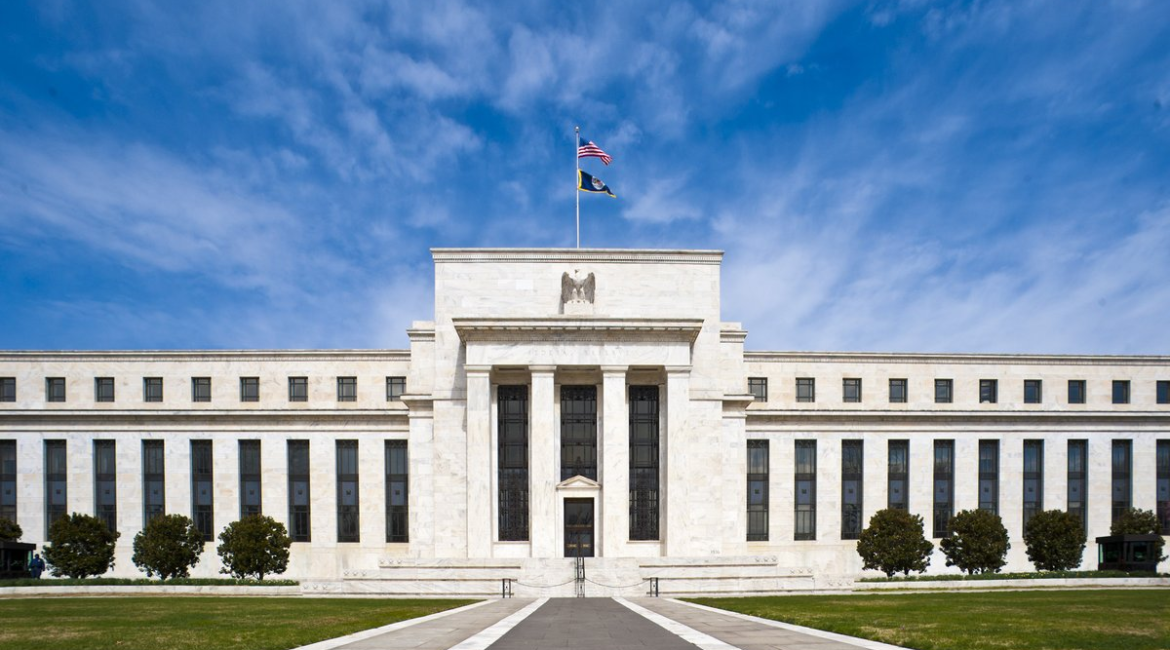
The Federal Reserve held interest rates steady last month. Minutes released Wednesday show that most officials expect to start raising them again soon. One of the Fed’s most influential governors said the central bank may need to “shock people” with a half-point increase in December. Markets responded quickly. Gold fell to its lowest price in 14 months, the dollar hit a 19-month high, and the S&P 500 fell for a fifth straight session.
For families, the message is that borrowing is likely to become more expensive before it gets cheaper. Here is what the Fed said, how markets reacted and what it means for anyone with a mortgage, a car loan or a retirement account.
What the minutes say
The minutes of the Oct. 27–28 meeting show the Federal Open Market Committee voted 10-2 to keep the federal funds rate at 3.75% to 4%. Governor Lisa Cook and Cleveland Fed President Beth Hammack dissented because they wanted a quarter-point increase immediately.
Most of the officials who voted to wait still expect to raise rates. “Almost all participants judged that, under their baseline outlooks for inflation and the labor market, further action to raise the target range for the federal funds rate … would likely be appropriate,” the minutes said. “A couple of participants” said an increase of more than a quarter point “could warrant consideration at the next meeting if incoming inflation data were unfavorable.”
The data since then have been unfavorable. As CNBC noted, October consumer prices rose 0.4% overall and 0.3% excluding food and energy. Both readings were a tenth of a point above forecasts.
The minutes give three reasons for officials’ concern:
- Inflation is widespread. Several officials said tariff-related price effects “appeared to be waning,” but most said “inflation pressures in the economy were broad based.”
- Energy prices remain high. “The vast majority” said high energy prices were still pushing up inflation, nearly nine months into the Iran war.
- AI spending is raising prices. Many participants said demand tied to the AI buildout was “continuing to strain supply and raise prices of technology-related consumer goods.” Several said price pressures were spreading beyond industries tied directly to data-center construction. Many called the AI buildout “a material source of inflation risk.”
The section on financial stability raised further concerns. Fed staff warned that “off-balance-sheet leasing commitments and circular financing arrangements among AI-related firms could amplify losses if returns on AI investment were to disappoint.” Most participants said AI-related debt “had grown rapidly,” much of it “through complex and opaque financing structures.” Some also raised concerns about “the level of government indebtedness, rising long-term yields, and financial stability.” Fiscal conservatives have made the same argument for years.
Waller wants a bigger move
A few hours before the minutes came out, Governor Christopher Waller went further than any of his colleagues have in public. “I’m very, very concerned about inflation. It’s kind of headed in the wrong direction, and it’s spreading out,” he told CNBC’s “Squawk Box.” “If you really want to get it down, you’ve got to start taking more aggressive actions. … You might need to, like, shock people.”
Waller said a half-point hike at the Dec. 8–9 meeting is probably necessary. The alternative, he said, would be a quarter-point increase together with a clear signal that another hike is coming in January. Chairman Kevin Warsh has opposed that kind of advance commitment. Waller also said the Fed should first reverse the three “insurance” rate cuts it made in 2025 and might need to go further.
Other officials are more cautious. New York Fed President John Williams said Tuesday, “I don’t think the situation calls for dramatic action.” St. Louis Fed President Alberto Musalem has suggested as many as four hikes by spring 2027. The Fed raised rates in September for the first time in more than three years.
Traders now see about a 95% chance of a quarter-point hike in December, according to CME Group’s FedWatch tool. Futures markets also expect another increase in January and at least one more before the end of 2027.
How markets reacted
Stocks swung through the session. According to Xinhua’s closing tally, the Dow Jones Industrial Average fell 561.25 points, or 1.11%, to 50,198.17. The S&P 500 slipped 0.23% to 7,323.63, which the Associated Press said was its fifth straight loss and its longest losing streak since June. The Nasdaq rose 0.42% to 24,429.89.
Energy was the worst-performing sector, down 3.5%, as oil prices fell. Health care fell 2.2%. Humana and UnitedHealth fell about 12% and 10%, respectively, Reuters reported. Nvidia fell about 3% even though its quarterly results beat expectations. Consumer discretionary stocks rose 2.2%, helped by strong holiday outlooks from Target and TJX.
Other markets reacted more sharply:
- Gold fell about 3% to a 14-month low near $3,735 an ounce, Reuters said. Gold, which pays no interest, becomes less attractive when investors expect higher rates.
- The dollar gained 0.3% to a fresh 19-month high, and the euro fell below $1.10.
- Treasury yields moved in opposite directions. The 10-year yield closed at 5.07%, down from 5.10% Tuesday, according to Treasury Department data. The 2-year yield, which tracks Fed expectations most closely, held at 4.80% after touching 4.83% during the day. The 30-year yield fell to 5.41%.
The yield moves suggest bond investors believe the Fed. Short-term rates are staying up because hikes are expected. Long-term rates fell slightly because investors think tighter policy will eventually bring inflation down. “The debate [is] shifting from whether to raise rates to how dramatically,” LPL Financial chief economist Jeffrey Roach told CNBC.
What it means at home
With the 10-year Treasury yield above 5%, mortgage rates are likely to stay high. Rates on credit cards, home-equity lines and other variable-rate loans generally rise with the federal funds rate, so a December hike would show up on those bills within weeks. Savers will earn more on money-market funds and certificates of deposit, which is a benefit for retirees.
The labor market has not weakened much yet. The minutes note that unemployment rose to 4.2% in September and that payroll gains averaged about 50,000 a month over the summer. The Fed is betting it can slow inflation without causing a large rise in unemployment. That has been difficult to do in the past.
The bigger picture
The Fed’s rate decisions matter, but they address only part of the inflation problem. The central bank cannot lower oil prices, which have risen because of the war and attacks on shipping in the Strait of Hormuz. It cannot speed up power plants or chip factories for the AI boom. And it cannot reduce federal borrowing, which the Fed’s own officials now cite as a financial-stability risk.
Those decisions belong to Congress and the White House. Faster permitting for energy and power projects would increase supply. Cutting deficits would reduce pressure on long-term rates. Ending tariffs that are not doing their job would lower costs. Without those steps, the Fed will have to rely more heavily on rate hikes, and Waller’s “shock” would land on households and small businesses that borrow money.
The next data points to watch are Thursday’s weekly jobless claims and Walmart’s earnings, followed by the November jobs and inflation reports before the Dec. 8–9 meeting. If those reports come in hot, a half-point increase becomes much more likely.
Sources: Federal Reserve, Minutes of the Federal Open Market Committee, Oct. 27–28, 2026 (released Nov. 18); CNBC (Nov. 18); Reuters via Investing.com and The Economic Times (Nov. 18); Associated Press (Nov. 18); Xinhua (Nov. 18); U.S. Treasury daily yield curve data (Nov. 18). Market figures are as of Wednesday’s close unless otherwise noted. This article is not investment advice.