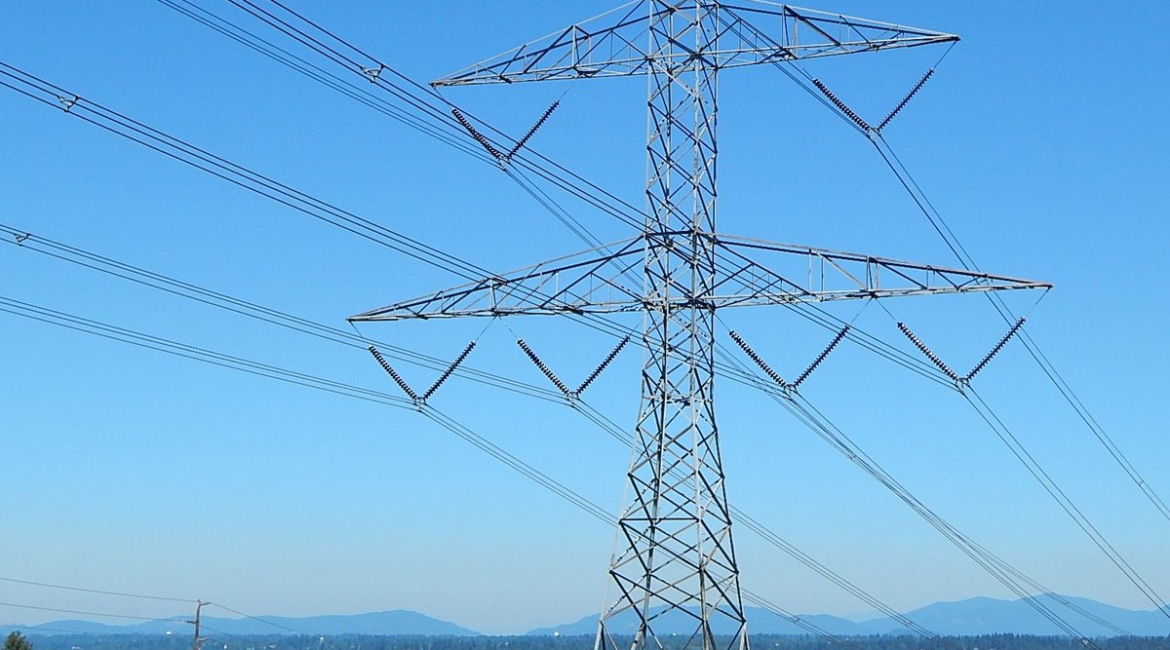
Late Thursday night, hours after its Iran war vote, the Senate passed the biggest change to how America builds things in decades. By a vote of 62 to 33, senators approved the Bipartisan American Affordability and Jobs Act, or BAAJA, a permitting bill meant to cut the years of reviews and lawsuits that slow down power lines, pipelines, wind and solar farms, mines and other infrastructure.
The bill has the support of the White House, Senate Republican leaders, business groups and the AFL-CIO. It also set off one of the angriest fights inside the Democratic Party since the party’s midterm gains this month. The bill now goes to the House, where it must pass before the current Congress ends on Jan. 3.
The vote
According to the Senate Press Gallery’s floor log, the Senate passed the bill at 10:02 p.m. Eastern on Thursday, Nov. 19, using H.R. 2347, a House-passed bill, as the vehicle. The official roll call shows 15 Democrats and independents voting yes: Chris Coons, John Fetterman, Ruben Gallego, Martin Heinrich, John Hickenlooper, Angus King, Amy Klobuchar, Gary Peters, Jack Reed, Jacky Rosen, Brian Schatz, Chuck Schumer, Elissa Slotkin, Mark Warner and Sheldon Whitehouse. Only two Republicans voted no: Josh Hawley of Missouri and Mike Rounds of South Dakota. Five senators did not vote: Republicans Bill Cassidy, John Cornyn, Mitch McConnell and Tommy Tuberville, and Democrat Chris Murphy.
The bill was written by four senators: Environment and Public Works Committee Chairman Shelley Moore Capito, a West Virginia Republican; Mike Lee, a Utah Republican; and Democrats Whitehouse of Rhode Island and Heinrich of New Mexico. “I have spent years trying to achieve bipartisan compromise on legislation that gets our nation back to building,” Capito said in a statement after the vote, urging House leaders to pass it “expeditiously.”
What the bill does
The bill is long and technical, but its main changes are clear. According to Axios and a Congressional Research Service analysis of the bill as introduced, it would:
- Limit lawsuits. Challenges to environmental reviews under the National Environmental Policy Act would have to be filed within 150 days. The CRS report says the bill also generally bars courts from canceling a permit or ordering a project stopped based on a NEPA violation. Instead, the agency would fix the problem while the project keeps going.
- Narrow reviews. The bill sets new limits on the scope and length of reviews under NEPA and the Clean Water Act, adds deadlines and coordination rules for agencies, and limits when agencies must consider new research once a review has started.
- Make permits harder to revoke. Once a project has its permits, the government would have a harder time revoking or reopening them. Renewable energy developers and many Democrats wanted this after the Trump administration moved against some wind and solar projects. Under the version the Senate passed, if a court finds an agency acted in bad faith to block a permitted project, the government could owe the developer 25% to 50% of its development and construction costs. That reading comes from an analysis by the group More Than Just Parks, which opposes the bill.
- Make data centers pay. The bill includes provisions meant to ensure data centers pay for the grid upgrades they need, rather than passing those costs on to other utility customers.
- Expand federal power over transmission. Washington would get more authority over the siting and approval of certain interstate power lines, which have often been blocked for years by state and local fights.
Why Democrats are fighting
Opponents on the left argue the bill weakens environmental law and ignores what voters said this month. “This bill is very out of sync with this last election,” Sen. Jeff Merkley of Oregon told HuffPost. Sen. Ed Markey of Massachusetts said on the Senate floor that the bill puts data center developers “on a greased-up slide into towns across America,” adding, “We just had a big election on data centers.”
Whitehouse, one of the authors and a longtime climate advocate, rejected the claim that the bill helps data centers. He used a vulgarity to dismiss it and told HuffPost the bill is “the first bill to take away the ability of data centers to freeload on the public,” because developers would have to pay for their own grid connections.
The fight became personal on Thursday night. Merkley and Sen. Ron Wyden, also of Oregon, refused to agree to a package of amendment votes, partly because Wyden’s proposal to ban data centers from federal land was left out. That also blocked a deal Sen. Lisa Murkowski of Alaska, the Republican chair of the Indian Affairs Committee, had negotiated to address objections from Native American tribes about weakened historic preservation protections. “Ninety-eight members agreed; two blocked it,” Murkowski said in a statement Friday. She voted for the bill anyway and said she is “not giving up” on the tribal changes. Gallego accused Merkley on social media of trying to sink the bill in the House, calling the move “#dirty.”
Possible 2028 presidential candidates split too: Gallego, Slotkin and Klobuchar voted yes, while Georgia’s Jon Ossoff and Raphael Warnock voted no.
The House is next
Speaker Mike Johnson told Bloomberg last week that he expects to have the votes to pass the bill, Axios reported. House Natural Resources Committee Chairman Bruce Westerman, an Arkansas Republican, issued a statement after the Senate vote. Opposition is building on the left. Rep. Jared Huffman of California, the likely next chairman of that committee when Democrats take the majority in January, has focused his objections on the tribal provisions. Rep. Alexandria Ocasio-Cortez of New York told HuffPost she believes Democrats will get a better bill next year: “I really do believe that a bill that is negotiated under a Republican trifecta is inferior to one that will be negotiated between the president and a Democratic Senate and House.”
That is the real choice facing the House. Supporters argue that no bill President Trump would sign is likely to come out of a divided government. Opponents are betting they can do better after Jan. 3. Any House changes would send the bill back to a Senate where the next roll call vote is not scheduled until Monday, Nov. 30, leaving very little time.
Why it matters
The case for permitting reform is not partisan. It is about cost. Electricity bills, the price of new housing and the country’s ability to compete with China all depend on building power plants, power lines and pipelines faster. Conservatives have long argued that federal reviews plus years of litigation give opponents of any project, gas pipeline or solar farm, an effective veto. A 150-day deadline to sue and a ban on judges halting projects over paperwork errors would be among the most significant changes to that system since NEPA became law in 1970.
There are real concerns too. Giving Washington more power over interstate transmission lines means less say for states and local landowners, an issue federalists should watch closely as the House takes up the bill. The tribal objections, which a Republican chair worked to resolve, deserve a fix rather than a procedural standoff. And as The Washington Post reported, some lawyers argue the bill would gut environmental protections, a claim its authors dispute.
Still, the Senate did something it rarely does now: it passed a major, bipartisan bill on the merits, with the majority leader, the minority leader and the president on the same side. Whether a lame-duck House can finish the job before Christmas will show whether this Congress can build anything at all.
Sources: U.S. Senate Press Gallery floor log (Nov. 19, 2026); U.S. Senate roll call vote 270, 119th Congress, 2nd session; Senate Environment and Public Works Committee (Nov. 19, 2026); Axios (Nov. 19, 2026); Congressional Research Service report R49510 (Nov. 6, 2026); HuffPost (Nov. 21, 2026); More Than Just Parks bill tracker; House Committee on Natural Resources. Descriptions of bill provisions may differ between the introduced and Senate-passed versions.