Wall Street just had its best day since the spring of 2025. Now comes the harder part: deciding whether Monday was a turning point or a one-day reprieve. U.S. stock futures slid early Tuesday as chip stocks gave back part of their gains, and traders went back to a question the rally did not answer. If the economy and the AI boom are this strong, how high will the Federal Reserve push interest rates?
Monday’s numbers
The closing figures from Monday, Nov. 23, are not in dispute. According to CNBC and the Associated Press:
- S&P 500: up 4.73% to 7,237.17
- Nasdaq Composite: up 6.51% to 24,089.56
- Dow Jones Industrial Average: up 1,447.98 points, or 3.01%, to 49,595.31
For the S&P 500 and the Nasdaq, it was the best session since April 9, 2025, the day President Trump announced a pause on his “Liberation Day” tariffs. The S&P 500 still closed about 7.4% below its Oct. 6 record of 7,818.93, according to market-close data compiled from Yahoo Finance. Breadth was strong. Rising stocks beat falling ones by roughly five to one on the New York Stock Exchange, Investing.com reported.
The spark was Nvidia’s decision to reinstate Jensen Huang as chief executive, effective immediately. Nvidia shares rose about 31% to $165.05. Micron gained 19% and CoreWeave 22%. Dell rose more than 20% ahead of its earnings report. The S&P 500’s technology sector jumped 9%. Not everything went up: CrowdStrike fell almost 9%, and defensive names such as Coca-Cola and UnitedHealth slipped as money left safe havens for chips.
The bounce came one trading day after a brutal week. By Friday’s close all three major averages were in correction territory, down 10% from their highs. CNBC said it was the worst week for the Nasdaq and the Dow in more than six years. One good day does not erase that. It does show how much of this market now depends on the fortunes of a handful of AI companies.
Tuesday morning: the hangover (premarket figures)
The numbers in this section are premarket and futures readings from early Tuesday, before the 8:30 a.m. Central opening bell. They change by the minute and are not closing prices.
Futures turned lower after showing early gains. As of early Tuesday, CNBC reported Nasdaq-100 futures down 1.61%, S&P 500 futures down 0.75% and Dow futures down 0.34%. An earlier snapshot reported by Yahoo Finance showed futures mixed and close to flat. The swing is a reminder of how jumpy trading has become.
Chips led the retreat. Nvidia was down a bit more than 3% in premarket trading. Micron was off 4.3%, and the iShares Semiconductor ETF was 2.9% lower in CNBC’s tally; Barron’s put that fund’s premarket drop at 3.4% after a 13.6% jump on Monday, its biggest one-day gain in more than 18 months. That looks like ordinary profit-taking after a historic move. Whether it becomes something more depends on what comes next.
The Fed is the bigger story
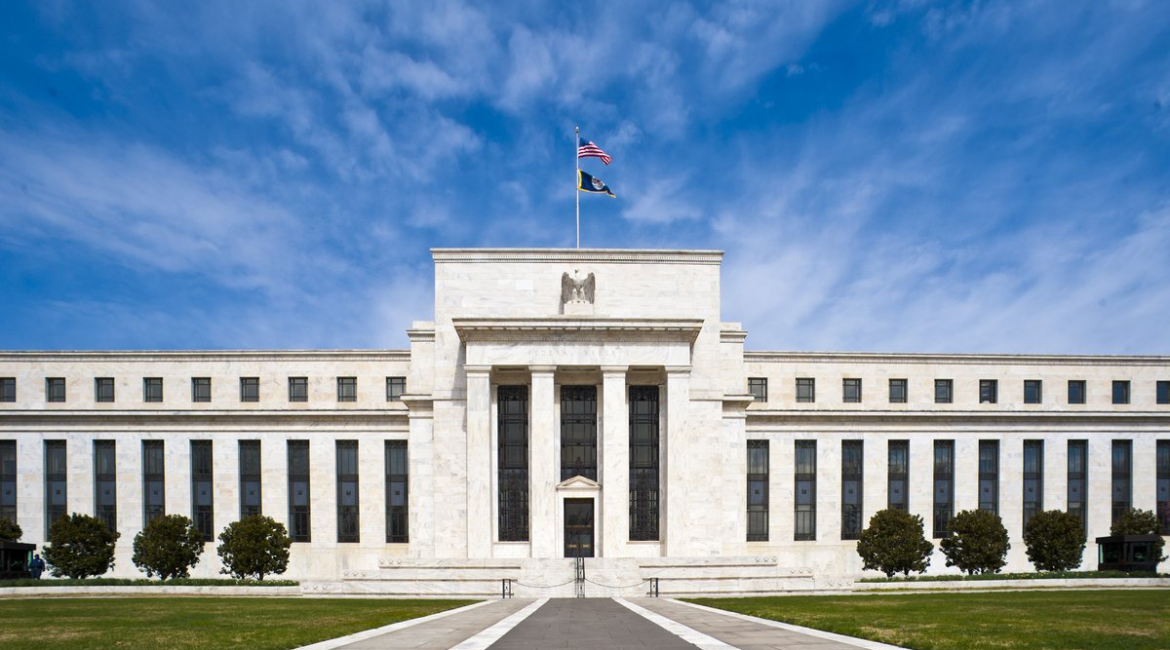
Lost in the Nvidia headlines is the fact that a December rate hike is now treated as all but certain. Yahoo Finance reported that traders priced a 95% chance of a quarter-point increase at the Fed’s December meeting and a 5% chance of a half-point move. Those are market-implied probabilities, not a Fed decision. Last week’s selloff briefly pushed those odds down. Monday’s rally pushed them back up. In plain terms: a hot stock market gives the central bank more room to keep tightening.
That puts Fed Chair Kevin Warsh in a tight spot. “This is a serious test for Warsh,” Krishna Guha of Evercore ISI told Yahoo Finance. He noted that the Fed chair’s silence leaves markets guessing whether he is “a hardcore hawk or a market-sensitive hawk.”
Bond markets show the same tension. The 10-year Treasury yield was about 4.90% early Tuesday, down 2 basis points, per CNBC. That is still close to 5%, a level that raises borrowing costs for mortgages, car loans and the federal government itself. Barron’s reported that the dollar index touched a 20-month high of 104.53 during Monday’s session before easing.
The next test arrives Wednesday with the October reading of the personal consumption expenditures (PCE) price index, the Fed’s preferred inflation gauge. CNBC called it the final inflation print before the December meeting. A hot number would likely lock in the hike and revive talk of more. A soft one could give the rally firmer footing.
The real economy: still growing, still pricey
Underneath the market drama, the economy is still expanding, though more slowly. S&P Global’s flash purchasing managers’ surveys for November, released Monday, showed manufacturing at 53.7 and services at 54.7. Both were down from October but above 50, the line between growth and contraction. S&P Global’s chief business economist, Chris Williamson, said the readings “still point to GDP rising at an annualized rate of about 3% in the fourth quarter.” That is a forecast based on survey data, not an official GDP figure. He also warned that the surveys’ price gauges point to inflation “running well above the Fed’s 2% target in the coming months.”
That is the affordability problem in one sentence. Strong growth helps workers. Prices that keep climbing take it back.
There is one bright spot for families heading into Thanksgiving. Oil was near its lowest level since late August early Tuesday, with Brent around $89 a barrel and West Texas Intermediate near $80, according to CNBC. Prices stayed low even after reports that three tankers hit naval mines in the Strait of Hormuz. Traders are focused on forecasts of a supply surplus.
What to watch this week
- Tuesday: Conference Board consumer confidence for November. Economists surveyed by Yahoo Finance expected 92.1, up from 91.7. That is a forecast; the actual number comes out at 9 a.m. Central. Dell reports after the close, a key read on spending for AI servers. Best Buy, Dollar Tree and HP also report this week.
- Wednesday: October PCE inflation.
- Thursday: Markets are closed for Thanksgiving.
- Friday: A shortened session, with stocks closing at 1 p.m. Eastern (noon Central).
Dealmaking is also back. Sanofi agreed to buy Insmed for $41 billion, or $175 a share in cash, CNBC reported. It is the largest pharmaceutical deal since 2023, and Insmed shares rose 14% before the bell.
The bottom line
Monday was real, and investors who held on through last week’s rout were rewarded. But a market that rises 5% in a day because one executive got his job back is fragile. And as Tuesday’s futures showed, that fragility works in both directions. Not all of the rally’s causes are healthy either. CNBC reported that Trump said he spoke with Nvidia’s board and “convinced” it to bring Huang back. When the president can move a company’s chair and its stock, investors are pricing politics along with earnings.
For ordinary savers, the lesson is the old one: don’t chase a single day. The forces that will matter into the new year are inflation, the Fed’s response, and whether AI spending turns into actual profits. Wednesday’s PCE report will tell us more about the first two than Monday’s fireworks did.
Sources: CNBC market coverage (Nov. 23 and Nov. 24, 2026); Associated Press; Yahoo Finance live coverage (Nov. 24, 2026); Barron’s (Nov. 24, 2026); Investing.com; S&P Global flash PMI as reported by CNBC. Premarket, futures and probability figures are as of early Tuesday morning and are subject to change.