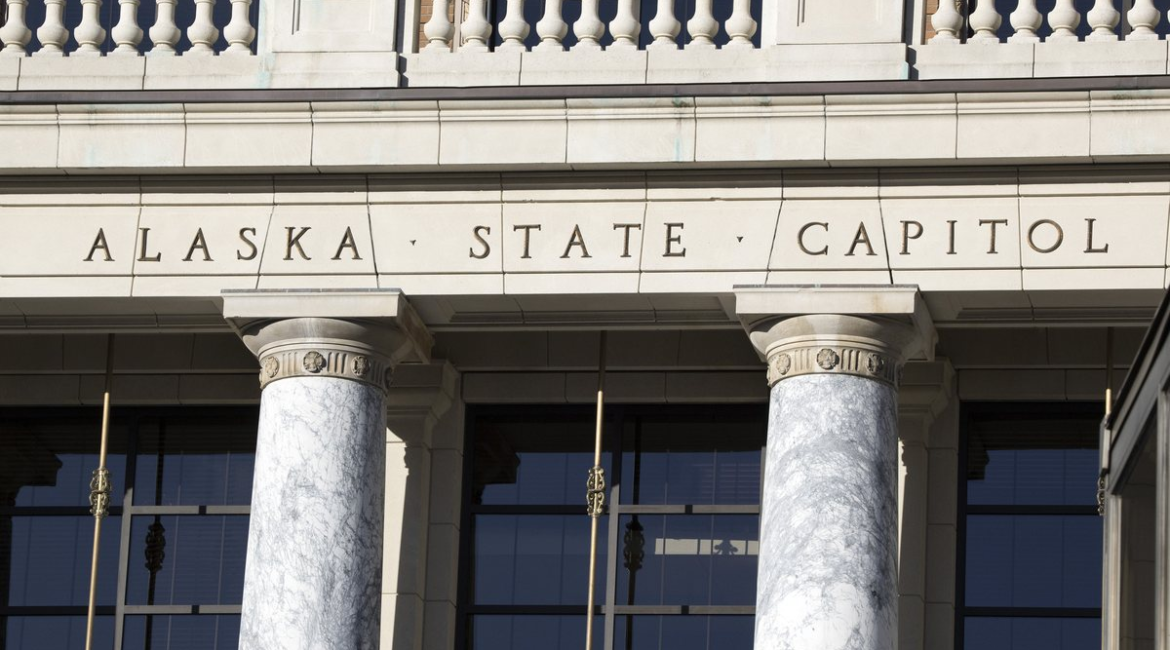
The last undecided U.S. Senate race of 2026 moved closer to an ending on Saturday. Former Democratic Rep. Mary Peltola widened her lead over Republican Sen. Dan Sullivan in Alaska’s latest count, and the state’s Division of Elections is set to run its ranked-choice tabulation on Wednesday, Nov. 18. Unless something unusual happens in the final ballots, Alaska is about to send a Democrat to the Senate for the first time since Mark Begich lost his seat in 2014.
The race has drawn national attention for reasons that go well beyond the margin: a second candidate named Dan Sullivan on the ballot, a New York Times report alleging Democratic involvement in his candidacy, a Justice Department lawsuit, and a president calling for the challenger to be prosecuted. Here is what is confirmed, what is alleged and what conservatives should take from it.
Where the count stands
The Division of Elections’ unofficial report, timestamped 3:15 p.m. Saturday, listed 283,618 ballots counted statewide, roughly 97 percent of the expected vote, the Alaska Story reported. The first-choice results:
- Mary Peltola (D): 140,637 votes, 49.94 percent
- Sen. Dan S. Sullivan (R): 129,424 votes, 45.96 percent
- Gerald Heikes (R): 6,002
- Daniel J. Sullivan Jr.: 4,652
- Write-ins: 872
Peltola’s lead grew to 11,213 votes from 10,412 on Friday. She remains just below the 50 percent needed to win outright on first choices. Even if every vote for the second Sullivan were added to the senator’s total, he would still trail by more than 6,500 votes.
An NBC News Decision Desk analysis published Saturday, based on Friday’s numbers, found Peltola is “likely to win” either way. With about 12,000 ballots outstanding at that point, Sullivan would have needed around 92 percent of them to tie on first choices. In the ranked-choice round, NBC found that more than 45 percent of voters who backed Heikes, Daniel J. Sullivan Jr. or a write-in did not rank either Peltola or the senator, which means their ballots will “play no role.” NBC estimated that only about 6,600 ballots would be redistributed to the top two, far short of what the senator would need.
Wednesday is also the deadline for overseas absentee ballots to arrive. The state’s target date for certification is Nov. 25.
The two Sullivans
Daniel J. Sullivan Jr., a Petersburg resident, filed to run at the end of May. Division of Elections Director Carol Beecher, a Republican, removed him from the ballot after concluding he was running to confuse voters, an allegation he has denied. A Superior Court judge and then the Alaska Supreme Court reinstated him, holding that the state’s “good-faith requirement” did not exist in the Constitution, state law or the division’s regulations, the Alaska Journal of Commerce reported. The ballot listed him as “Sullivan, Daniel J. Jr.” with no party, and the senator as “Sullivan, Dan S. (Registered Republican) Incumbent.”
On Oct. 28, the New York Times reported that members of Peltola’s campaign and aides at the Democratic Senatorial Campaign Committee were allegedly involved in efforts to recruit people named Dan Sullivan to run. A central source, former Peltola campaign manager Elisa Rios, who was fired in August, later asked to retract her statements, Alaska’s News Source reported; the Times said her interviews were consistent with its other reporting. The Peltola campaign said it had “no involvement with either Sullivan campaign,” and a DSCC spokesperson said, “The DSCC is not involved with Dan J. Sullivan,” Newsweek reported. Alaska’s News Source said its own fact-checking had previously found no evidence that the Petersburg Sullivan was recruited by Democrats.
President Trump said Peltola “should be removed from the ballot and prosecuted, and so should the fake Dan Sullivan.” Gov. Mike Dunleavy called the allegations “disturbing” and ordered the state Department of Public Safety to investigate. The Justice Department opened a criminal investigation, and FBI agents questioned donors to the Petersburg Sullivan; multiple donors confirmed there was no confusion about whom they had supported, according to the Alaska Journal of Commerce, which also reported that experts have said the conduct described in the Times story does not appear to be unlawful. No one has been charged.
The lawsuit that failed
Before the election, the Justice Department sued Alaska, asking a federal court to block certification if Sullivan narrowly lost and to set aside ballots cast for the other Sullivan for a possible investigation into voter intent. On Nov. 1, U.S. District Judge Sharon Gleason dismissed the suit, ruling that the federal government lacked standing and that the request could not be squared with the secrecy of the ballot. “The absence of any explanation from the United States as to how its requested relief could redress its alleged injury while simultaneously maintaining the secrecy of the ballot is telling,” she wrote. The department has appealed to the Ninth Circuit.
Dunleavy has suggested that the state’s investigation “may in fact impact whether somebody is seated in the U.S. Senate.” That is not the governor’s call to make. Under Article I, Section 5 of the Constitution, “Each House shall be the Judge of the Elections, Returns and Qualifications of its own Members,” and the Senate that convenes in January will have a Democratic majority. Dunleavy, who is term-limited, leaves office next month.
The rest of the Alaska ballot
Saturday’s report also showed Republican Rep. Nick Begich leading independent Bill Hill, 133,707 to 116,932, though below 50 percent. Democrat Jonathan Kreiss-Tomkins held 50.90 percent in the governor’s race. Ballot Measure 2, which would repeal Alaska’s open primary and ranked-choice voting, was failing with 53.62 percent voting no. Ballot Measure 3, which the Alaska Story describes as a citizenship measure, was passing with 68.38 percent.
Our view: count every vote, then learn the right lesson
Conservatives have every reason to want the truth about how the second Sullivan got on the ballot. If a campaign recruited a namesake candidate to confuse voters, that is a dirty trick, and voters deserve to know who was behind it. Investigators should follow the facts, and if any law was broken, prosecutors should say which one. But it is also worth remembering that both parties in Alaska have a history of boosting spoiler candidates, and that the man at the center of this fight won his place on the ballot in court.
What conservatives should not do is try to overturn a count because they dislike the result. The numbers show that the second Sullivan did not decide this race. Sen. Sullivan himself said, “I will accept the election results,” regardless of who wins. That is the right standard, and it is the one Republicans would demand if the roles were reversed.
The deeper lesson is about candidates and issues, not ballot design. Trump carried Alaska by 13 points in 2024. Republicans lost it anyway in a year dominated by high prices and the Iran war. Alaskans also rejected repealing ranked-choice voting, so the party will have to win under those rules. That means recruiting candidates who can earn second-choice votes, not just first-choice loyalty. The road back to a Senate majority in 2028 runs through states like this one.
Sources: Alaska Division of Elections unofficial results as reported by the Alaska Story (Nov. 14, 2026); NBC News Decision Desk (Nov. 14, 2026); Alaska Journal of Commerce/Anchorage Daily News (Nov. 8, 2026); Alaska’s News Source/KTUU (Oct. 28, 2026); Newsweek (Oct. 28, 2026); U.S. Constitution, Art. I, Sec. 5. Results are unofficial until certification. The allegations about candidate recruitment are disputed and no charges have been filed. “Our view” is this publication’s opinion.