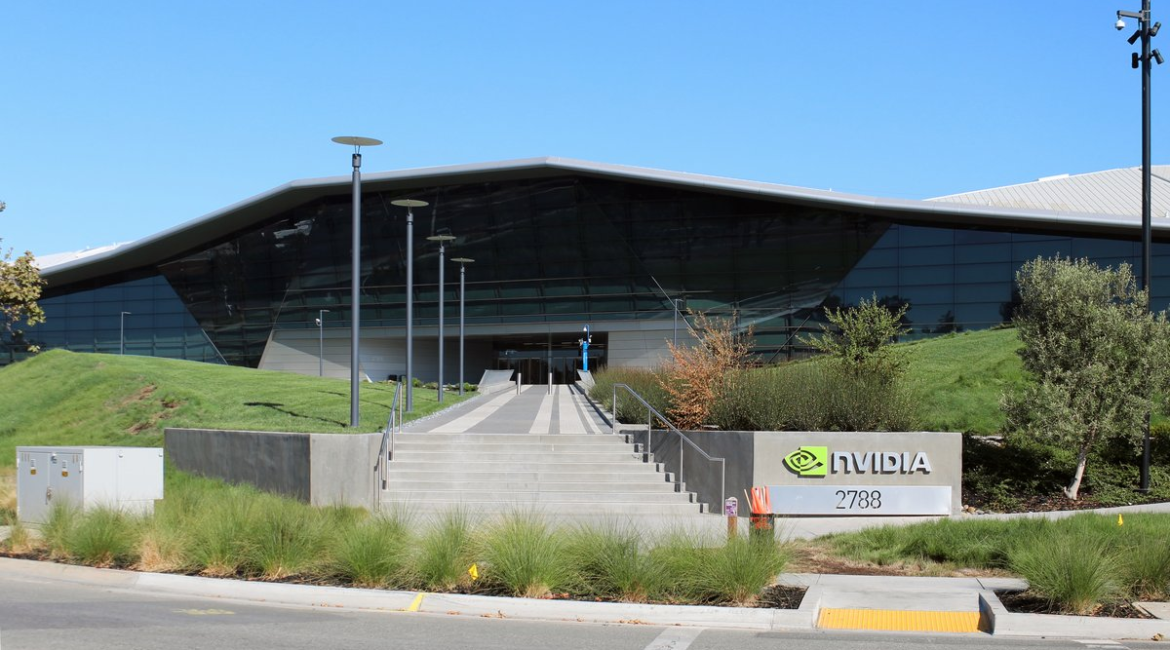
The AI trade had its worst start to a week in months. On Monday, Nov. 16, the Nasdaq Composite fell 2.49% to 24,509.76 and the S&P 500 lost 1.92% to 7,416.59, the third straight losing session for both. The Dow Jones Industrial Average dropped 739.38 points, or 1.41%, to 51,608.17, according to CNBC. Nvidia, the company at the center of the selling, fell another 4.1%.
Two things happened in Washington over the weekend and on Monday. The Commerce Department issued a rule to stop Chinese companies from renting American AI chips through data centers in other countries. And senior administration officials publicly disagreed about who should run the world’s most important chipmaker. Stock futures were down again early Tuesday, before Nvidia’s first earnings report since its founder’s resignation.
The scoreboard
Monday’s selling started in technology and spread. Micron and Intel each fell more than 7%, Advanced Micro Devices lost 5%, memory maker Sandisk dropped about 8%, Dell fell almost 7% and Oracle about 5%. By the afternoon, banks were sliding too: Morgan Stanley, Goldman Sachs and JPMorgan Chase each lost more than 2%. Consumer staples was the only S&P 500 sector in positive territory in afternoon trading.
Volatility rose. The Cboe Volatility Index, Wall Street’s “fear gauge,” jumped as much as 25% to an intraday high of 24.05, its highest level in a week. Bitcoin, often treated as a barometer of risk appetite, fell as low as $62,000 over the weekend, its lowest since August, before recovering to about $64,000 Monday morning.
Bonds were the exception. The 10-year Treasury yield eased to 5.12% Monday from 5.15% on Friday, and the 2-year slipped to 4.83%, according to Treasury Department data. A 10-year yield above 5% is still high by the standards of the past 15 years. It keeps mortgage rates and federal borrowing costs elevated.
Economic data added to the mixed picture. The New York Fed’s Empire State manufacturing index fell 18 points to 7.8 in November, well below the 16.7 economists expected, as new orders dropped sharply. Employment in the survey rose to its highest level since June 2022, and the prices-paid index fell 14 points to 45.9, which suggests input cost increases are slowing. Overseas, Japan reported an unexpected third-quarter contraction, and China’s October retail sales, industrial output and investment all missed forecasts.
The selling continued overnight. At 6 a.m. Eastern Tuesday, Dow, S&P 500 and Nasdaq-100 futures were each down about 0.4%, Yahoo Finance reported, and Nvidia was lower in premarket trading. Germany’s DAX was down 0.8% in early European trading.
Washington closes the “rent-a-chip” loophole
The biggest policy news was a new export rule. On Monday the Commerce Department’s Bureau of Industry and Security released an interim final rule on remote access to advanced chips. Commerce said the rule was “written by and at the direction of the Department of Treasury and the National Security Council.” It is the government’s first formal policy response to the Nvidia scandal.
Until now, U.S. export controls mainly governed where chips were physically shipped. A Chinese company that could not legally buy top Nvidia hardware could, in many cases, rent computing time on the same hardware from a data center in Southeast Asia. According to a summary by the law firm Nixon Peabody, the new rule requires a license to ship advanced chips and servers to any data center anywhere in the world if the exporter knows the facility will provide more than 12 million units of “aggregate TPP,” a measure of total processing performance, to companies headquartered in China, Macau or other countries of concern. The threshold counts capacity across “linked” data centers, including digitally linked ones. A data center that refuses to share its know-your-customer checks is treated as a red flag.
The rule also requires licenses for advanced chip exports to Indonesia, Malaysia, Singapore, Thailand and Brazil, which the rule says present “a higher-than-normal risk of diversion.” Publication in the Federal Register is expected Nov. 19. China’s Foreign Ministry responded that Beijing “will take necessary measures to resolutely safeguard its legitimate rights and interests,” DW reported.
The rule could slow some sales. Southeast Asian data centers have been among the fastest-growing buyers of American AI hardware, and every new license requirement adds delay and uncertainty to those sales.
Two messages from the administration
The second source of uncertainty is the administration itself. On Sunday, Treasury Secretary Scott Bessent told Fox News that Nvidia needs “a dramatic shakeup” and that its board should “go outside the company” for its next chief executive. He demanded answers within 10 days from the board and its outside lawyers about the company’s export-compliance culture. “If this were a bank and they hadn’t complied like this, the OCC would be in there right now, and a lot of the executives would be removed,” he said, CNBC reported.
On Monday, as he left for Asia, President Trump said he “would not mind” if Nvidia reinstated co-founder Jensen Huang, who resigned last week after admitting an affair with a former executive of a Singapore firm suspected of diverting chips to China. “I think he learned a big lesson,” Trump said, according to CBS News. A source told CNBC that Nvidia’s board is not discussing bringing Huang back and is focused on an investigation, led by the law firm Wachtell Lipton, into whether his conduct compromised national security or company secrets. Nvidia also announced a new board committee to oversee national security, export compliance and trade risk.
Analysts are cutting their price targets. Mizuho lowered its target to $220 from $250 and UBS to $240 from $300, while both kept buy-equivalent ratings. Mizuho’s Vijay Rakesh said the stock’s roughly 32% drop from its October peak reflects the “Jensen/founder premium lost” and warned of a “6-7-month management overhang.”
What to watch this week
- Nvidia, Tuesday after the close. Analysts expect close to 100% year-over-year growth in revenue and earnings. Interim CEO Colette Kress, previously the company’s CFO, will lead the call. Investors want to hear about China exposure, Singapore-linked sales and whether the new rule will affect demand from Southeast Asian data centers.
- Retail and housing data, Tuesday. Retail sales figures and a housing market index are on the calendar, and Home Depot and Disney report before the bell. They will show whether consumers are still spending with long-term rates above 5%.
- Anthropic’s IPO, Thursday. The AI company is targeting a price of $70 to $78 a share at a valuation of roughly $1.4 trillion, CNBC reported. A weak debut would add to doubts about AI valuations.
The bottom line
Closing the remote-access loophole is sound policy. If a Chinese company cannot buy a chip, it should not be able to rent the same chip next door. Enforcing that rule consistently is the government’s job.
Choosing a private company’s CEO is not. When the Treasury secretary calls for an outside chief executive and the president a day later says he would welcome back the one who resigned, investors cannot tell what Washington will do next, and that uncertainty shows up in stock prices. Nvidia is one of the largest holdings in many Americans’ 401(k)s. Clear rules applied consistently would help those savers more than public commentary on who should run the company.
Sources: CNBC market coverage (Nov. 16, 2026) and reporting on Treasury Secretary Bessent (Nov. 15); U.S. Treasury daily yield curve data; Bureau of Industry and Security (Nov. 16); Nixon Peabody (Nov. 16); CBS News (Nov. 16); DW (Nov. 17); Yahoo Finance (Nov. 17). Market figures are as of Monday’s close unless otherwise noted. This article is not investment advice.