Tuesday’s economic data showed two very different economies. Shoppers kept spending in October even with prices rising. Home builders, meanwhile, reported their worst conditions in more than 14 years, as mortgage rates above 7% kept buyers away. On Wall Street, the S&P 500 fell for a fourth straight session, and a Federal Reserve official said several more rate hikes may be needed before spring.
Here is what the numbers show, and why the housing figures may matter more to most families than another day of losses in AI stocks.
The consumer is still spending
The Census Bureau reported that retail and food-service sales rose 0.2% in October to $748.2 billion, after an unrevised 0.8% gain in September. Sales were up 6.8% from a year earlier. Those figures are not adjusted for inflation, so part of the increase reflects higher prices rather than more goods sold.
The headline number was held down by a 1.6% drop at auto dealers and a 2.3% decline at furniture stores, Reuters reported. Excluding autos, sales rose 0.6%. The “control group,” which excludes autos, gasoline, building materials and restaurants and feeds directly into the government’s GDP calculation, also rose 0.6%, beating the 0.4% economists expected. Online retailers gained 1.2%, likely helped by Amazon’s October Prime Big Deal Days sale.
Gas stations are no longer driving the totals. According to PNC Economics, gas station sales jumped 3.7% in August and 6.0% in September but rose a smaller 1.5% in October. PNC said control-group sales were up 5.6% from a year earlier, the largest gain in four years.
Goldman Sachs responded by raising its forecast, CNBC reported. The bank now expects fourth-quarter GDP to grow at a 2.4% annual rate, up 0.6 point from its previous estimate. Chief economist Jan Hatzius wrote that tax refunds and stock-market gains “have more than offset the drag from higher energy prices.”
That last point matters. Much of today’s spending comes from households that own stocks and homes. Families who rent, carry credit card balances and pay more each month for groceries and fuel are not seeing the same gains. The Associated Press described October as a month when “high prices gave shoppers pause.”
Builders are pulling back
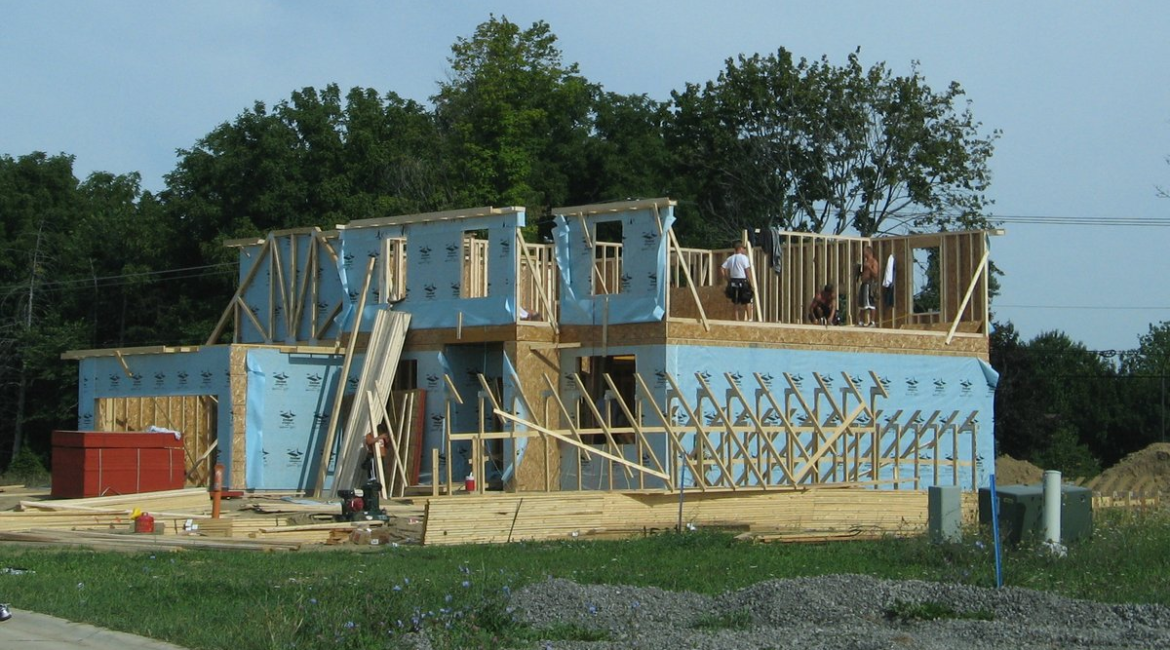
Housing told a different story. The National Association of Home Builders/Wells Fargo Housing Market Index fell four points to 25 in November, its lowest level since April 2012. Readings below 50 mean more builders see conditions as poor than good. Economists polled by Reuters had expected the index to hold at 29.
All three parts of the index declined:
- Current sales conditions fell six points to 28.
- Expected sales over the next six months fell two points to 30.
- Traffic of prospective buyers fell two points to 16, its lowest in 15 years apart from the start of the pandemic in 2020.
Builders are cutting prices to make sales. In November, 46% reduced prices, the highest share since Covid, and 68% offered incentives such as mortgage-rate buydowns. The average price cut stayed at 6% for an eighth straight month. A year ago, the index stood at 38, CNBC noted.
Builders gave several reasons. NAHB Chairman Bill Owens said “stepped-up immigration enforcement is keeping legal workers off job sites, deepening labor shortages and driving up costs,” and that higher fuel prices are leading subcontractors to raise their rates. NAHB Chief Economist Robert Dietz pointed to “building material costs pushed higher by tariffs,” worker shortages and “excessive regulations that undermine housing affordability,” along with “mortgage rates above 7%.”
Borrowing costs remain the biggest obstacle. The average 30-year fixed rate reached 7.51% on Monday, according to Mortgage News Daily, compared with 6.38% a year earlier. Freddie Mac’s weekly survey, which is calculated differently, last put the average at 7.18%, Reuters reported. Last week, the National Association of Realtors said sales of previously owned homes fell in October to their lowest level in more than 16 years.
Markets and the Fed
Stocks fell again. The Dow dropped 848.75 points, or 1.64%, to 50,759.42, after falling more than 1,000 points at its low. The S&P 500 lost 1.03% to 7,340.53, its fourth straight decline and its lowest close since late July. It is now about 6% below its Oct. 6 record of 7,818.93. The Nasdaq fell 0.74%. Losses deepened after CNN reported an outage on a classified National Security Agency network. The NSA later said it had “experienced temporary degradation during scheduled routine maintenance.”
Home Depot beat earnings estimates and reported its strongest same-store sales growth in four years. Its shares still fell after its full-year guidance implied a weaker-than-expected holiday quarter, a sign that the housing slowdown is reaching home-improvement spending.
Interest rates are still high. The Treasury’s daily yield data put the 10-year yield at 5.10% and the 30-year at 5.46% at Tuesday’s close. The Bureau of Labor Statistics said import prices rose 1.1% in October, above the 0.7% forecast. St. Louis Fed President Alberto Musalem said in a speech that “the economy will likely require several interest rate increases before the spring of 2027 to achieve 2% inflation in a timely manner.” CNBC described his view as allowing for as many as four hikes. Reuters reported that traders still expect the Fed to raise rates in December, and the dollar index touched a 19-month high during the session.
After the close, Nvidia reported results that beat expectations. The company said third-quarter revenue was $115.8 billion, up 103% from a year earlier, and forecast about $130 billion for the current quarter, assuming no data center computing revenue from China. The shares rose in after-hours trading, and stock futures moved higher overnight. Investors will see on Wednesday whether the rebound holds. Strong AI earnings, however, do nothing to lower mortgage rates.
What it means
The Fed is fighting inflation with the tool it controls, and the costs fall heavily on housing. Each increase in the 10-year yield raises mortgage rates, which reduces the number of buyers and leads builders to construct fewer homes. That reduces the future housing supply and puts upward pressure on rents and prices over time.
Washington can address the parts of this problem that are within its control. Builders themselves identify three: tariffs on lumber and other materials, labor shortages and local regulations that add cost to every new home. Rate hikes can slow inflation, but they cannot add housing supply. Reducing permitting delays, revisiting tariffs on building materials and creating legal, verified ways for construction workers to fill job openings would help housing without adding to inflation. The NAHB’s own survey says these supply-side problems are hurting builders now.
For households, the takeaway is simple. Spending is holding up, but much of it rests on stock-market gains and tax refunds. Housing is weakening, and borrowing costs may rise further. Families should be cautious about adding variable-rate debt before the Fed’s December meeting.
Sources: U.S. Census Bureau advance retail sales report (Nov. 17, 2026); NAHB/Wells Fargo Housing Market Index (Nov. 17); Reuters via Investing.com (Nov. 17); PNC Economics (Nov. 17); Associated Press (Nov. 17); CNBC market and housing coverage (Nov. 17); U.S. Treasury daily yield curve data; NVIDIA investor relations (Nov. 17). Market figures are as of Tuesday’s close unless otherwise noted. This article is not investment advice.