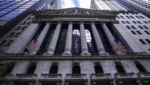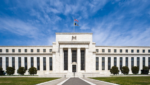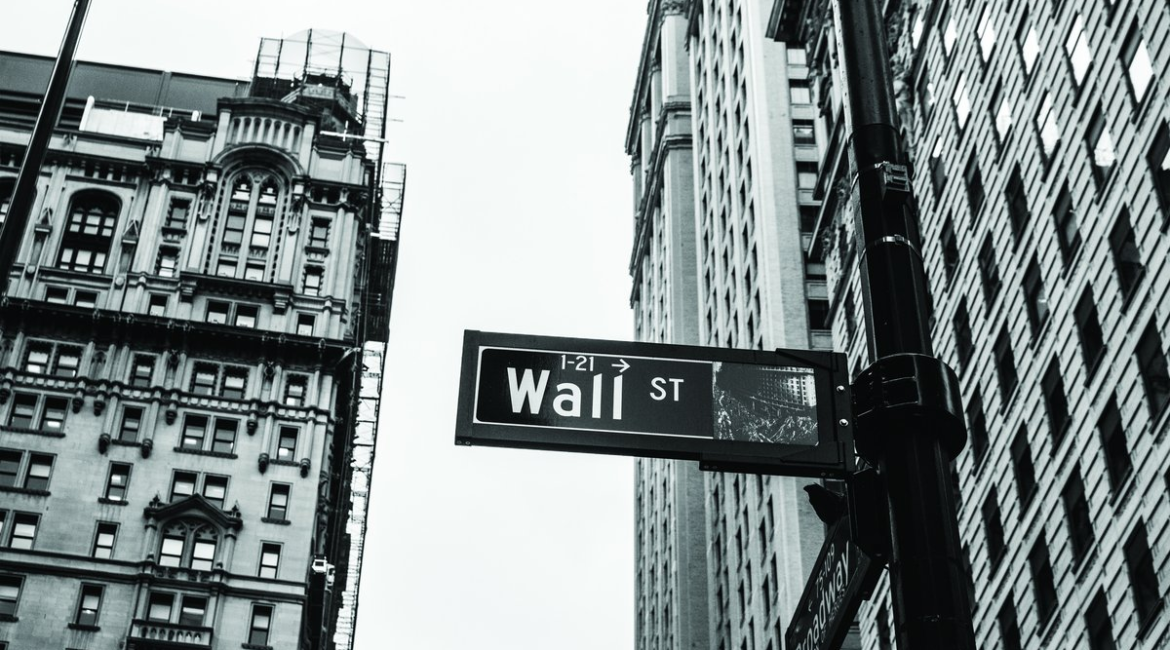
Wall Street is closed today for Thanksgiving. Before it shut down, it got a lot of news to digest. On Wednesday the government reported that the economy grew much faster this summer than first estimated, and that inflation kept moving the wrong way in October. Stocks swung wildly on the news. The Dow fell more than 1,100 points in the morning and then recovered to close higher. By the closing bell, investors had mostly accepted something they had expected for weeks: the Federal Reserve is going to raise interest rates again in December.
Here is what the data showed, what it means for the Fed, and why a strong economy is not good news for everyone at this year’s Thanksgiving table.
Growth: 4.3%, not 3.4%
The Bureau of Economic Analysis’s second estimate shows real gross domestic product grew at a 4.3% annual rate in the third quarter (July through September). The first estimate had put growth at 3.4%. Growth in the second quarter was 2.2%. The agency said the 0.9-point upgrade came “primarily” from higher estimates of investment and consumer spending. The investment revision was led by intellectual property products, especially software.
The details are strong as well. Real final sales to private domestic purchasers, which strips out trade, inventories and government spending and which Fed officials watch as a measure of underlying demand, grew at a 5.8% rate, up from 4.9% in the first estimate. Real gross domestic income, which measures the economy from the income side, rose 4.4%. Corporate profits from current production rose $206.0 billion in the quarter. Axios credited the upgrade to business investment “fueled by the AI buildout” along with consumer spending. KPMG called the revision “stunning” and said it was the strongest growth in three years.
Labor-market data pointed the same way. The Labor Department said initial jobless claims fell to 189,000 for the week ending Nov. 21, down 13,000 from the week before and below the 200,000 Wall Street expected. CNBC noted that this is close to the lowest level since the late 1960s.
Inflation: 3.8% and heading the wrong way
The other report released Wednesday morning was less encouraging. BEA’s personal income and outlays release showed the personal consumption expenditures (PCE) price index, the Fed’s preferred inflation measure, rose 0.3% in October and 3.8% from a year earlier. Core PCE, which leaves out food and energy, also rose 0.3% for the month and 3.3% for the year. According to CNBC, the headline figure matched the Dow Jones consensus forecast, while core came in 0.1 point higher than forecast. KPMG said the headline rate was the highest since May and the core rate the highest since November 2023.
That is nearly double the Fed’s 2% target. CNBC noted that inflation has now been above target for about five and a half years. The latest increase followed the energy shock from the war with Iran that began in late February. Tariffs and heavy spending on AI infrastructure are adding to the pressure. “America’s inflation problem is bigger than an energy shock,” Navy Federal Credit Union chief economist Heather Long told the network.
The income and spending figures were mixed. Personal income jumped 0.7% in October, well ahead of the 0.4% forecast CNBC cited. After adjusting for inflation, though, consumer spending was flat; BEA put real PCE down $5.8 billion, less than 0.1%. The personal saving rate rose to 4.1% from 3.6% in September. KPMG described households as building up “precautionary savings,” meaning they are earning more but holding on to it.
The Fed: December is all but certain
Taken together, the reports leave the Fed little reason to wait. “Inflation is too hot and it will not be brought under control as long as economic demand is also too hot,” Fwdbonds chief economist Chris Rupkey told CNBC. Ahead of the release, CNBC reported that markets were already fully pricing in a quarter-point increase at the Fed’s Dec. 8-9 meeting. Yahoo Finance put the odds of a December hike at about 98% after the data came out. These are market-implied probabilities, not a decision. The Fed has not acted, and the November jobs report is still due before the meeting.
Market pricing beyond December moved slightly in the other direction. CNBC said traders still expect two more increases but cut the odds of a third hike in 2027 to about 1 in 3, from roughly even odds on Tuesday. Treasury yields fell sharply Wednesday morning, with the 10-year note down more than 7 basis points to about 4.82% at midmorning. Those are futures-market forecasts and they will change with each new data release.
Stocks: an 1,100-point hole, then a comeback
The stock market reacted sharply. Along with the inflation report, the White House announced new tariffs on more than a dozen trading partners, including China and the European Union. At their lows, the Dow was down more than 1,100 points, or 2.2%. The S&P 500 was down 3.2% and the Nasdaq 4.6%, according to CNBC. MarketWatch reported that the Nasdaq 100 briefly sat exactly 20% below its October closing peak, the usual definition of a bear market.
Prices then recovered. The Dow closed up 164.25 points, or 0.33%, at 50,182.95. The S&P 500 lost 0.25% to 7,182.78, and the Nasdaq Composite fell 0.62% to 23,585.80. AI-related shares were still the weakest: Nvidia fell almost 4%, Micron 4.5% and Oracle more than 5%. Traders attributed part of the rebound to thin pre-holiday trading and to a newsletter in which investor Michael Burry wrote that he is “temporarily almost entirely long.” MarketWatch also reported that tech stocks recovered some ground after reports that U.S. officials told congressional staff there was no evidence a Chinese executive linked to Nvidia CEO Jensen Huang was working for Chinese intelligence. Those reports describe a classified briefing and have not been officially confirmed.
U.S. stock and bond markets are closed today. On Friday stocks close early at 1 p.m. ET, and SIFMA recommends that bond trading end at 2 p.m. ET.
What it costs at the dinner table
Inflation is easy to see on a holiday like this one. The American Farm Bureau Federation’s 41st annual survey found that a classic Thanksgiving dinner for 10 costs an average of $58.63 this year, or about $5.86 per person. That is up more than 6% from 2025. It is the first overall increase since the record of $64.05 in 2022, and still 8.5% below that record. A 16-pound frozen turkey averaged $23.68, or $1.48 a pound, up 10%. The group blamed high diesel prices and farm labor shortages. Volunteers collected the prices in the first week of November, and stores often cut turkey prices closer to the holiday.
The bottom line
There is real good news in these numbers. An economy growing at 4.3% with jobless claims near half-century lows is not in recession, and businesses are investing heavily in the technology of the future. But fast growth does not guarantee stable prices, and this page has made that point before. When demand runs this hot while tariffs and energy costs push prices up, the Fed’s main tool is higher borrowing costs. Those fall hardest on families with mortgages, car loans and credit card balances.
Washington can help or make things harder. Policies that expand supply, such as cheaper energy, faster permitting and more housing construction, reduce inflation pressure. Policies that add to costs, such as new import taxes and continued deficit spending, push the other way. Next week brings the November jobs report and, after that, the Fed’s December meeting. Investors will be watching both closely.
Sources: U.S. Bureau of Economic Analysis (GDP second estimate, Q3 2026; Personal Income and Outlays, October 2026); CNBC; Axios; KPMG; Yahoo Finance; MarketWatch; USA Today; SIFMA; American Farm Bureau Federation. Rate-hike odds and future rate paths are market-implied forecasts as reported Nov. 25 and are not Fed decisions. The 10-year Treasury yield is a midmorning figure from Nov. 25. Reports about a classified congressional briefing are unconfirmed.