Most federal review boards don’t meet on New Year’s Eve. The National Capital Planning Commission, which must approve major federal construction in and around Washington, plans to. Its chairman, a White House official, has called a special session for Dec. 31, three days before control of two of the commission’s 12 seats moves to Democrats. Several of President Trump’s biggest projects in the capital are expected to come up for approval.
The commission has the legal authority to meet whenever it chooses. The timing, though, raises an accountability question that conservatives should care about no matter who holds the gavel: when an oversight body changes its own calendar to finish decisions before new members arrive, it is acting to avoid a check rather than to perform one.
What was scheduled
Chairman Mark Paoletta notified commissioners by email that the panel would meet Dec. 31 and also scheduled a special executive session for earlier in December, The Washington Post reported Friday, as summarized by Mediaite. The New York Times reported that the session was not on the commission’s calendar until Paoletta called it on Nov. 27, according to Quartz.
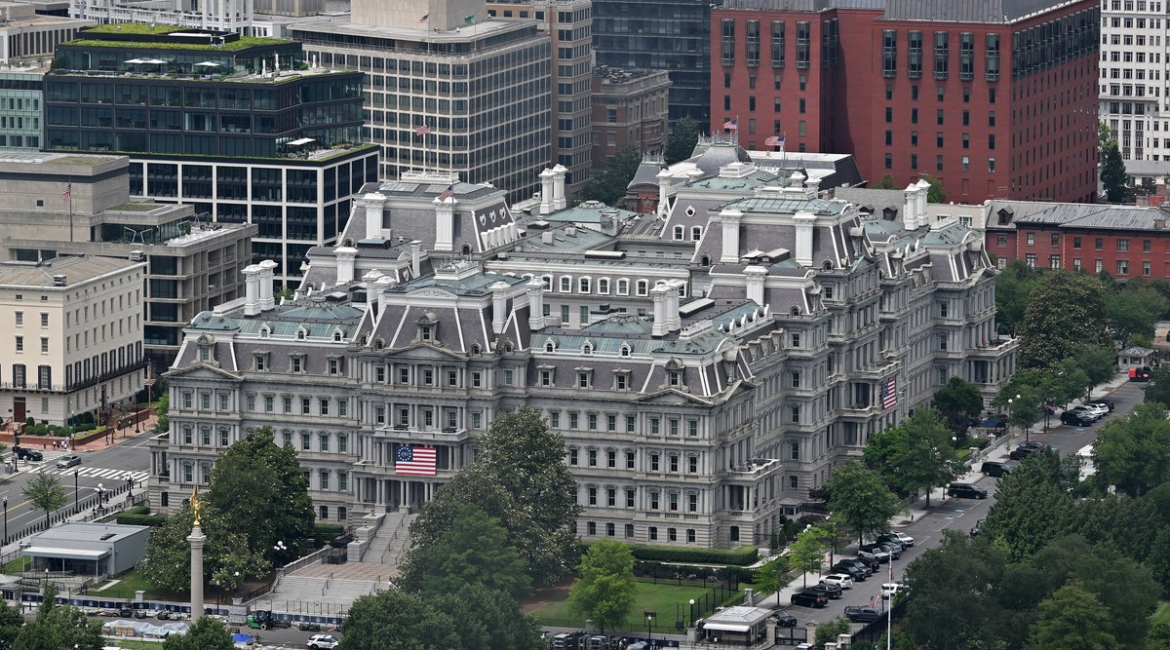
The Post reported that the projects expected to come up for final approval include the overhaul of the East Potomac Park golf course, the redevelopment around the Tidal Basin, and the plan to paint the Eisenhower Executive Office Building next to the White House. The Times also listed infrastructure work in West Potomac Park, the planned site of the National Garden of American Heroes. The commission’s regular Dec. 3 meeting already includes the East Potomac Park Golf Links, submitted by the National Park Service. The requested action there is “approval of comments on concept plans,” according to the commission’s own project file. That is an early stage of review, not final approval.
Why the date matters
Federal law sets the commission’s membership. According to the commission’s website, the president appoints three citizen members, including the chairman. The District’s mayor appoints two. The remaining seven are ex officio: the secretaries of Defense and the Interior, the administrator of General Services, the mayor, the D.C. Council chairman, and the chairmen of the House Oversight Committee and the Senate Homeland Security and Governmental Affairs Committee. Those two seats are currently held by Rep. James Comer and Sen. Rand Paul, both Republicans.
The administration controls six seats, congressional Republicans two, and District officials four. In January, Democratic committee chairmen will take the two congressional seats. Under the commission’s bylaws, tie votes fail, the Times reported, so a 6-6 split would stop approvals. A Dec. 31 vote is the last chance to act under the current majority.
The commission already showed this month how its votes divide. On Nov. 5 it approved final plans for Trump’s proposed 250-foot “Triumphal Arch” near Arlington National Cemetery by 8-4, with the four votes against coming from members not appointed by Trump, NBC News reported. Within an hour, U.S. District Judge Tanya Chutkan temporarily blocked construction in a lawsuit brought by the District and Virginia. During that meeting, after public comment ran more than nine hours and a disruption Paoletta called a “malicious attack” crashed the virtual meeting site, he said: “We’ll have this thing done, whether it’s past midnight or not.”
The objections
D.C. Council Chairman Phil Mendelson, a commission member, said he would oppose the move. “Using N.C.P.C. to skirt the law and the designated process is inappropriate,” he said in a statement reported by the Times. “No one likes a player who changes the rules in the middle of the game.” Rep. Jared Huffman of California, expected to lead the House Natural Resources Committee in January, told the Post, “These Kangaroo Commissioners are shameless,” and described the effort as part of a “flood the zone approach to everything.”
Administration officials did not publicly explain the date in the reports reviewed for this article. The White House has defended the projects themselves. After the arch vote, spokesperson Davis Ingle praised the commission for approving “President Trump’s historic vision” and called the judge’s order the work of “an activist district court,” NBC reported. Paoletta, who is also general counsel at the Office of Management and Budget, called it a “national disgrace” that no such memorial had been built already.
The money question
The meeting also raises questions about who is paying. The New York Times reported this week that a National Park Service donations account used for Trump’s Washington projects received about $300 million more than expected in September: $347 million, compared with the $50 million the agency had anticipated, according to the Times report as republished by the Arkansas Democrat-Gazette. The records do not identify the source of the money, whether it came from one donor or several, or which projects it will fund. The administration declined to answer questions about it.
The Times reported that the account, which took in less than $100 million a year before Trump’s second term, has collected about $790 million since he returned to office. It has helped pay for the White House ballroom, repairs to the Lincoln Memorial Reflecting Pool and design work on the arch. The paper estimated that the full cost of the president’s Washington projects will exceed $1 billion. Interior Department spokesperson Katie Martin responded with a statement that “President Donald J. Trump has done more to make our nation’s capital a shining beacon than any other president in the history of this country.” Tony Irish, a former longtime Interior Department lawyer now with the watchdog group Public Employees for Environmental Responsibility, said that without disclosure, “Are the donors seeking certain government benefits? … We just don’t know, because of the lack of transparency.”
Nothing in the public record shows that any donor received a government favor, and no one has been accused of wrongdoing. The concern is that the public can’t check either way.
Why conservatives should care
Some of these projects may be worthwhile. Many conservatives would welcome a monument to American heroes, and improving a public golf course is a reasonable goal. The issue is how decisions are made, not the president’s taste in architecture.
Three principles apply to any administration. First, review boards are meant to check power, not approve it automatically. Rescheduling a vote to beat a change in membership treats the commission’s design, which mixes federal, congressional and local members, as an obstacle. Second, large anonymous gifts to fund a president’s projects are a conflict-of-interest risk, whether they go to a Park Service account, a library foundation or an inaugural committee. Third, the precedent will be used by both parties. If a lame-duck majority can rush approvals before New Year’s, a future Democratic administration will cite this example when it does the same. This magazine argued this week that midnight rules and lame-duck rushes should be limited for both parties, and the same reasoning applies here.
The Dec. 3 meeting will be the first test. If the commission takes up only the preliminary items on its posted agenda and the White House discloses who supplied the $347 million, the New Year’s Eve session will matter less. If not, the incoming Democratic chairmen will have an obvious first subject for oversight.
Sources: The Washington Post via Mediaite; The New York Times via Quartz and the Arkansas Democrat-Gazette; NBC News; National Capital Planning Commission (commission roster and project 8832 file). Descriptions of which projects will be on the Dec. 31 agenda are based on news reports; the commission had not posted a Dec. 31 agenda at publication. No one named in this article has been charged with or accused of a crime.