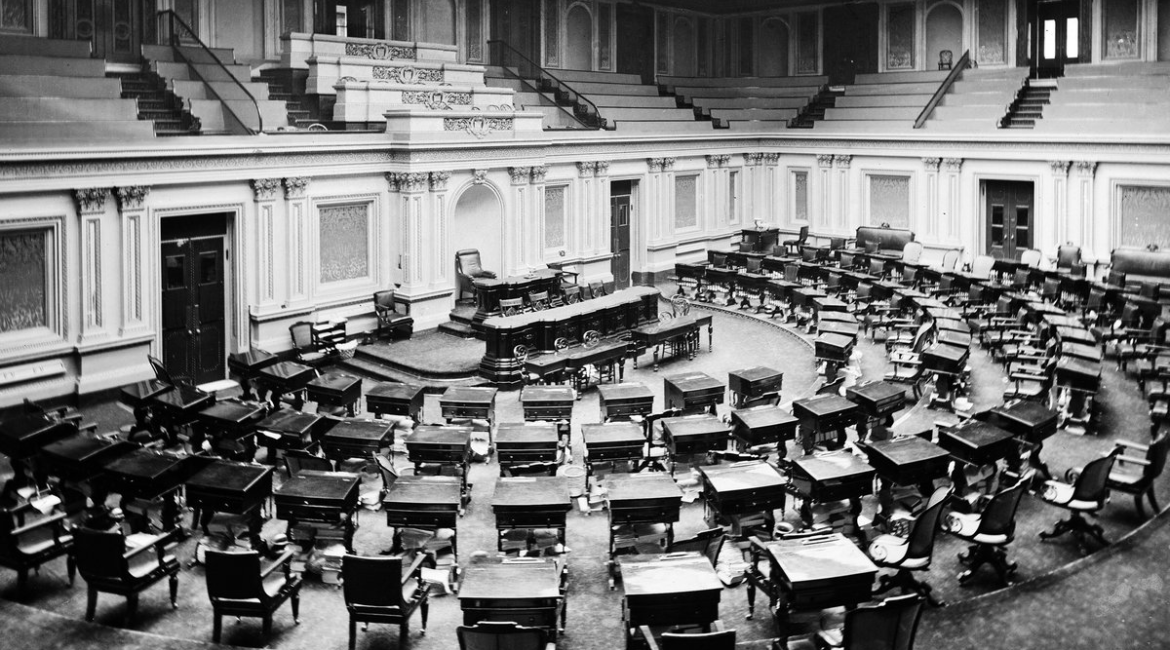
The Senate returns Monday for the last weeks of the Republican majority, and the most-discussed political fight on the right is about a single bill: the SAVE America Act. Sen. Mike Lee of Utah, the bill’s Senate author, wants Majority Leader John Thune to bring it up again and force Democrats into a “talking filibuster.” Thune says the votes were never there. Grassroots conservatives have spent the holiday week calling for his head.
This magazine has already covered the GOP’s argument over who is to blame for the midterm losses. The question now is narrower and practical: with a few weeks left before Democrats take the Senate in January, could Lee’s plan actually work, and what would it cost?
Lee’s plan
On Wednesday night, Lee posted a step-by-step plan on X. “After confirming all remaining Trump nominees, getting the government funded, and passing permitting reform, the Senate should call up the SAVE America Act and debate it until it passes—making clear that filibustering senators will be required to speak and that the moment no one shows up to speak we will call the question and pass it with a simple majority,” he wrote. As of Saturday morning, the post had drawn more than 250,000 views and about 19,000 likes.
It builds on a formula he laid out Nov. 8, after Sen. Rick Scott of Florida demanded that every candidate for Senate GOP leadership commit to passing the bill. “(1) Put the SAVE America Act on the Senate floor. (2) Require filibustering senators to speak, calling the vote at a simple-majority threshold when they stop speaking. (3) Announce that debate will continue until it passes,” Lee wrote, as quoted by Radio Purple News.
What the bill does
The SAVE America Act, sponsored in the House by Rep. Chip Roy of Texas, would require documentary proof of U.S. citizenship, such as a passport or a birth certificate paired with photo ID, to register for federal elections. It would require photo identification to vote and would direct states to remove noncitizens from their rolls once they have verified information that a registrant is not a citizen, according to summaries of the House-passed text. Supporters call it a basic safeguard. Democrats say noncitizen voting in federal elections is already illegal and rare, and that the document requirements would keep eligible citizens from voting.
The record so far
Much of the online anger skips over what actually happened, which the official vote records show. The House attached the bill to a Senate-passed veterans measure, S. 1383, and passed it 218-213 in February, according to the House Clerk’s roll call. On March 17 the Senate voted 51-48 to take up that bill. Days of procedural fighting followed, and the measure stalled.
On June 5, just before midnight, Lee offered the House text as an amendment to another bill. The Senate roll call shows the motion got 50 yeas and 49 nays. It failed because it needed three-fifths. Every Democrat who voted opposed it, along with three Republicans: Mitch McConnell of Kentucky, Lisa Murkowski of Alaska and Thom Tillis of North Carolina.
That is the basis of Thune’s defense. In an interview with The Daily Wire, he said the Senate held seven votes on versions or pieces of the bill. Every Democrat opposed a standalone voter ID proposal, and a broader version with mail-in voting limits lost some Republicans because their own states rely on mail ballots. “It was clear from the get-go that we didn’t have the vote,” Thune said. He blamed “a paid influencer world” and “a lot of keyboard warriors” for a “Republican rift,” and noted that 36 states already have voter ID laws.
The anger
That explanation has not satisfied the base. Rep. Anna Paulina Luna of Florida wrote that Thune “was responsible for blocking passage of the Save America Act and should STEP DOWN,” Radio Purple reported. Activist Jack Posobiec wrote the day after the election that Thune “needs to step down” if he could not move bills and judges in the time left. Senate Republicans re-elected Thune by voice vote on Nov. 10, and no sitting GOP senator has publicly called for him to resign, according to Radio Purple’s review.
Would a talking filibuster work?
Under current practice, senators do not have to speak to block a bill. They only need to deny the majority the 60 votes required to end debate under the cloture rule, Senate Rule XXII. Lee’s approach would not use cloture at all. Republicans would keep the bill on the floor until opponents ran out of speeches, then call for a simple-majority vote.
There is real basis for this. Senate Rule XIX generally limits each senator to two speeches on the same question in a single legislative day. In theory, a determined majority that refuses to adjourn can eventually exhaust the minority. Strom Thurmond’s 24-hour, 18-minute speech against the Civil Rights Act of 1957 is the best-known example.
The costs are also real, and Lee’s own order of steps reflects them. While the bill is on the floor, almost nothing else moves. That is why he wants nominees confirmed, the government funded and permitting reform passed first. The majority must also keep a quorum nearby at all hours, because any senator can force a quorum call, and the burden falls on the side trying to keep the Senate in session. Opponents can offer amendments and points of order to stretch out the debate. With the Congress ending in early January, a determined minority would not need to hold out for long. Thune said this month, “I don’t know how we’d force that fight on the floor.”
The math is tight either way. A talking filibuster lowers the passing threshold from 60 to a simple majority, but it does not add any votes. In June the bill got 50 yeas, with three Republicans opposed and one Democrat absent. If every senator were present and voted the same way, the result would be 50-50, and Vice President JD Vance could break the tie. That only works if every other Republican votes yes and stays close to the floor through days or weeks of debate, and if no one in the majority objects to the procedural rulings the strategy may need. One defection, one absence or one senator who wants to go home for Christmas would sink it, and the effort would end in a long, public defeat.
Why it still matters
Supporters of Lee’s plan have an argument beyond the vote count. Making Democrats stand on the floor for days opposing proof of citizenship and voter ID would put every senator on record on ideas with broad public support. In an October 2024 Gallup poll, 84% of adults favored photo ID to vote and 83% favored proof of citizenship for first-time registrants, although that poll asked about the general ideas and not this bill. A loss that is public and forced can shape the next campaign in a way a quiet procedural failure cannot. That was Lee’s point when he said debate should continue “until it passes.”
The other side of that argument is that the lame duck is short and the list of must-pass items is long. If government funding or Trump’s remaining nominees slip into January, they will be decided by a Democratic Senate.
The bill will expire when this Congress adjourns. Republicans who want it back will have to reintroduce it in a Congress run by Democrats. Monday’s return will show whether Thune gives Lee his floor fight, or whether the SAVE America Act becomes a campaign issue for 2028.
Sources: Sen. Mike Lee on X; Gallup; U.S. Senate roll call votes No. 57 and No. 151 (119th Congress, 2nd Session); Office of the Clerk, U.S. House of Representatives; The Daily Wire; Radio Purple News; Florida Voice News; Townhall. View and like counts are as of Saturday morning, Nov. 28, and will change. Social media quotations from Sen. Scott, Rep. Luna and Mr. Posobiec are as reported by Radio Purple News. Descriptions of floor procedure are this magazine’s analysis.