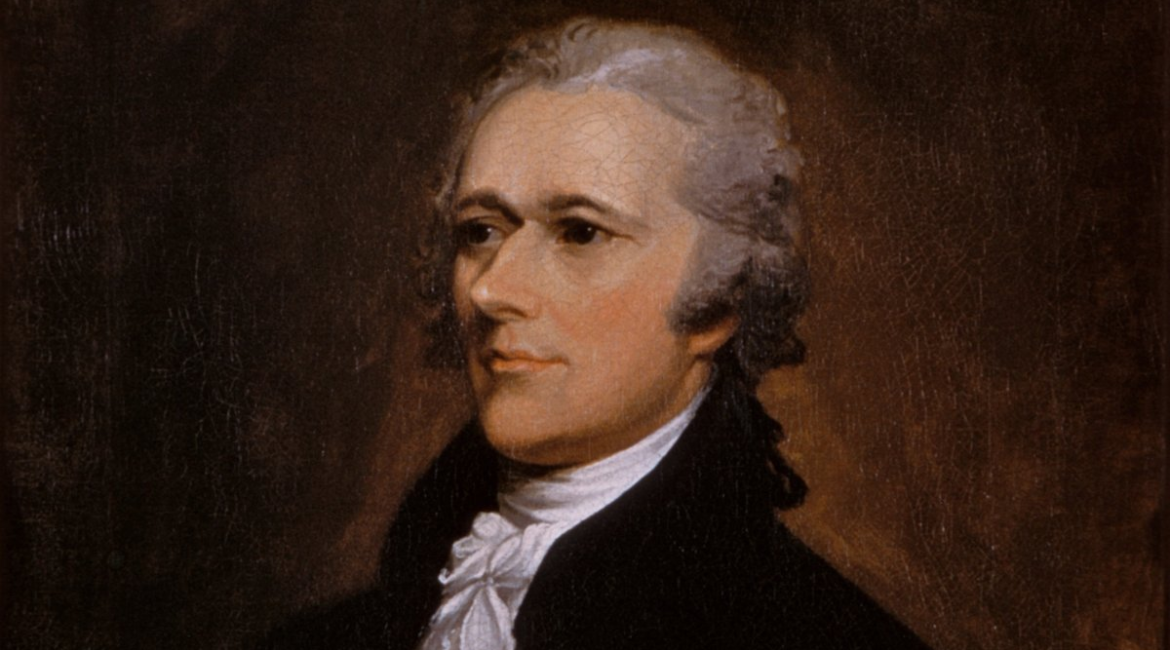
In Federalist No. 74, Alexander Hamilton argued that “the benign prerogative of pardoning should be as little as possible fettered or embarrassed.” He gave the power to one person because one person could act quickly and be held responsible. He was not imagining paid intermediaries selling access to that one person.
That business now exists. A CBS News “60 Minutes” investigation published in September found that brokers seeking clemency from President Trump charge fees that sources said can reach $3 million. On hidden camera, two of them told a felon they could probably get him a pardon for $300,000 (CBS News). Lobbying firms disclosed nearly $5.2 million in pardon-related revenue in 2025, about eight times the previous year, NOTUS reported, as summarized by Burn the Playbook.
The problem did not start with one party, and the fixes should bind every future president.
A bipartisan record
On his last day in office in 2001, Bill Clinton pardoned fugitive financier Marc Rich, whose ex-wife Denise was a major donor to the Clinton presidential library. In December 2024, Joe Biden pardoned his son Hunter, who had been convicted on gun charges and had pleaded guilty to tax offenses. Biden had repeatedly said he would not do that. On his way out, he also issued preemptive pardons to family members and to Dr. Anthony Fauci, covering people who had not been charged with anything.
On his first day back in office, President Trump cleared more than 1,500 people charged or convicted in connection with Jan. 6 through pardons, commutations and dropped prosecutions, CBS reported. A CBS analysis of Justice Department data found that about 70% of Trump’s second-term clemency actions did not go through the Justice Department, and 92% when the Jan. 6 cases are included. One case CBS examined involved nursing-home operator Joseph Schwartz. He pleaded guilty to failing to pay more than $38 million in withheld employment taxes and was pardoned in November 2025, months after the lobbying firm JM Burkman and Associates disclosed $960,000 in fees from him. The family of a resident who died in one of his facilities never collected a nearly $19 million judgment. “It’s about how much you can pay for it,” her daughter told CBS.
The White House rejects that description. Spokesperson Lauren Bis told CBS the administration “has a robust pardon review process” and said anyone “spending money to lobby for pardons is foolishly wasting their money and the president doesn’t even know who these so-called ‘lobbyists’ are.” No one has been charged with selling a pardon, and in the Schwartz case the White House called his prosecution “an example of over prosecution.” The problem is that the public has no reliable way to tell a merciful decision from a purchased one. That is what needs fixing.
What Congress can and cannot do
The pardon power is in the Constitution, and the Supreme Court has said Congress cannot reduce it by statute. In Schick v. Reed (1974), the Court held that the power “flows from the Constitution alone” and “cannot be modified, abridged, or diminished by the Congress.” Honest reform must therefore regulate the money, lobbying and paperwork around the decision, or amend the Constitution.
Fix 1: Make paid clemency advocacy fully transparent
Federal lobbying law includes thresholds and exemptions that let many paid “advisors” avoid registering. Congress should require anyone paid to seek clemency for someone to register within two days of being hired or of the first contact, whatever the amount and whatever share of their work it represents, and to report every contact. That is the approach of the Pardon Transparency and Accountability Act of 2026 (H.R. 9860), introduced in July by Rep. Dave Min. It has not moved out of the Judiciary Committee.
Fix 2: Ban success fees
One client, the rapper Torence Hatch, told CBS he paid $600,000 up front on the understanding that half would be returned if no pardon came, and he has filed an arbitration claim seeking a refund. The brokers dispute his account and say no final agreement was signed. A fee that depends on a presidential signature invites brokers to promise access they may not have. Many states already prohibit contingency fees for lobbying. Congress should prohibit any compensation for clemency advocacy that depends on the outcome, with civil penalties and disgorgement of the fee.
Fix 3: Follow the money into the president’s circle
The Marc Rich case remains the standard example because the money did not go to the president personally. It went to his library. Congress should require each clemency recipient, and immediate family members of the recipient, to disclose any donation of more than a modest amount made in the previous five years to the president’s campaign, inaugural committee, presidential library, legal defense fund or any business the president owns. The disclosure should be published when the grant is announced. It restricts no choice; it lets voters judge.
Fix 4: Give victims and prosecutors a record
The Justice Department’s Office of the Pardon Attorney once screened most petitions for remorse, rehabilitation and the effect on victims. Today, CBS reported, petitions often go directly to the White House. Congress cannot require the president to consult anyone. It can require the Pardon Attorney to prepare a short impact statement whenever the department learns a grant is under consideration. That statement would include victims’ views and any effect on ongoing investigations, and it would go to Congress even if it is completed after the fact. H.R. 9860 includes this. Congress should also require a public, quarterly count of petitions received outside the Justice Department process.
Fix 5: Make clear that selling a pardon is bribery, and keep the clock running
James Madison told the Virginia ratifying convention in 1788 that if a president were “connected, in any suspicious manner, with any person, and there be grounds to believe he will shelter him, the House of Representatives can impeach him.” Impeachment is one remedy. The criminal law should be another. Congress should amend the federal bribery statute to state explicitly that it covers anything of value given or promised in exchange for clemency, including payments routed to third parties such as foundations, libraries and family businesses. Congress should also pause the statute of limitations for those offenses while the official involved remains in office, so a scheme cannot simply wait out the clock.
Fix 6: A narrow constitutional amendment
Statutes can make abuse visible. Only an amendment can rule out the worst cases. The broad proposal now in Congress, H.J.Res. 135 from Rep. Johnny Olszewski, a Maryland Democrat, and Rep. Don Bacon, a Nebraska Republican, would let Congress nullify any pardon by a two-thirds vote of both chambers. That would move a power Hamilton deliberately gave to one accountable person into a congressional process. A better amendment would be narrow: no president could pardon himself, his relatives, or his own current or former employees and campaign staff for offenses connected to their service to him. That would apply to the preemptive pardons of the Biden family and to any future president’s associates alike.
States show that limits on clemency can work. In Texas, the governor may grant clemency only on the written recommendation of a majority of the Board of Pardons and Paroles. In Georgia, the constitution gives the power to an independent board.
The bottom line
Mercy is a conservative value. So are correcting overzealous prosecutions and giving people who have served their time a second chance. A pardon process that depends on who can afford a well-connected broker undermines all three, because it tells ordinary petitioners that their applications don’t matter. Transparent lobbying, no success fees, published donations, victim impact statements, a clear bribery law and a narrow amendment would keep the “benign prerogative” Hamilton defended, while making it much harder to sell.
Sources: The Federalist No. 74; CBS News / “60 Minutes” (Sept. 13, 2026); NOTUS via Burn the Playbook; Congress.gov (H.R. 9860 and H.J.Res. 135, 119th Congress); Schick v. Reed, 419 U.S. 256 (1974); Madison’s remarks in the Virginia ratifying convention, June 1788; Texas Constitution, Art. IV, § 11; Georgia Constitution, Art. IV, § II. The donation-disclosure rule in Fix 3, the success-fee ban in Fix 2, the bribery-statute and tolling changes in Fix 5, and the narrow amendment in Fix 6 are this magazine’s proposals, not existing law. No one named in this article has been charged with buying or selling a pardon.