In November 1979, after militants seized the U.S. Embassy in Tehran, President Jimmy Carter declared a national emergency and froze Iranian government assets. That declaration, Executive Order 12170, has been renewed every year since, most recently by the current administration, and is still in effect. It has outlasted the hostage crisis and the Cold War, and every president since Carter has renewed it.
It is not the only one. As of Nov. 5, the Brennan Center for Justice counted 51 declared national emergencies in effect under the National Emergencies Act of 1976. Its running list shows 92 emergencies declared since the law was passed, including at least a dozen since President Trump returned to office in January 2025. Each declaration can unlock some of the roughly 150 statutory emergency powers that, according to a Yale Journal on Regulation analysis, Congress has given the president over the years.
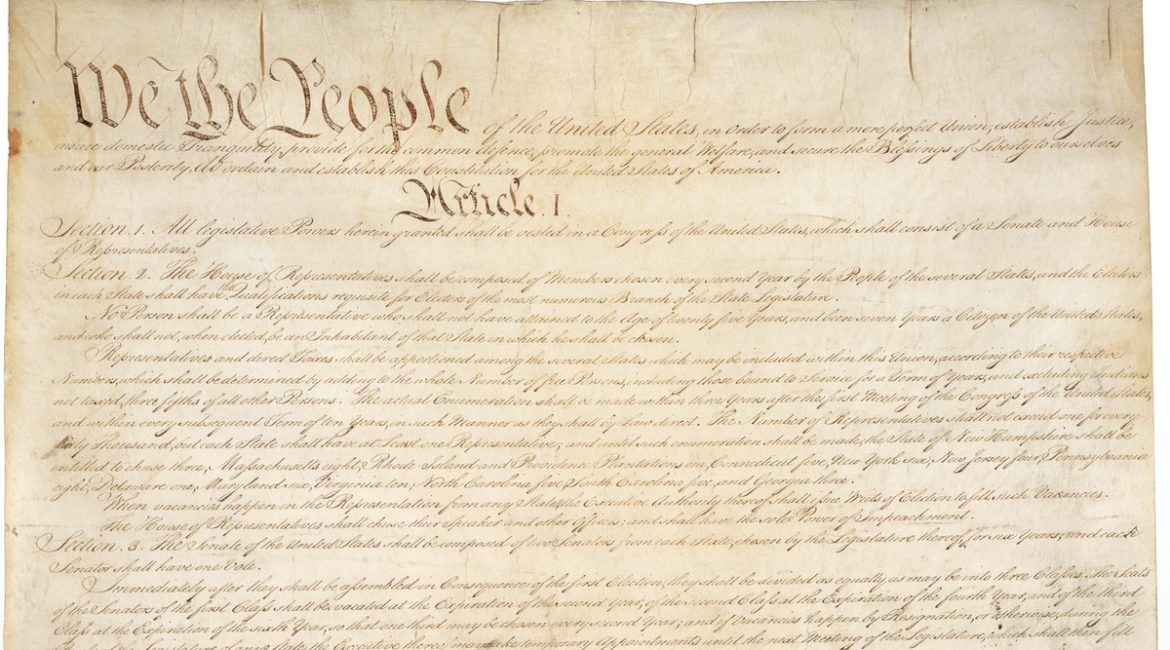
This year showed what is at stake. In February, the Supreme Court ruled 6-3 in Learning Resources v. Trump that the International Emergency Economic Powers Act, a 1977 emergency law, does not let the president impose tariffs. More than 2,000 refund lawsuits followed, SCOTUSblog reported. Customs and Border Protection now runs a refund program for duties that the Yale analysis says may total about $166 billion. The tariffs were collected for about a year before a court stopped them. Congress, which the Constitution gives the power “to lay and collect … Duties,” did not.
Republicans and Democrats both say they want Congress to reclaim its authority. Here are six ways to do it.
How the check broke
The 1976 act was meant to rein in emergency government. Congress gave itself the power to end any emergency by a simple majority vote of both chambers, through a concurrent resolution that did not need the president’s signature. In 1983, the Supreme Court struck down that kind of “legislative veto” in INS v. Chadha. Congress responded by requiring a joint resolution, which the president can veto. As a result, ending an emergency over the president’s objection now takes a two-thirds vote in both chambers.
Congress has never done it. In 2019, both chambers voted to end President Trump’s border-wall emergency, which he used to move military construction money to the wall. He vetoed the resolution, and the House fell short of the votes to override. In October 2025, the Senate voted 51-47 to end the emergency behind his global tariffs, with Republicans Susan Collins, Mitch McConnell, Lisa Murkowski and Rand Paul joining Democrats, according to the Senate roll call. House leaders had already changed the chamber’s rules to block such votes, The Washington Post reported.
The law has other protections that Congress rarely uses. Under 50 U.S.C. § 1622, each chamber “shall meet to consider a vote” on ending an emergency every six months. Congress almost never holds those votes. Emergencies expire after one year unless the president publishes a short renewal notice in the Federal Register, which presidents do routinely.
Six fixes
1. Make new emergencies expire in 30 days unless Congress approves them. This is the central idea of the bipartisan ARTICLE ONE Act. Sen. Mike Lee, R-Utah, and Rep. Chip Roy, R-Texas, sponsored it with Sen. Richard Blumenthal, D-Conn., and Rep. Steve Cohen, D-Tenn. According to Lee’s office, the bill “would automatically end all future emergency declarations made pursuant to the NEA after 30 days unless Congress affirmatively votes to extend the emergency.” The president would keep the ability to act quickly in a real crisis. If the emergency continued, Congress would have to vote to approve it. The last version, S. 1912, died without a floor vote when the 118th Congress ended. It should be reintroduced and passed.
2. Require a new vote every year and phase out the old emergencies. Under the ARTICLE ONE approach, an emergency Congress approves would still need a new vote each year. The 51 emergencies already in effect should get a deadline, perhaps two years, after which each one ends unless Congress reauthorizes it or writes it into permanent law. Many of these declarations support economic sanctions on hostile regimes such as Iran, and Congress should keep those sanctions. If they are long-term policy, Congress can enact them as ordinary statutes.
3. Write the tariff ruling into law and limit emergency powers to their intended purpose. The Supreme Court has said IEEPA does not cover tariffs. Congress should make that permanent, so a future president or a future Court cannot reverse it. Congress should also adopt the principle legal scholar Elena Chachko calls “authority-matching.” Under it, when Congress has written a specific law for a problem, such as the trade statutes for tariffs, a president could not use a broad emergency power to get around that law’s limits. In practice, that means an emergency could not be used to do something Congress has refused to approve.
4. Guarantee a floor vote in both chambers. Resolutions to end an emergency should go to the floor within a fixed number of days in both chambers. Neither chamber’s leadership should be able to block that vote through a procedural rule. Members of Congress should have to vote on every major emergency, and voters should be able to see those votes.
5. Require public reporting on the powers used and the money spent. Each declaration should list the specific statutory powers being invoked. The president should send Congress a public report every 90 days explaining what has been done under each power and how much it has cost, including any money moved from other accounts. The government should keep a single public online registry of active emergencies. Right now, the most complete public list comes from a private research group.
6. Close the money loophole. The 2019 border-wall fight showed that an emergency declaration can be used to move billions of dollars Congress appropriated for other purposes. Any transfer of money under emergency authority above a modest threshold should require approval from Congress within 30 days, or the money goes back to its original account. Under the Constitution, Congress controls federal spending, and that should still apply when the president declares an emergency.
Why conservatives should support this now
In Federalist No. 47, James Madison wrote that “the accumulation of all powers, legislative, executive, and judiciary, in the same hands … may justly be pronounced the very definition of tyranny.” Emergency powers concentrate power in the executive branch. They were meant for wars and true national crises, and presidents of both parties now use them to carry out policies Congress has not passed.
Republicans should also consider the politics. Democrats take control of Congress in January, and the White House will be open in 2028. A future president could use these same powers to declare a climate emergency, a gun-violence emergency or a public-health emergency that reaches into private businesses. Conservatives who objected to Biden-era emergency measures and supported the Court’s tariff ruling should want limits in place before that happens.
Reforming emergency powers may be the easiest bipartisan accomplishment available in the next Congress. Lee and Roy are among the House and Senate’s most conservative members. Blumenthal and Cohen are reliable progressives. A GOP Senate passed the tariff resolution, and a 6-3 Supreme Court struck down the tariffs. All of that suggests the votes could be there.
The question is whether Congress is willing to take back its own power. Doing so would mean members have to cast recorded votes on difficult issues, with less ability to leave those decisions to the president or the courts.
Sources: Brennan Center for Justice, “Declared National Emergencies Under the National Emergencies Act” (updated Nov. 5, 2026); Elena Chachko, Yale Journal on Regulation; SCOTUSblog (March 2026); U.S. Customs and Border Protection, IEEPA duty refunds; INS v. Chadha, 462 U.S. 919 (1983); 50 U.S.C. § 1622; U.S. Senate Roll Call Vote No. 600, 119th Congress (Oct. 30, 2025); The Washington Post (Oct. 30, 2025); Office of Sen. Mike Lee, ARTICLE ONE Act (June 2023); The Federalist No. 47.