
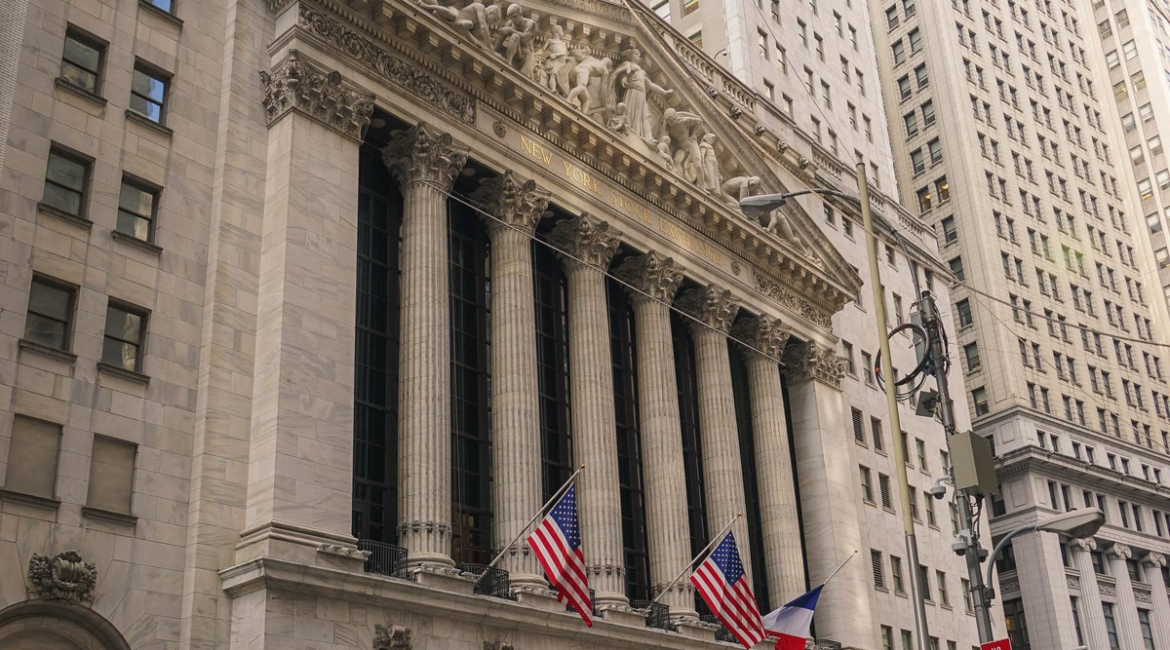
For months, Wall Street treated Anthropic’s initial public offering as the event that would prove the artificial intelligence boom still had legs. On Thursday the company got its moment. The stock market went the other way.
Anthropic priced its shares at $83, above the expected range, and raised a record of more than $81 billion, the largest first-time stock sale in history, CNBC reported. The stock opened on the Nasdaq under the ticker ANT shortly before noon Eastern time at $111.50, up 34%, which CNBC said gave the company a fully diluted value of roughly $2 trillion. Then the selling started. By the close, Anthropic had given back much of its pop and finished up about 17% from its offer price.
The broader market fared worse. According to Reuters, the Dow Jones Industrial Average fell 1,101.11 points, or 2.19%, to 49,097.06. That was its first close below 50,000 since June. The S&P 500 lost 2.02% to 7,175.83, its sixth straight losing session, and the Nasdaq Composite dropped 2.25% to 23,879.20. All three indexes had been higher in the morning.
A “sell the rally” market
The timing was hard to miss. The major averages slid to their session lows almost as soon as Anthropic began trading, CNBC reported. The Cboe Volatility Index, Wall Street’s “fear gauge,” touched nearly 29, its highest level since March.
Steve Sosnick, chief strategist at Interactive Brokers, told CNBC the market had swung from “buy the dip” to “sell the rally” in recent days. Once the S&P 500 broke below the 7,300 level, he said, “the dam seemed to break once the big event was behind us.” The index is now below its 200-day moving average, a level many trend-following investors watch closely. Wednesday’s close was its first below that line since April 7.
The damage was concentrated in the companies most tied to the AI build-out. Nvidia fell 3.3%, its sixth straight loss, and CNBC noted the chipmaker is down 28% this month as it deals with the departure of chief executive Jensen Huang. The Philadelphia Semiconductor Index fell 2.4%. Advanced Micro Devices dropped 7.7% after Hunterbrook Capital disclosed a short position, pointing to what it described as alleged breaches of U.S. export controls involving China. Those are allegations from a short seller that stands to profit if the stock falls, and they have not been proven. Cloud-computing firms CoreWeave and Nebius fell 6.1% and 9.4%.
Early Friday the selling continued. Anthropic shares were down 6.8% in premarket trading, and S&P 500 futures were off about 0.8% shortly before 5 a.m. Eastern, Reuters reported. The major indexes are on track for their steepest weekly decline since April 2025, when the “Liberation Day” tariffs were announced, and the Nasdaq sits 13.6% below its Oct. 6 record close.
Bonds catch a bid, but the Fed is not riding to the rescue
Investors fleeing stocks bought Treasury bonds. The 10-year yield slipped 1.9 basis points to 5.046%, its fourth straight decline, and the two-year yield fell to 4.77%, Investing.com reported. A 10-year yield above 5% still means expensive mortgages, car loans and federal borrowing.
What stock investors are not getting is relief from the Federal Reserve. CME Group’s FedWatch tool showed a 98.4% chance of a rate hike at the Fed’s December meeting as of early Friday, according to Reuters. Philadelphia Fed President Anna Paulson said Thursday the Fed will need to raise rates again because inflation is too high. In past selloffs, markets could count on the central bank to cushion the fall. With inflation running above the Fed’s 2% goal for more than five years, that cushion is gone for now.
The other numbers from Thursday explain why. Weekly first-time jobless claims rose 1,000 to 203,000, the Labor Department reported, which is still very low. The four-week average was 197,750. Continuing claims rose 70,000 to 1.763 million, their highest since the end of August, Reuters noted, a sign that some laid-off workers are taking longer to find jobs. Layoffs, though, remain rare.
Meanwhile the Philadelphia Fed’s factory index fell to 6.3 from more than 20 in October, its lowest reading since May. But the survey’s prices-received measure jumped to 47, the highest since June 2022, CNBC reported. Slower growth with faster price increases is the combination central bankers like least.
Main Street’s view: Walmart
The day’s most useful read on ordinary households came from Bentonville, Arkansas. Walmart reported third-quarter revenue of $188.8 billion, up 5.2%, with U.S. e-commerce up 23%. It raised its full-year sales growth forecast to 4.9% to 5.2% and its adjusted earnings forecast to $2.84 to $2.89 a share. Even so, the sales outlook came in below the 5.5% analysts expected, Reuters reported, and the stock fell about 1%.
The warning inside the report matters more than the stock move. Chief executive John Furner said surging diesel and transportation costs had added about $2 billion in expenses this year, according to Reuters, and that pricing “really depends on transportation costs and input costs as we move forward.” The world’s largest retailer is saying, in plain terms, that energy costs tied to the Iran war are still pushing toward store shelves heading into the holidays. Brent crude traded near $92 a barrel Thursday, CNBC reported, after reports of new tanker disruptions in the Strait of Hormuz.
What it means
Three lessons stand out.
First, a hot IPO is not proof of a healthy market. Investors were happy to buy Anthropic at a premium and, in the same hour, sell the chipmakers and cloud firms that supply it. That is consistent with what CNBC’s sources described as profit-taking at “the culmination of this much-hyped moment.” The real test for AI companies is whether hundreds of billions of dollars in data-center spending produce profits. One day of trading cannot answer that.
Second, concentration risk is now a household issue. Many Americans hold index funds in their retirement accounts. When a few giant technology stocks dominate the S&P 500, a correction in one industry hits the savings of people who never bought a single AI stock. Interactive Brokers economist José Torres told Investing.com that continued stock weakness “is poised to weigh on the economy,” because rising asset values have been supporting consumer spending.
Third, Washington’s choices still set the stage. Inflation driven by energy costs and years of heavy federal borrowing is why the Fed is raising rates into a falling stock market and why 10-year yields stay above 5%. A sounder dollar and a narrower deficit would do more for investors over time than any one stock offering.
Next week brings the personal consumption expenditures price index, the Fed’s preferred inflation measure. If it runs hot, a December hike becomes even more certain, and the debate may shift to how big it will be. For now, the message from Thursday is that the market wants evidence, not excitement.
Sources: CNBC markets coverage (Nov. 19, 2026); Reuters via Investing.com and StreetInsider (Nov. 19–20, 2026); Investing.com Treasury market report (Nov. 19, 2026); U.S. Department of Labor, Unemployment Insurance Weekly Claims (Nov. 19, 2026); Walmart Q3 FY27 earnings release (Nov. 19, 2026). Market figures are closing levels as reported; premarket figures were as of early Friday and may change.



[…] which this magazine covered on Friday after its record debut, lost 8.5% in its first full trading day, giving back much of the 17% gain […]