
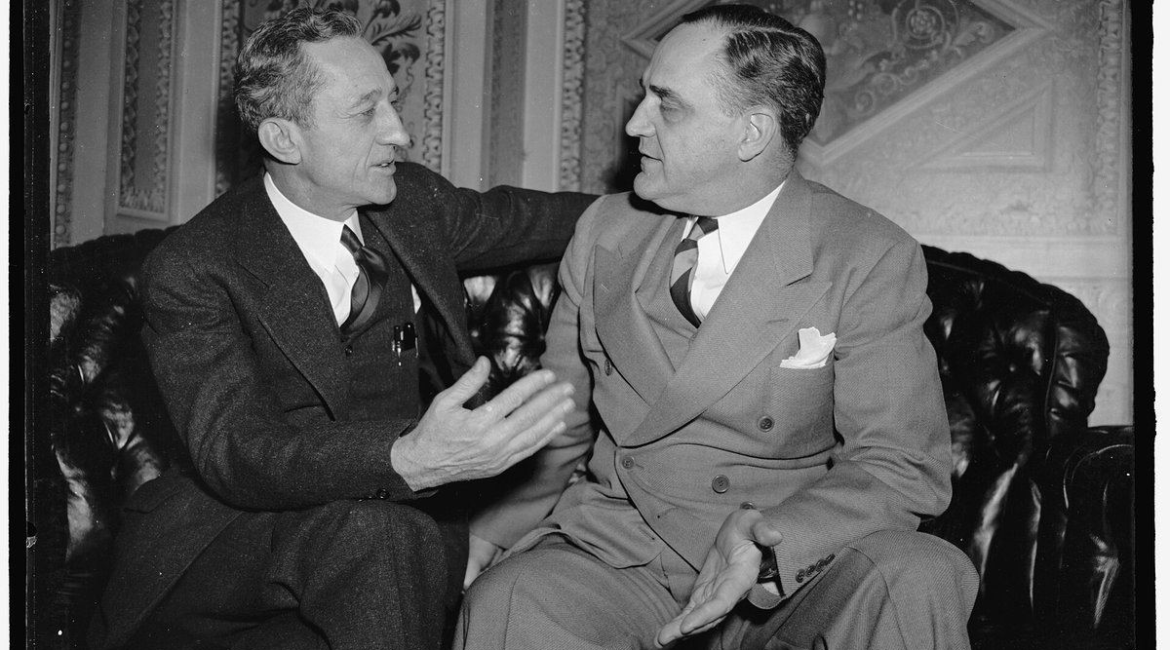
In 1939, Congress passed a law with a simple purpose: the federal government’s power, money and payroll should not be used to win elections. Named for its author, Sen. Carl Hatch of New Mexico, the Hatch Act has been amended several times since. Its core promise has not changed. Federal employees keep their right to vote and hold political views, but they may not use their offices to campaign.
Eighty-seven years later, in the closing days of the 2026 midterms, that promise is under more strain than at any time in recent memory. A New York Times review published Thursday found that at least nine of the 15 Cabinet secretaries have been formally accused of violating the Hatch Act. These are accusations, not findings. Several agencies insist their officials followed the rules. But the volume of complaints, and the weakness of the system meant to resolve them, should concern anyone who believes the law applies to the powerful as well as the powerless.
What the complaints allege
According to the Times report, the complaints cover a wide range of conduct. Attorney General Todd Blanche appeared at a political rally in New York. Transportation Secretary Sean Duffy endorsed Mike Rogers, the Republican Senate candidate in Michigan. Commerce Secretary Howard Lutnick and Interior Secretary Doug Burgum were introduced by their official titles at a campaign rally in Alaska. Complaints have also named Federal Communications Commission Chairman Brendan Carr. A watchdog group, The Steady State, filed complaints over appearances by Defense Secretary Pete Hegseth in Iowa and Kentucky. The Office of Special Counsel (OSC) has already closed the Kentucky complaint. The Times also reported that the FBI took down a video that attacked Abdul El-Sayed, a Democratic Senate candidate in Michigan.
The Campaign Legal Center filed a complaint over three taxpayer-funded ads. “We have not seen this level of violations in recent times,” said Kedric Payne of the Campaign Legal Center, as quoted by the Times.
The administration’s response deserves to be stated fairly. The Interior Department said Burgum spoke in his personal capacity. Pentagon spokesman Sean Parnell said Hegseth’s appearances were “thoroughly vetted and cleared by lawyers.” The Justice Department said its ethics officials had cleared Blanche’s appearance. Cabinet officers, unlike career civil servants, are allowed to engage in some political activity on their own time. Whether a given speech crossed the line depends on facts such as who paid for the trip, whether the official used a title, and whether the event was official or political.
The referee is barely on the field
The deeper problem is enforcement. Under the OSC’s own guidance, covered employees may not use their official authority or titles while engaged in political activity. Penalties for ordinary federal workers can include removal, suspension, demotion, debarment from federal jobs for up to five years, reprimand or a civil fine. But for Senate-confirmed political appointees and White House commissioned officers, the OSC does not bring cases to the Merit Systems Protection Board. It sends a report to the President, who decides what, if anything, happens. The President and Vice President themselves are exempt from the Act.
That structure has always depended on presidents of both parties caring about the appearance of fairness. It now depends on an office that was without a confirmed leader for most of this term. The Times noted that President Trump fired the head of the OSC early in his second term, and the office had no confirmed special counsel until Charles Baldis was confirmed in August.
The OSC’s recent record shows how thin enforcement has become. During the 43-day government shutdown in the fall of 2025, the office received more than 1,000 complaints about partisan messaging from 37 agencies and the White House, Federal News Network reported. It declined to pursue discipline. It said agencies had relied on a 2024 advisory opinion and that its own Hatch Act staff had been furloughed. It flagged some “inflammatory” messages, including on a USDA website and a White House site, that it said “might” violate the law, but it made no final determination.
This is not a partisan point
Conservatives have every reason to take this seriously, because we have been on the other side of it. The Times noted that the OSC has condemned conduct by Biden Cabinet members Marcia Fudge and Xavier Becerra. In 2021 it named 13 Trump administration officials in a report, and in 2018 it found that White House counselor Kellyanne Conway had violated the law. The rule has bitten administrations of both parties. That is exactly why it is worth keeping.
Abigail Bellows of Common Cause and Russell Riley of the University of Virginia’s Miller Center both warned the Times about the erosion of the norm. Riley acknowledged that the idea of keeping official power out of campaigns can seem “kind of quaint,” but said “it’s important.” He is right. Every administration is tempted to use the government’s megaphone, travel budget and law enforcement agencies for its own political benefit. Tomorrow’s administration will be just as tempted, and it may not share today’s politics.
The standard for rank-and-file officials remains strict, and it should be. On Thursday, the Justice Department announced that a former U.S. Postal Service procurement official, James E. Lee Sr., pleaded guilty to conspiracy to commit bribery and honest services wire fraud. According to the department, from mid-2018 to late 2023 he steered contracts worth hundreds of millions of dollars to four companies, and about $183,000 in payments went to a relative. His sentencing is set for February 2027. That is a different kind of offense, a criminal one, but the principle is the same: public office is a public trust. A system that prosecutes a procurement officer while shrugging at Cabinet-level campaigning will lose the public’s confidence.
Restoring a credible referee
Four reforms would help regardless of which party holds the White House.
First, require the OSC to publish, within a fixed period, its findings on every Hatch Act complaint against a Senate-confirmed official, including closed cases and the reasons for closing them. Sunlight costs little and deters a great deal.
Second, when the OSC finds a violation by a senior appointee, send the report to Congress as well as the President, and require a public written response explaining what action was taken.
Third, protect the OSC’s Hatch Act unit from shutdown furloughs, as other essential oversight functions are protected, so that the referee is not sent home precisely when partisan messaging spikes.
Fourth, require agencies to publicly report the costs of Cabinet travel to events with a political character, and to have campaigns reimburse those costs, so taxpayers can see whether they are paying for campaign appearances.
None of this requires anyone to assume the worst about any official named above. It requires only that the law Carl Hatch wrote be enforced the same way for a cabinet secretary as for a letter carrier. That is what equal justice under law means.