
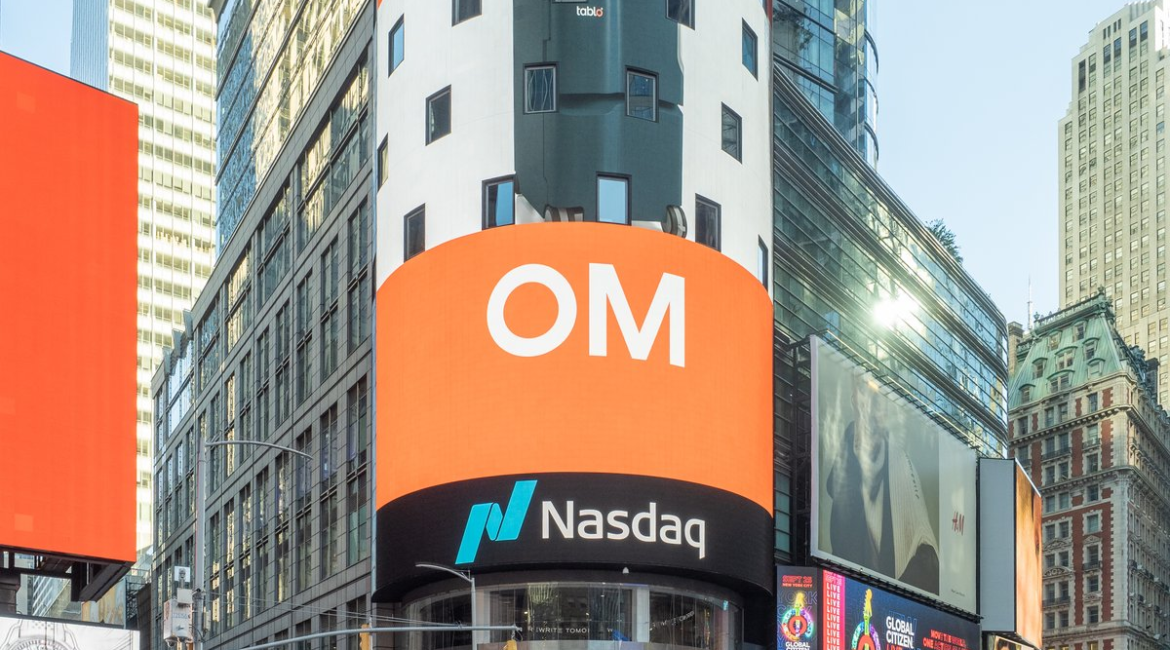
For most of this year, the stock market’s story could be told in two letters: AI. On Friday, that story ran into a wall. The S&P 500 and the Dow Jones Industrial Average both closed in correction territory, 10% below their closing records, and the Nasdaq Composite erased its entire gain for 2026. The week that was supposed to prove the artificial intelligence boom still had room to run, with Nvidia’s earnings and Anthropic’s record stock offering, instead produced the worst weekly losses in years.
Here are the closing numbers, as reported by CNBC and the Associated Press. The S&P 500 fell 265.44 points, or 3.7%, to 6,910.39. The Nasdaq Composite dropped 1,261.47 points, or 5.28%, to 22,617.73, leaving it down 2.7% for the year. The Dow lost 949.73 points, or 1.93%, to 48,147.33. The Nasdaq-100, which tracks the largest non-financial companies on the Nasdaq, fell 5.6% and was briefly in a bear market during the session, 20% below its recent high.
A week for the record books, the wrong kind
The weekly numbers are worse. According to CNBC, the Dow fell 8% for the week, its worst week since March 2020, when the pandemic shut down the economy. The S&P 500 lost 8.6%, its worst week since April 2025, when the administration’s sweeping tariff announcement rattled markets. The Nasdaq lost about 10%, its largest one-week decline in more than six years.
The damage was concentrated but not contained. Ten of the S&P 500’s 11 sectors finished lower on Friday, Xinhua reported. Technology fell 7.11% and consumer discretionary fell 3.5%. Only consumer staples, the companies that sell groceries, soap and toothpaste, gained, rising 0.68%. Walmart rose more than 1%, and Costco, Johnson & Johnson and Procter & Gamble each gained about 1%, CNBC said. Investors were moving into companies people keep buying from in a downturn.
Chip stocks were hit hardest. Nvidia fell about 14%, Advanced Micro Devices fell more than 13% and Micron Technology fell almost 14%. CNBC reported that the selling in Nvidia picked up after Reuters reported that the Securities and Exchange Commission is exploring possible accounting issues at the company. That report has not been confirmed by the SEC, and no charges have been filed. Separately, California Attorney General Rob Bonta announced late Thursday that his office had sent Nvidia an investigative subpoena. In his statement, Bonta said he is investigating whether the company or former CEO Jensen Huang’s actions “resulted in China obtaining advanced chips or confidential information,” and whether the company misled investors about that risk. Nvidia also posted its longest weekly losing streak since the 2008 financial crisis.
Anthropic, which this magazine covered on Friday after its record debut, lost 8.5% in its first full trading day, giving back much of the 17% gain it posted Thursday.
Fear spreads beyond Wall Street
The CBOE Volatility Index, known as Wall Street’s “fear gauge,” rose as high as 32.27 during Friday’s session, according to FactSet data cited by CNBC. The index had not closed above 30 since late March. Bitcoin fell below $60,000 for the first time since July. Spot gold, often a safe haven, fell 2.81% to about $3,520 an ounce, its lowest level in more than a year, because a strong dollar and expectations of higher interest rates make gold less attractive.
The selling was global. Before U.S. markets opened, Japan’s Nikkei 225 fell 5.06% and South Korea’s Kospi fell 5.21%. Taiwan’s main index lost 14.89% for the week, its steepest weekly drop since October 1997, according to LSEG data cited by CNBC. Investors did buy U.S. government bonds: the 10-year Treasury yield slipped to about 4.99% Friday morning.
Why the AI trade cracked
There is no single cause, and analysts gave several. “This is not just a valuation-driven correction. It’s becoming broader,” Massimo Santicchia, head of U.S. equities at Procyon, told CNBC. “Right now, it’s definitely risk-off.” Richard Saperstein, chief investment officer at Treasury Partners, said the market is going through “an AI repricing” that reflects “slowing data center buildouts, reduced funding sources for AI-related projects and a slower trajectory of technology-related earnings growth.”
CNBC listed other worries: signs that the huge spending on data centers is slowing, Democratic gains in this month’s midterm elections that investors fear could bring tougher rules, and Jensen Huang’s departure from Nvidia. Washington added another unknown on Friday. At a White House press conference, President Trump said he wants to stop U.S. companies from building data centers in other countries, warning that companies would face “tremendous penalties.” No details were released. Markets usually dislike that kind of uncertainty.
Not everyone thinks the selling is over. Jonathan Krinsky, chief market technician at BTIG, noted that all three major indexes were trading below their 200-day moving averages, a widely watched long-term trend line. “Generally speaking once something is below a 200 DMA, the risk is to the downside,” he said. Capital Economics senior markets economist James Reilly wrote that the declines in tech stocks and the S&P 500 “have further to run” and projected the S&P 500 would end next year at 6,500, about 6% below Friday’s close.
The Fed will not ride to the rescue
In past selloffs, investors could count on the Federal Reserve to cut interest rates. This time, the Fed is preparing to raise them. Markets strongly expect a quarter-point increase at the Fed’s Dec. 8–9 meeting, CNBC reported. Fed Governor Christopher Waller said in a CNBC interview on Wednesday that the Fed may need a half-point increase to “shock people” out of accepting 3% inflation. The Fed’s benchmark rate is now 3.75% to 4%, Fortune noted.
On Friday, Fed Governor Lisa Cook made the same argument in a speech in Chile. “Inflation has been above target for more than five and a half years, and every additional day poses greater risk that price- and wage-setters will adjust their inflation expectations upward,” she said. “If we fall behind, additional and larger rate increases may be required later to catch up.”
There was one bright spot for the Fed on Friday. The University of Michigan’s final November consumer survey showed sentiment rising to 51.5, and Americans’ expected inflation over the next year fell to 3.7%, a full percentage point below a month earlier and the lowest reading since March. The five-year outlook slipped to 3.3%. Gasoline is helping: AAA put the national average at $3.69 a gallon on Friday, down from $3.72 on Thursday, though still about 59 cents higher than a year ago. Still, survey director Joanne Hsu said consumers “continue to report overwhelmingly that inflation—rather than unemployment—will cause greater hardship” over the next year or two.
What it means for Main Street
A correction is not a recession, and a bad week is not a crash. The S&P 500 has had many 10% declines that did not turn into bear markets. But tens of millions of Americans hold these stocks in 401(k)s and IRAs, and many of those accounts became heavily concentrated in a handful of AI companies as those stocks soared. This week shows the risk of that concentration.
The bigger lesson is about policy. Markets can handle bad news. They have a harder time with unpredictable government action, whether that is a surprise threat of penalties on overseas investment or a Fed that waited too long to fight inflation and now has to raise rates during a selloff. Investors and families both need stable money, predictable rules and a government that does not keep changing the terms. Friday showed what happens when markets lose confidence in all three at once.
Sources: CNBC markets coverage (Nov. 20, 2026); Associated Press (Nov. 20, 2026); Xinhua (Nov. 21, 2026); Fortune (Nov. 20, 2026); CNBC interview with Fed Governor Christopher Waller (Nov. 18, 2026); University of Michigan Surveys of Consumers via CNBC; AAA via CNBC. Market figures are Friday, Nov. 20, closing levels as reported unless noted as intraday. The Reuters report on a possible SEC review of Nvidia has not been confirmed by the SEC.


[…] gas did nothing for stocks last week. As this magazine reported Saturday, the S&P 500 closed Friday at 6,910.39, more than 10% below its record and in correction […]