
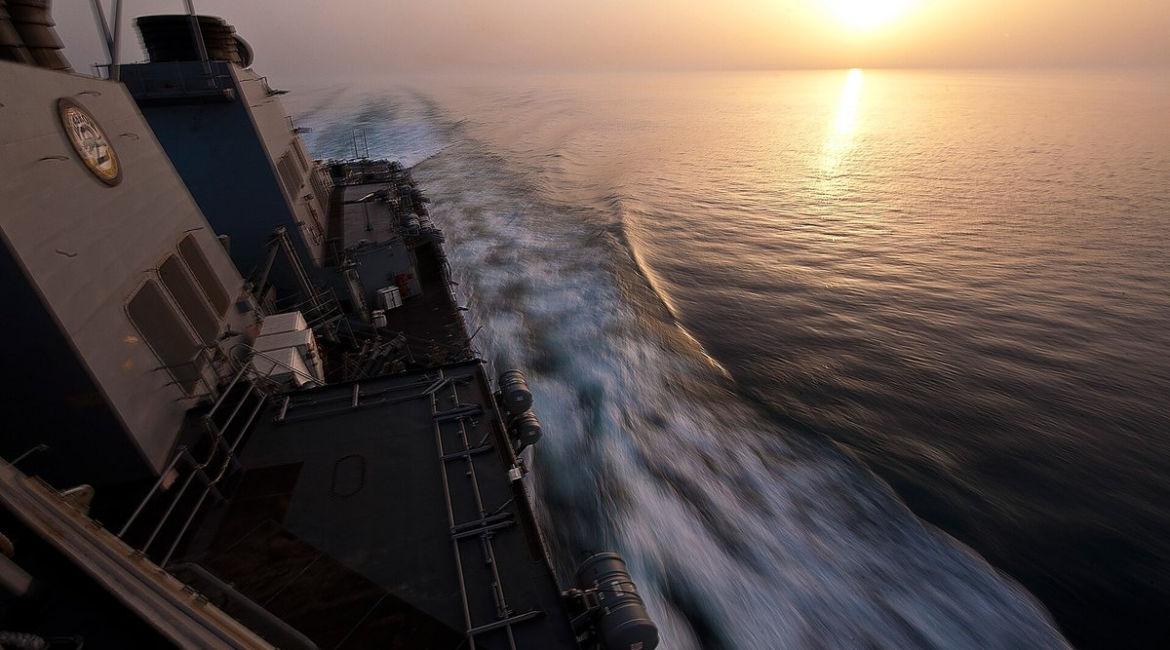
Overnight into Thursday, Iran’s state television made a startling claim: seven oil tankers had caught fire or been damaged in and around the Strait of Hormuz. According to the British news agency PA Media, the report said four of the tankers were hit while transferring oil and caught fire, and three more were damaged and immobilized after striking naval mines.
If it is verified, PA reported, it would be the largest number of vessels damaged in the waterway in a single day since the Iran war began on February 28. That is a big “if,” and how Washington handles it matters, because the same night brought a report that the United States and Israel have drawn up plans for a new round of strikes on Iran after the November 3 midterm elections.
What Iran claims, and what has been confirmed
The claim came from a statement by the navy of Iran’s Islamic Revolutionary Guard Corps (IRGC), carried by the IRGC-affiliated Tasnim news agency. Rudaw quoted it as saying “three violating vessels were involved in an incident after striking naval mines west of the Strait of Hormuz,” and that “four violating vessels conducting ship-to-ship oil transfers were struck simultaneously and are burning in flames.” PA reported that the statement gave no details about casualties or the flags of the tankers.
Independent confirmation is thin so far. Rudaw reported that the United Kingdom Maritime Trade Operations (UKMTO), which tracks incidents for commercial shipping, had not reported attacks on seven vessels in the previous 24 hours. The latest attack UKMTO had reported was on Wednesday, 11 nautical miles off Bukha, Oman, where local authorities said a tanker had been struck by “an unknown projectile.” UKMTO has also cautioned in its weekly report that it is “struggling to accurately report [the] true number of attacks,” with most vessels that are attacked refusing to report to it.
In other words, the true picture may be worse or better than Tehran says. Iran has every reason to exaggerate its reach, and shipowners have reasons to stay quiet. Policymakers should demand facts before reacting to either.
The threat to American bases
The more important part of the statement may be its warning. PA reported that the IRGC said any U.S. attempt to allow tankers through what it called “illegal passages” may expand its response to include U.S. bases in the region. Rudaw quoted it as saying “the scope of confrontation will extend to [US and allied] bases in the region.” PA noted that the Revolutionary Guard has routinely targeted U.S. bases in Gulf countries since the war began.
The strait itself has become a contest of blockades. Rudaw reported that the waterway carried around a fifth of the world’s oil supply before the war, that the United States imposed a naval blockade in mid-July to cut off Iran’s oil exports, and that Iran has kept firing drones and missiles at passing ships while demanding that they seek its “permission.” Tehran renewed an offer on Sunday to reopen the strait if Washington agreed to its conditions.
Plans for a second round
Also on Wednesday, The New York Times reported that the U.S. and Israel have drawn up plans for renewed strikes on Iran after the midterms, targeting its energy infrastructure, nuclear facilities, and missile arsenal, according to summaries by Investing.com and The Times of Israel. The report said U.S. and Israeli forces have been rehearsing strike maneuvers in flights over Iraq, and that Defense Secretary Pete Hegseth met Israeli Prime Minister Benjamin Netanyahu this week to discuss possible attacks.
Some U.S. planners believe a three-day campaign could do enough economic damage to push Tehran into nuclear negotiations, the report said. But President Trump has repeatedly postponed renewed strikes, including an operation planned earlier this month, and has not approved a new offensive. The Times of Israel’s summary said there is a small chance the President could act this month, and that he could also decide against any military action. Iran, for its part, has warned that retaliation could reach Saudi oil refineries, data centers, and undersea internet cables.
The price at the pump
Markets took the news seriously. As of early Thursday, Investing.com reported, Brent crude was up 3.3% at $112.39 a barrel and U.S. West Texas Intermediate was up 2.5% at $99.64. American travelers are already paying for it: United Airlines told investors it expects to pay an average of $4.80 a gallon for fuel in the fourth quarter, up from $3.90 in the third, and Southwest cut its 2026 profit forecast this week, citing higher fuel prices, CNBC reported.
A constitutional and prudent response
First, verify before escalating. A claim from an adversary’s propaganda arm is not a casus belli. The Navy and our allies should establish what actually happened to these ships, publicly and quickly, so that Americans can judge the facts for themselves.
Second, protect Americans in uniform. If the IRGC is openly threatening U.S. bases, commanders should have every defensive resource they need, and the administration should tell the public what it is doing to keep those troops safe.
Third, let Congress do its job. The Constitution gives Congress, not the President, the power to declare war. If the administration believes a new round of strikes on Iran’s energy and nuclear sites is necessary, the case should be made to the people’s representatives and debated in the open. A plan timed for just after an election, while voters are being asked to choose those very representatives, is exactly the kind of decision the Framers wanted made in daylight.
Fourth, keep building strength at home. No American policy can guarantee that tankers pass safely through a narrow strait half a world away. Producing more of our own energy, and moving it through American pipelines and refineries, is the surest way to make families less hostage to what happens there.
Iran’s regime has shown again that it will use the world’s most important oil chokepoint as a weapon. America’s answer should be steady, factual, and constitutional: confirm the facts, defend our people, debate the next step in Congress, and strengthen the home front.
Sources
- PA Media via STV News: Iran says seven oil tankers damaged overnight in Strait of Hormuz (Oct. 22, 2026)
- Rudaw: IRGC claims attacked seven vessels in Strait of Hormuz (Oct. 22, 2026)
- Investing.com: U.S., Israel prepare for renewed Iran strikes after midterm elections – NYT (Oct. 21, 2026)
- The Times of Israel: US and Israel said to draft plans for resumed strikes on Iran after midterm elections (Oct. 22, 2026)
- Investing.com: U.S. stock futures retreat as investors weigh Tesla, Meta earnings (updated Oct. 22, 2026)
- CNBC: Stock market news for Oct. 21, 2026 (United Airlines fuel outlook)
- CNBC: Stock market live updates, Oct. 22, 2026 (Southwest Airlines forecast)
- U.S. Constitution, Article I, Section 8 (National Archives transcription)